





Seismic data have captured the tense quiet of the COVID-19 lockdowns and the thunderous excitement of Taylor Swift’s Eras Tour. And now, another human experience has been written in seismic signals: the shock and awe of witnessing a total solar eclipse.
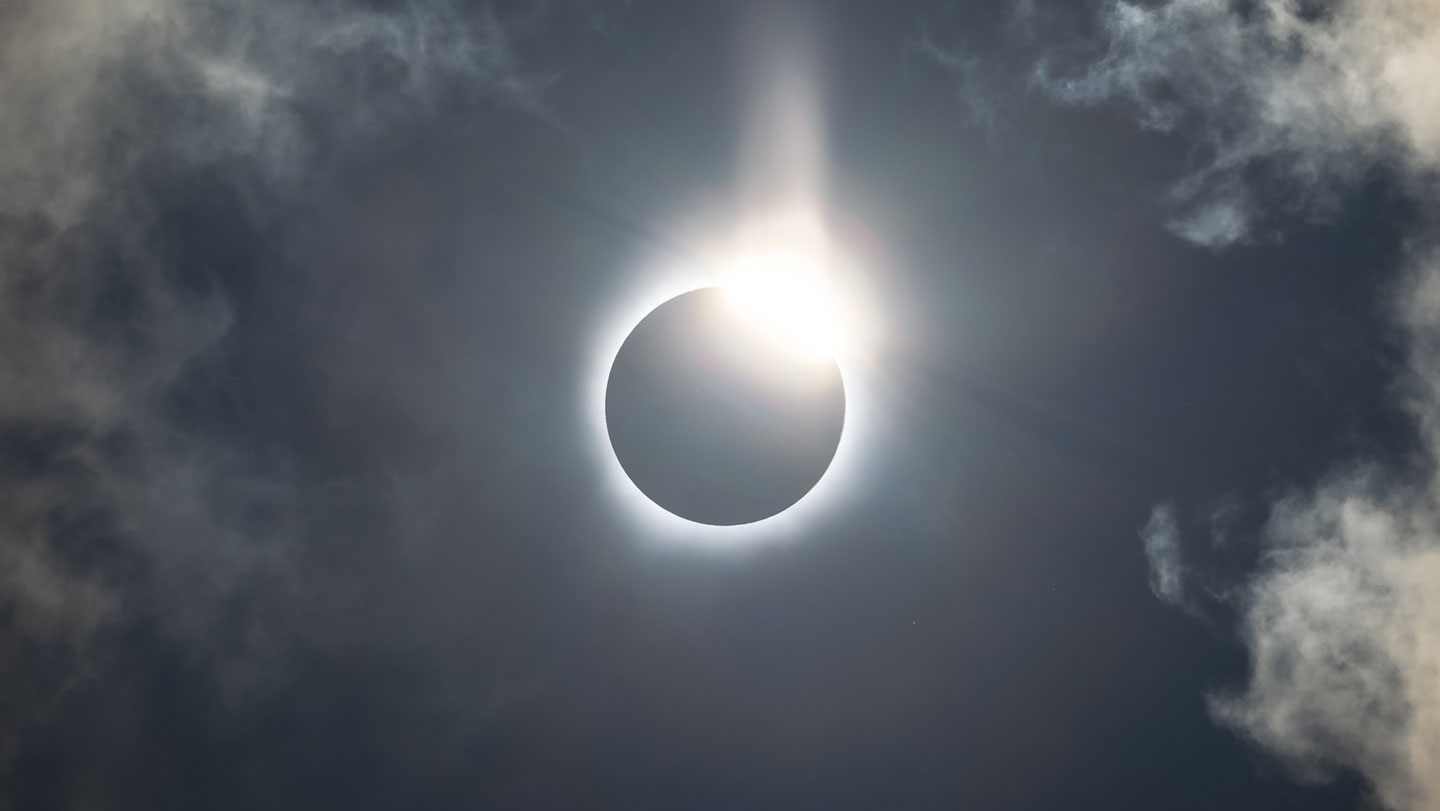
As a solar eclipse swept across North America on April 8, 2024, there was a lull in seismic vibrations across the continent, a new analysis shows — at least in places where the spectacle stopped human observers in their tracks.
Seismic activity dipped during the eclipse in cities that were in the path of totality, where the moon completely masked the sun. But that pattern did not appear in rural areas or cities outside the path of totality. This hints that the seismic changes were due to human hustle and bustle coming to a standstill during the eclipse, Benjamin Fernando reported April 17 at the Seismological Society of America annual meeting in Pasadena, Calif.
While Fernando watched the 2024 eclipse with friends in Cleveland, he was struck by how quiet the world seemed during the few minutes of totality. As a seismologist, he immediately wondered whether that sense of the world holding its breath would show up in seismic signals.
Fernando looked at data collected by about 250 seismometers. He focused on seismic rumbles with frequencies from about 1 to 50 hertz, because human-caused vibrations — from traffic, machinery and other sources — are expected to be strongest in that range.
Cities in the path of totality, from Dallas to Montreal, had quieter ground vibrations across all frequencies during the eclipse compared with the rest of April 2024. The biggest drop was seen in Cleveland, where seismic vibrations at some frequencies were 8 to 9 decibels quieter during totality than the monthly average.
“I am pleasantly surprised by how clearly these signals show up and am curious as to whether we can do similar analyses on other events,” says Fernando, of Los Alamos National Laboratory in New Mexico. In another recent study, he reported a seismic hush that fell over Seattle during the 2026 Super Bowl — possibly because so many Seattleites were glued to their TVs, watching their hometown Seahawks compete in California.
Caltech seismologist Gabrielle Tepp has measured the ground shaking caused by a stadium of Swifties rocking out. By studying human-made seismic signatures, she says, “we could potentially use seismic instruments for monitoring human activity.” That could be useful for designing cities or planning for big events, from parades to the World Cup and the Olympic Games.
Read the full article here