






Snakes are facing extinction due to deadly diseases, warns new research.
Rattlesnakes are among the most vulnerable species threatened around the world, say scientists.
Infections, often caused by parasites or fungi, are one of the key factors alongside habitat destruction.
To achieve an overview of snake health, researchers in the US surveyed seven pathogens in wild native snakes to compare disease prevalence over time, space, and among different species.
Prominent among fungal diseases is ophidiomycosis – also known as snake fungal disease – which is caused by the fungus Ophidiomyces ophidiicola (Oo), according to the study.
In the 20 years since its discovery, scientists say it has been found in many species of snake
Study first author Dr. Corinna Mishin said: “The fungus Oo and the parasite Raillietiella orientalis (Ro), appear to be the most important infectious agents in free-ranging snakes in the south-eastern US.
“We also show that increased risks of ophidiomycosis were strongly associated with coinfections in free-ranging native snakes.”
For the study, published in the journal Frontiers in Veterinary Science, the research team captured more than 500 snakes at two wildlife refuges in South Carolina and Florida, representing 29 species.
They also sampled across the southeastern US.
Most snakes were captured alive, swabbed, and had blood samples taken.
A few snake carcasses found on roads or in the field underwent full post-mortem examination, including tissue sampling.
Mishin, from the University of Georgia, said: “For around 10 years, free-ranging snake research almost solely focused on Oo.
“We wanted to evaluate snake health on a more comprehensive level and really establish a broader view.”
In just under 20% of all snakes, no pathogens were detected.
The most commonly detected pathogens were the bacterium Salmonella enterica, which was found in 63% of snakes, and Hepatozoon spp., a tick-borne parasite, found in just over half (53%).
Another bacterium, detected in 18% of snakes, was the antibiotic-resistant Mycoplasma spp., which can cause upper respiratory disease and has never before been reported in wild snakes in the US.
Almost half of the snakes studied (44%) were infected with more than one pathogen.
In around 29%, 11%, and 3% of snakes, the team respectively found two, three, or four pathogens simultaneously.
Mishin said, “When an animal has become sick from an infection, their immune system is compromised, which increases the risk of further disease exacerbation from other infectious agents that may have once been subclinical.”
The research team also found that the work showed that snake species was a predictor of likely pathogens with which they were infected.
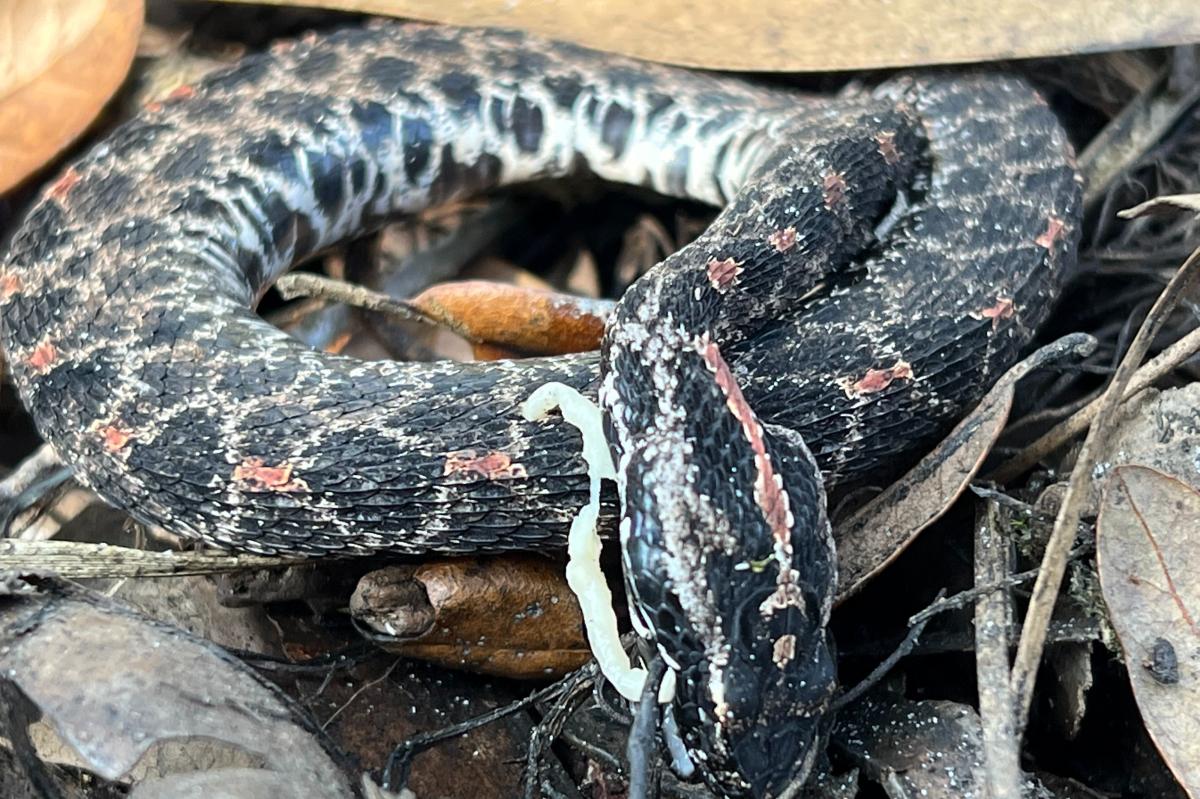
For instance, pygmy rattlesnakes were most likely to be sick with snake fungal disease.
Twelve out of 34 rattlers tested positive for Oo, with many having concurrent signs of disease.
But just one in 55 eastern ribbon snakes and three out of 36 ring-necked snakes did.
Rattlesnakes were also most likely to host Ro, an invasive crustacean parasite commonly known as snake lungworm.
The research team found that 14 out of 34 rattlesnakes were infected.
But, in other snake species, the same parasite was found less often or not at all, as was the case among Florida green watersnakes.
Mishin said: “We hypothesise that certain species with poorer general population health, specifically rattlesnakes with historic and current increased risks of human persecution, are likely more susceptible to infection with subsequent disease.
“In addition, pygmy rattlesnakes were expected to have an increased prevalence of Ro, as they primarily consume lizards and frogs, which are known to transmit the parasite.”
She said other factors also influenced snakes’ likelihood of hosting pathogens. For example, snakes sampled in Georgia were much more likely to have Oo, but Ro was found only in Florida snakes.
Mishin said skin lesions favoured Oo infection, too.
Snake fungal disease was detected in more than 30% of snakes with skin lesions, but in just 2% of snakes without.
Mishin said the results are limited due to difficulties in detecting Ro, which in live snakes is done by analysing faeces.
As snakes generally have extended periods between meals, she says, consistent faecal availability is not always given. Therefore, Ro rates are likely to be underestimated.
But Mishin says the findings are important for the conservation of snakes and the control of invasive species.
For example, Burmese pythons and brown anoles – both invasive in the US – are known to be “competent” hosts of Ro.
Mishin added: “Our data provide important information of which pathogens native snakes may likely have but also which they are likely naïve to.
“This can inform actions needed to prevent pathogen spillover from captive snakes.
“When translocating wildlife, it’s essential to consider which pathogens may be translocated with them – and the potential downstream effects.”
Read the full article here