




Published on •Updated
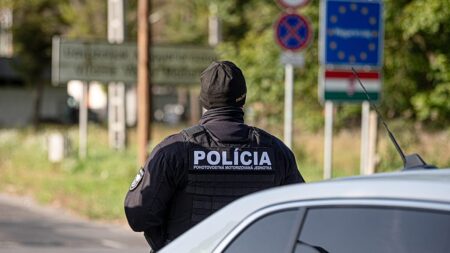
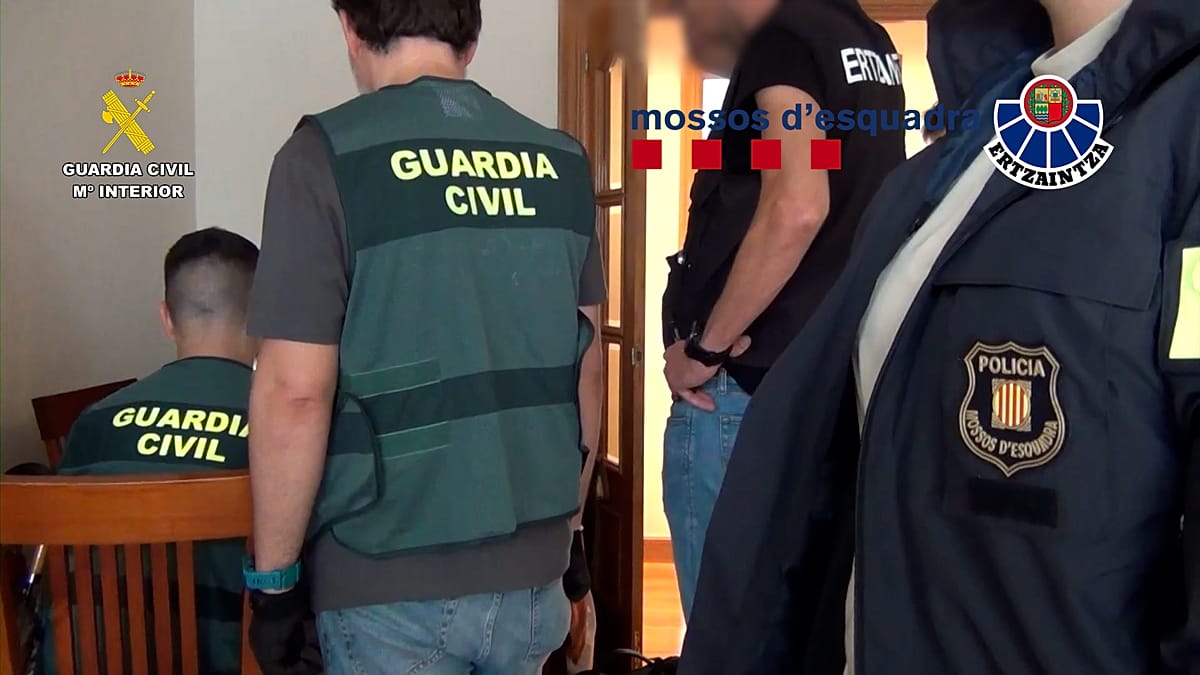
A joint operation involving the Guardia Civil, the autonomous police forces of the Basque Country and Catalonia (Ertzaintza and Mossos d’Esquadra) has led to the arrest in Guipúzcoa, a region near the northern border with France, of a 17-year-old Spanish national.
The three police forces consider him to be the main figure in Spain for the neonazi, paedophile and satanist 764 network. This organisation, which, according to the investigation, has for months been generating public alarm through threats targeting educational centres, town councils, libraries and other public and private entities.
Between January and April this year, the teenager is believed to have sent numerous messages announcing shootings and armed attacks. None were carried out, but they were enough for several institutions to activate exceptional security protocols.
In some of these messages, according to police sources, the author claimed that he would broadcast the attacks live so that other members of the organisation could watch them. Threats against a well-known leisure centre and against several individuals are also being investigated.
Searches were carried out on 16 July at two homes in Guipúzcoa linked to the suspect, once the corresponding judicial authorisations had been obtained. Officers seized electronic devices, storage media and documents which are now being analysed. The detainee has appeared before a judge and is subject to a custodial measure in a specialised centre in Donostia/San Sebastián.
What is the 764 network and how did it operate in Spain
The 764 network emerged in the United States and takes its name from the first three digits of the postcode for Stephenville, Texas, the hometown of its founder.
Over time it evolved from a marginal community on internet forums into a structure with a presence in different countries, linked to offences such as sextortion, the distribution of child sexual abuse material, incitement to self-harm, the dissemination of content showing extreme violence and animal abuse. Canada has classified it as a terrorist entity, and several countries have ongoing investigations into its activities.
In Spain, the investigation has also identified the use of techniques typical of these communities, such as swatting, doxing and identity theft, aimed at falsely pointing to people unconnected with the events in order to trigger police interventions, create dangerous situations and divert investigators’ attention. At least two people, one in the Basque Country and another in Catalonia, were subjected to harassment campaigns arising from these practices.
Investigations have also revealed that the detainee took part in digital spaces where psychological manipulation was exerted on children and vulnerable young people, involving dynamics of humiliation, coercion to self-harm and submission to the will of those who recruited the victims. Images and videos obtained in this way were later shared within the community as a means of exerting control over those affected.
Prevention, the main line of defence
Investigators stress that organisations such as the 764 network actively target minors on social media, messaging apps and gaming platforms. The initial contact is usually presented as a friendship or shared interests, and only over time does it turn into manipulation, blackmail and isolating the victim from their environment.
For that reason, the authorities recommend that families and educators remain alert to signs such as requests for private photos, conversations the child hides, proposals involving self-harm or demands to take part in degrading challenges.
Early communication with the family, the school or the security forces remains, according to those responsible for the investigation, the most effective way of preventing a teenager from becoming trapped in this type of network.
Read the full article here