



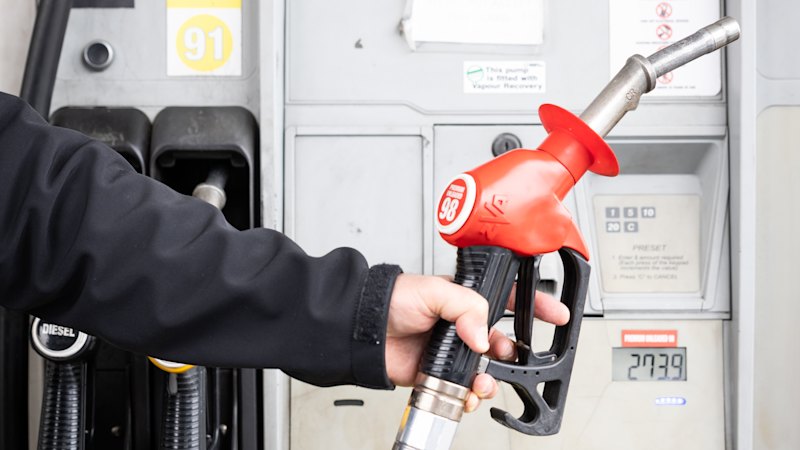
As global turmoil caused fuel costs to skyrocket, experts wondered if Queenslanders would change their travel habits.
They did. But the effects were uneven, the University of Sydney’s Business School has found.
Researchers surveyed 808 Queensland residents, asking how they currently travelled, and what would happen to their weekly plans if petrol prices reached $2.50, $3 and $3.50 per litre.
The results pointed to three outcomes – people drove less, used public transport more, and cut some trips altogether instead of finding a different way to travel.
Lead researcher Dr Andrea Pellegrini said petrol was a household cost people encountered constantly and directly, meaning price increases were immediate and difficult to ignore.
“Transport is not simply another household expense,” he said. “It’s what allows people to access work, education, healthcare, shopping, family commitments and social activities.”
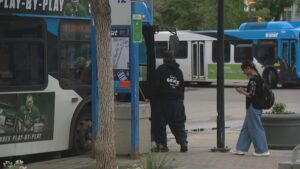
Pellegrini said public transport, with a flat fare of 50¢ in Queensland, became more attractive as fuel prices rose, but many private trips could not easily be replaced by another mode, particularly for people in outer suburban and regional areas.
“It quickly reaches a point where people need to decide which trips they can sacrifice,” he said.
An increase in fuel prices would see a sharp rise in avoided trips – by 90 per cent at $2.50 per litre, almost 190 per cent at $3 per litre, and more than 270 per cent at $3.50 per litre.
At present, people aged 60 and over are less likely to use rideshare and cycling, and would be less likely to cancel trips in response to higher fuel prices, with the study’s authors suspecting they travel more for essential activities.
Full-time workers currently drive more than others, and reported substantially greater public transport use, with fewer avoided trips.
Part-time workers tend towards public transport, cycling and walking, consistent with more flexible travel or more local trips.
Managers are more likely to use public transport, taxis and cycling, but would be less likely to avoid trips under the hypothetical price scenarios.
Having more bicycles in a home was associated with more walking trips, which the authors said may indicate households with stronger non-car mobility were also more likely to combine cycling with other forms of active travel.
Cycling increased modestly at higher fuel prices, while walking remained broadly stable.
People who already use public transport would be less likely to cancel travel, possibly because they already find it accessible and convenient, while others would still face issues related to public transport frequency, reliability and accessibility regardless of the fuel price.
Low-income families with a weekly household income below $999 drive substantially less to begin with, and people with higher transport disadvantage are less able to adapt and choose a different way to travel.
Lower-than-expected fuel prices stimulated extra travel more strongly than higher-than-expected prices suppressed it, with the authors theorising that many trips were already committed, limiting people’s ability to cancel, whereas lower costs may reduce pressure on household budgets and enable more discretionary travel.
During the study, from mid-March to the first week of April, petrol prices hovered between $2.20 and $2.53. Those costs were then softened by the fuel excise cut on April 1.
Electric vehicle sales jumped 50 per cent in the month after the war in Iran began, with Brisbane’s car-reliant suburb of Rochedale clocking the highest number of EV registrations outside the CBD.
But Pellegrini said steep upfront costs to buy an electric vehicle were a significant barrier for the households most affected by rising fuel costs.
“If people stop travelling because they can no longer afford their usual activities, the issue is not just transport,” he said. “It’s about access, equity and social participation. Responses to rising fuel prices need to go beyond simply telling people to drive less.
“Alternatives also need to be realistic, including reliable public transport, support for flexible work, and a fair and affordable transition to electric vehicles.”
Previous research from the University of Queensland asked 10 people to go car-free for 20 days in Brisbane. At the end, none wanted to continue.
After struggling to get around via public transport, walking or riding – and despite saving $300 – participants said it was too difficult to live in Brisbane without a car.
The federal government has announced the fuel excise cut will be extended for a month beyond the June 30 deadline, but it will be reduced to 16¢ a litre – half the 32¢ cut in place since April.
Fuel prices are well below the record highs of March, when unleaded petrol hit 258.9¢ per litre in Brisbane and diesel climbed to 327.6¢ a litre on April 10.
Forecasters expected fuel prices to continue to fall after the US and Iran signed a ceasefire agreement, although peace talks remained fragile.
Start the day with a summary of the day’s most important and interesting stories, analysis and insights. Sign up for our Morning Edition newsletter.
From our partners
Read the full article here