





Good morning. Angela Skujins here holding down the newsletter this week, with Mared Gwyn gracing your television screens as Europe Today’s anchor.
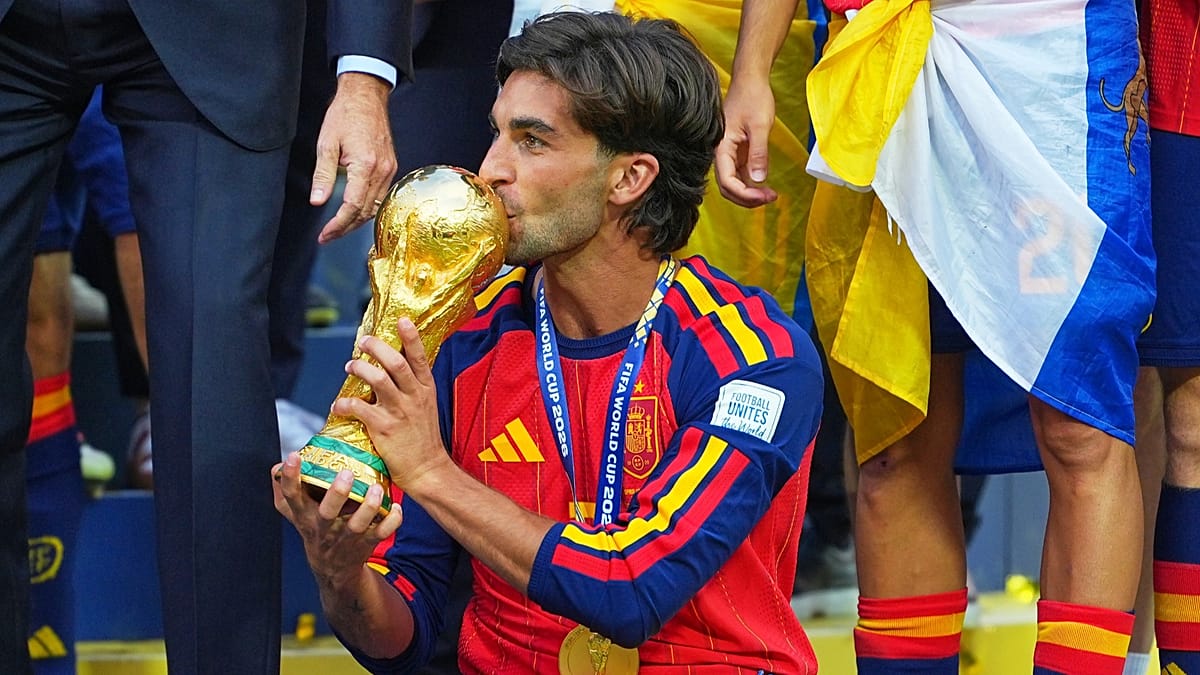
I am here to help you digest today’s news — as well as last night’s men’s FIFA World Cup final. The championship winner: Spain’s La Roja.
Felicidades España! For those who missed it, last night’s final in New Jersey was mostly goalless, but in extra time, Spain ended Argentina’s reign as world champions when forward Ferran Torres scored the singular goal of the match, giving Spain its second World Cup title.
“It was a goal scored by 47 million people,” Torres said when asked about the winning shot and referring to Spain’s population.
“I feel pride, to be honest,” said Spain coach Luis de la Fuente, who at 65 is now the oldest man to lead a team to a World Cup title. “Accompanying them on this journey is an honour.”
The final marked the end of the biggest tournament in the competition’s 96-year history. At the final whistle, a record 104 games were played across almost six weeks and three countries, with the jumbo tournament delivering nail-biting drama on and off the field, with highs, dramatic lows, impressive goals, Norwegian rowing, a Tartan takeover, and many other memorable moments.
But it was not only sportsmanship that drove almost five weeks’ worth of headlines.
It was the politics off the field, too, from US President Donald Trump’s apparent pressure on FIFA to reverse the red-card suspension of striker Folarin Balogu, to Belgian footballer Jeremy Doku, who missed a match to attend the birth of his son that drew criticism — and praise.
Who was at the final? Argentine President Javier Milei was not in New Jersey for the final, and instead opted to watch the match from Buenos Aires due to superstitions. Spanish Prime Minister Pedro Sánchez, however, made the trip to New Jersey, and was seated in the star-studded VIP section alongside US President Donald Trump and other high-profile guests.
Trump and Sánchez’s moment sharing a luxury booth in the MetLife Stadium came after months of friction over defence spending and US policy in the Middle East.
Relations have been improving in recent weeks, though, after Trump said Spain had “fully redeemed itself” by agreeing to a substantial increase in its North Atlantic Treaty Organisation (NATO) defence commitments at last month’s summit in Ankara.
We do wonder what, if anything, was said between the pair. But it appears before the game kicked off, Sánchez used an interview with Spanish public broadcaster RTVE to congratulate Trump on the 250th anniversary of the United States in a perceived attempt to curry favour.
Asked whether Trump might present the World Cup trophy to the winners, the Spanish prime minister avoided speculation, saying: “What matters to me is not who presents it, but who receives it.”
A loss for Trump. Despite the goodwill, Trump and FIFA President Gianni Infantino were booed during the presentation ceremony after Spain clinched victory, the Guardian reports. Trump appeared to stand with the team on the side of the stage before being ushered away by Infantino.
Going stateside. The EU’s justice chief Michael McGrath is visiting Washington on Monday in what is being touted as an “important moment” for the transatlantic relationship, the Commissioner’s media team told Euronews in a statement. Amid Greenland tensions and politics on the football pitch, McGrath will centre the meetings around the Digital Fairness Act and the online protection of minors.
“For European consumers and businesses, what happens in the US digital economy has a direct impact in Europe,” he said.
“We need strong transatlantic cooperation to ensure consumers are treated fairly online, understand how their data is used, and that children enjoy a high level of protection online.”
Musical chairs in London. Andy Burnham is expected to become the 59th Prime Minister of the United Kingdom today. He was officially declared Labour Party leader on Friday, having secured the votes of 379 members of parliament.
Today, he will need the official rubber stamp from King Charles III before taking over the top job, with many questions about how he wants to steer his mandate — particularly with the European Union.
Tim Bale, Professor of Politics at the University of London, just told Euronews’ flagship morning programme Europe Today that Bunham is expected to continue drumming up support for Ukraine, continue navigating an “erratic” US president and trying to move towards a closer relationship with the EU. Watch.
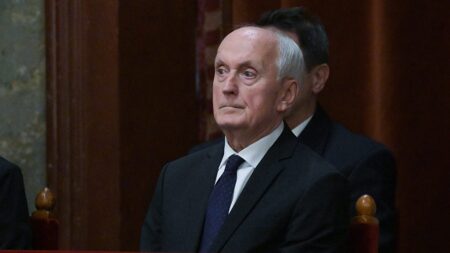
Musical chairs in Budapest. Starting today, the President of the Hungarian National Assembly, Ágnes Forsthoffer, takes over as temporary president. This is until the next head of state is elected, Sándor Zsíros writes in this dispatch.
Last week, Magyar removed the country’s president Tamás Sulyok, a figure he repeatedly referred to as the puppet of former prime minister and rival, Viktor Orbán.
Who is tapped for the top job? Judit Polgar, the greatest female chess player of all time, has been recommended for the prime ministerial position. “I will meet her tomorrow, and will ask whether she is ready to serve our country in a new role until the new constitution is passed,” Hungarian Prime Minister Péter Magyar wrote in a Facebook post over the weekend.
Musical chairs in Kyiv. Ukrainian President Volodymyr Zelenskyy may replace his commander-in-chief today as protests enter another day regarding a wider ministerial reshuffle.
Yesterday, Zelenskyy held talks with Ukraine’s military leadership, including Mykhailo Drapatyi, who has been widely backed by civil society to take up the role of commander-in-chief.
Back to Brussels. European Commission President Ursula von der Leyen will receive former Italian Prime Minister and European Central Bank President Mario Draghi for an exchange on EU competitiveness. Press officers refused to brief reporters, including Euronews’ own, about what the meeting was about beyond this theme.
21st sanctions headache. Ambassadors, together with the European Commission, will scramble this week to find a solution that can finally lift what has been dubbed a Greek tragedy and enable a deal on the already watered-down sanctions package against Russia before the summer break.
Finalising the 21st sanctions package has bumped into the formidable resistance of Greece, which is pushing to reopen a ban on Russian LNG agreed last year to allow the continuation of transport, Jorge Liboreiro reports.
The demand is closely linked to Dyangas, a company owned by Greek billionaire George Prokopiou, who, by the way, also controls another firm that makes millions carrying Russian oil.
Dynagas and its subsidiary have chartered 11 vessels, including seven Arctic-resistant icebreakers, to the Yamal facility, Russia’s largest LNG producer.
Dynagas says that the full ban on Russian LNG risks becoming a “self-inflicted blow to Europe’s maritime capacity, Arctic shipping expertise, employment and strategic influence, while failing to achieve its intended geopolitical objectives”.
It also warns that breaching long-term contracts with Yamal, some going as far as 2065, could trigger a debt default and render its icebreakers useless. These are essentially the same arguments that Athens is using in Brussels to ask for the 2025 legal text to be reopened and adjusted.
“It’s really a dilemma,” a senior diplomat told Jorge. “I’m glad I’m not the Greek prime minister.”
Major wildfires continue as Spain’s burned area reaches 70,000 hectares this year
Two major wildfires remain active in north-eastern and central Spain, with emergency services focusing on a blaze near La Mierla in Guadalajara province and another near Orés in Zaragoza province. Together, they are already among the country’s most destructive fires for 2026.
The fire near La Mierla, around 100 kilometres north-east of Madrid, began on Thursday and has burned almost 13,000 hectares, according to the latest official figures.
During the early hours of Sunday, firefighters concentrated on two areas. Crews directly attacked the southern edge of the blaze near Gascueña de Bornova, while others worked to protect the villages of Navas de Jadraque and Bustares.
Authorities have now evacuated 16 villages and surrounding areas, including communities near the Beleña reservoir.
Read the full story.
More from our newsrooms
Iran launches retaliatory strikes after ninth night of US attacks
Intensifying fighting between the United States and Iran has largely halted traffic through the Strait of Hormuz, driving the price of Brent crude to $90 a barrel. Evelyn Ann-Marie Dom has more.
Thousands of Italian military and police personnel march in Rome over pay and pensions
Around 6,000 members of Italy’s armed forces and security services marched through Rome on Saturday, demanding higher pay, better pensions and stronger workplace protections. Fortunato Pinto has the details.
German Chancellor Merz hints at possible cabinet reshuffle after top CDU figure resigns
German Chancellor Friedrich Merz has hinted he could reshuffle his government after Jens Spahn resigned as parliamentary leader, adding to pressure on the ruling conservatives ahead of key regional elections. Read the story by Kirsten Ripper.
We’re also keeping an eye on
- The European Commissioner for Environment, Water Resilience and a Competitive Circular Economy, Jessika Roswall, holds a video conference call with the EU co-chairs of the UN water conference 2026.
- The European Commissioner for Fisheries, Costas Kadis, meets with Joao Vasco Costa, Vice-President of the Regional Assembly of the Azores in Faial, Azores, Portugal.
That’s it for today and for this week. Sándor Zsíros, Sasha Vakulina and Jorge Liboreirocontributed to this newsletter.
Read the full article here