




If you’re shopping for a new TV during Prime Day this year, you’ve probably noticed that the terminology for different display types has gotten a bit overwhelming. From QLED to OLED to RGB mini-LED, the biggest challenge in choosing a new TV might be deciphering all the confusing jargon.
A second problem is deciding which advances in the color TV revolution matter most to you. Some people really want their HDR highlights to pop. For others, it’s all about the color richness and color accuracy. And then there are the home-theater enthusiasts who prioritize perfect blacks and cinematic image quality.
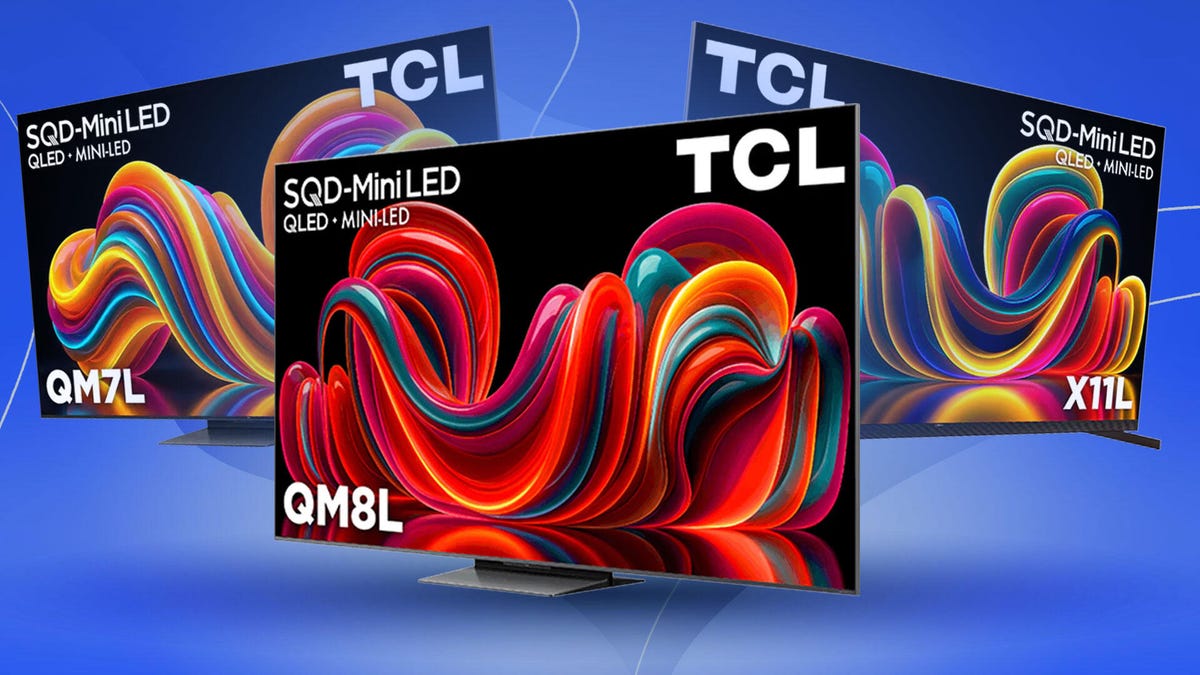
The newest premium TV options all offer improvements in different ways, which means there’s no single option for the “best” picture quality. It all depends on what matters to you. TCL’s new SQD Mini-LED technology, which stands for Super Quantum Dot mini-LED, might offer the best balance between all the recent advances in color, sharpness and brightness.
Here’s what to know about different display technologies and how to choose the one that’s right for you.
The tradeoffs between QLED, OLED and RGB mini-LED
QLED
QLED, or quantum dot mini-LED, TVs have become popular because they combine a mini-LED backlight with quantum dots. A quantum dot is an extremely small semiconductor particle (typically only 2–10 nanometers across), which allows for precise tuning of colors. QLED gives you high brightness, rich color, and strong performance at large screen sizes.
They’re particularly great if you have a bright living room or enjoy sports or gaming. The trade-off is that QLED still relies on a backlight, so some scenes may show blooming or halo effects around bright objects on dark backgrounds.
OLED
OLED TVs take a completely different approach. Each pixel can turn on or off independently. As a result, the black levels and contrast are exceptional, making them the go-to choice for those who want the full home cinema experience.
The tradeoff is brightness: OLED may be less ideal for very bright rooms, very large screens or prolonged display of static images (they carry a risk of image burn-in that other display technologies don’t).
RGB mini-LED
RGB mini-LED pushes color further than either of these two. By using red, green and blue backlights, the colors practically leap off the screen. If you value color brightness, color volume, or HDR impact, RGB mini-LED is the way to go.
Of course, because each RGB mini-LED group covers many pixels, colors can sometimes bleed together in complex scenes.
SQD Mini-LED: cleaner light, pixel-level color control
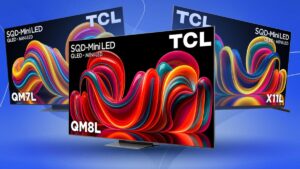
The most recent evolution in the TV color revolution is TCL’s SQD Mini-LED. While other brands are leaning into RGB mini-LED, TCL has focused on improving the quantum-dot system itself. The goal is to produce a cleaner, more color-rich light source and then use advanced color filters to create the final color at the pixel level. The fact that color is managed at the pixel level, rather than across a zone of multiple pixels, really matters.
In an SQD Mini-LED TV, the quantum dots that provided more saturated reds and greens in previous QLED models are taken to a new level. TCL calls this “super quantum dots” because you get not only enhanced color filtering and color-management systems, but also advanced local dimming and halo-control technologies. This innovative refinement of the quantum dot system addresses some of the major concerns that consumers faced with older QLED TVs.
Of course, SQD Mini-LED technology doesn’t eliminate every LCD limitation. Local dimming, processing, viewing angle and panel quality are not quite perfect. But the promise is clear: The color is wider, more reliable, and more consistent in the kinds of content you watch every day, providing for a solid balance among recent advances in television technology.
What to look for in TCL’s Prime Day TV deals
Whatever you want your new TV to excel at, TCL has Prime Day deals that’ll get you the perfect option at a price you’ll love. Here are a few of the TCL models discounted during Prime Day.
Read the full article here