




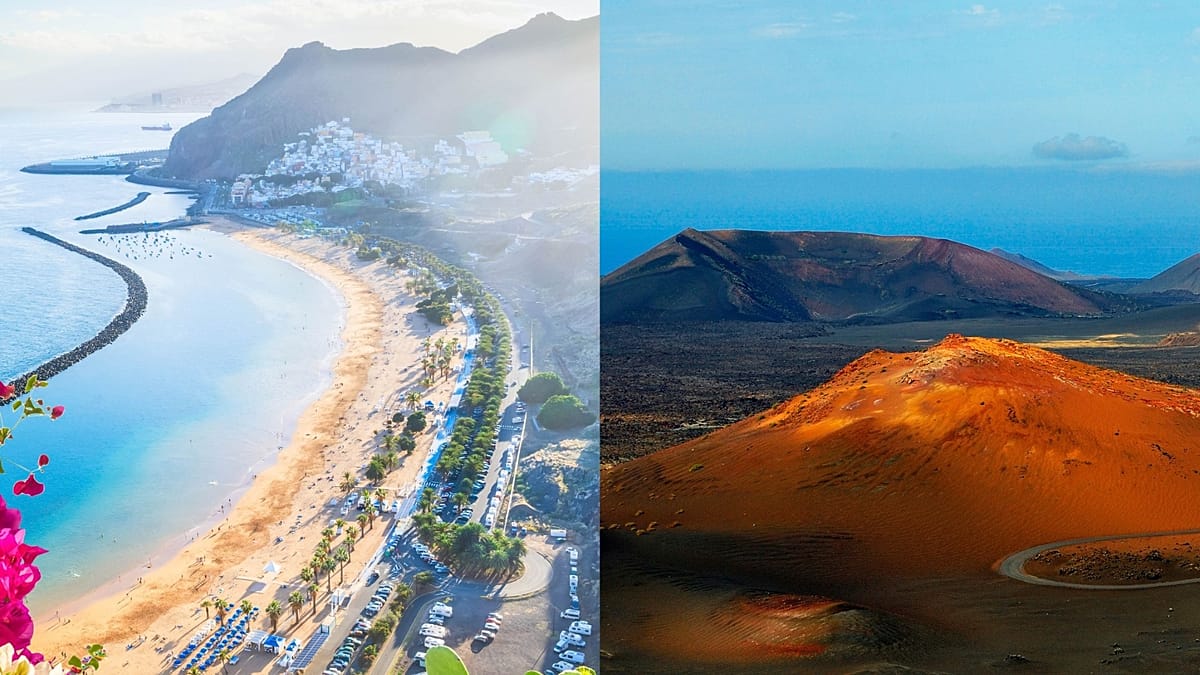
Planning a Canary Islands getaway? Tenerife and Lanzarote are two of the biggest names in the archipelago, but choosing between them isn’t always straightforward.
Both offer sunshine, beautiful beaches and dramatic landscapes, yet the experience on each can be surprisingly different. Tenerife combines volcanic scenery with lively resorts, lush countryside and plenty to do, while Lanzarote is known for its stark landscapes, distinctive architecture and laid-back feel.
As a fan of the Canary Islands as a year-round destination, I’ve been to both Tenerife and Lanzarote twice, and they both offer significant charms, whether you’re looking for adventure, nightlife, culture or somewhere to properly switch off.
Here’s how the two stack up.
Tenerife
If you think of the Canary Islands, Tenerife will likely be the first island which comes to mind. That’s probably because it’s the largest and most developed among the islands, and a popular spot for families and couples alike.
One thing it definitely offers is fun. For thrillseekers of all ages, a visit to Siam Park in Costa Adeje is a must. The attraction is frequently named as the best water park in the world by the likes of Tripadvisor and offers countless slides and pools.
Loro Parque is a favourite for animal lovers, and has been ranked among the best zoos in the world by the Tripadvisor Travellers’ Choice Awards.
Culture is a big deal here, too, and especially in February and March, when the Carnival of Santa Cruz – one of the world’s biggest carnivals after Rio de Janeiro – comes to town.
Year-round, a visit to the Óscar Domínguez Institute at the Tenerife Espacio de las Artes is well worth it, as it houses a major collection of paintings, drawings, and surrealist objects by the Tenerife-born artist.
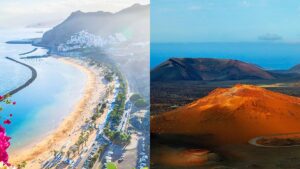
There are plenty of beaches here for all tastes, from volcanic sand in spots like Playa Jardín to golden sand at Playa de las Teresitas and dramatic coastal scenery at Los Gigantes.
Much of Tenerife is admittedly fairly busy, but there are spots for those who crave peace and quiet.
If that sounds like you, head to the less-developed north of the island, especially Garachico, which boasts cobbled streets and the natural lava pools of Piscinas Naturales El Caletón, and the UNESCO World Heritage Site of San Cristóbal de La Laguna, with its rich history and colourful buildings.
Tenerife is a hiker’s dream, too. The entire island is dominated by the Pico del Teide volcano, the tallest peak in Spain, crisscrossed with some incredible hiking trails.
While there are plenty of cheap and cheerful accommodation options on Tenerife, there are also plenty of stylish hotels for a chic stay.
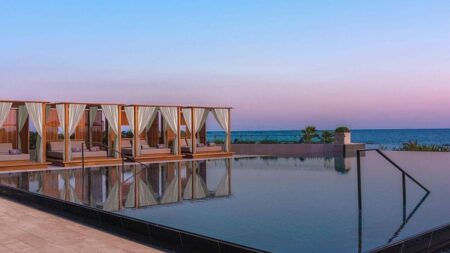
The Royal Garden Villas Luxury Hotel and Spa in Costa Adeje has 28 rooms, all with their own private pools, and the Gran Meliá Palacio de Isora has the largest saltwater infinity pool in any European hotel, measuring a staggering 400 metres.
For me, Tenerife wins on sheer variety. It’s easy to spend a week here without feeling as though you’re doing the same thing every day. It’s also a little more accessible than Lanzarote thanks to its two airports and more frequent daily flights – but, of course, that’s not the be-all and end-all for a perfect trip.
Lanzarote
While Tenerife does pack a significant cultural punch, it is arguably overshadowed by Lanzarote, which is really the Canary of choice for those looking for a holiday less ordinary.
That’s down to a significant extent thanks to the late artist, architect and visionary César Manrique. Not only does his lasting influence mean that all houses are painted white and there are very few buildings higher than two storeys anywhere on the island, to make sure that the architecture works with the volcanic landscape rather than competing with it, but his creations are really a must-visit here.
The César Manrique Foundation, open to the public, is housed in his former home, in a structure built into volcanic rock with rooms built into natural volcanic bubbles, all complemented with mid-century furniture.
Manrique’s Jameos del Agua caves are an incredible example of nature meeting art, inside a lava tube created by the eruption of the Corona Volcano. See an indoor lake formed by seawater seepage, and inhabited by the albino blind crab, a species endemic to Lanzarote. It’s also the site of a really striking restaurant, where you can sample local cuisine inside a volcano tunnel.
There’s so much more to Lanzarote than Manrique’s legacy, though.
It’s an unusual-looking place overall, with a lunar-esque landscape made up of 300 volcanic cones and vast black lava fields that give parts of the island an almost otherworldly feel.
The unusual scenery extends to its vineyards, particularly those in La Geria, where grapes are grown in volcanic soil and wine is produced in a way that’s unique to the island, and Timanfaya National Park, which is the best place to see unique geothermal demonstrations.
Lanzarote is also a favourite with road cyclists, thanks to its winding network of routes, while surfers will find plenty of laid-back spots along the coast. It also boasts beautiful beaches, too, from the golden sands of Playa Blanca to the more rugged coves around Papagayo.
A good chunk of the accommodation here tends to feel a little more boutique and design-led than on Tenerife.
Finca Malvasia, a rustic converted farmhouse with a dreamy pool and flanked by volcanic vineyards, has played host to fashion shoots, while Hotel Palacio Ico is located in a 17th-century Teguise palace and has a Michelin-recommended restaurant.
For me, Lanzarote is the more distinctive island. Tenerife has more to do, but Lanzarote has a stronger sense of place, and it is difficult to find anywhere else in Europe that looks – or feels – quite like it.
Whichever island you choose, be sure to try some edible Canarian classics, from Papas Arrugadas, local potatoes boiled in salty water until wrinkled, to Sancocho Canario, a traditional salted fish dish perfectly complemented by flavoursome mojo sauce, a staple of Canarian cuisine.
Read the full article here