







Some concepts on display at trade shows are simply bald attempts at garnering attention on a noisy and crowded show floor. And then there are others that provide actual glimpses into the future. Lenovo’s Project Aero falls into the latter category. (I’d put all of its rollable display concepts into the former: fun to see in action, but not something I’d look for in my next purchase.)
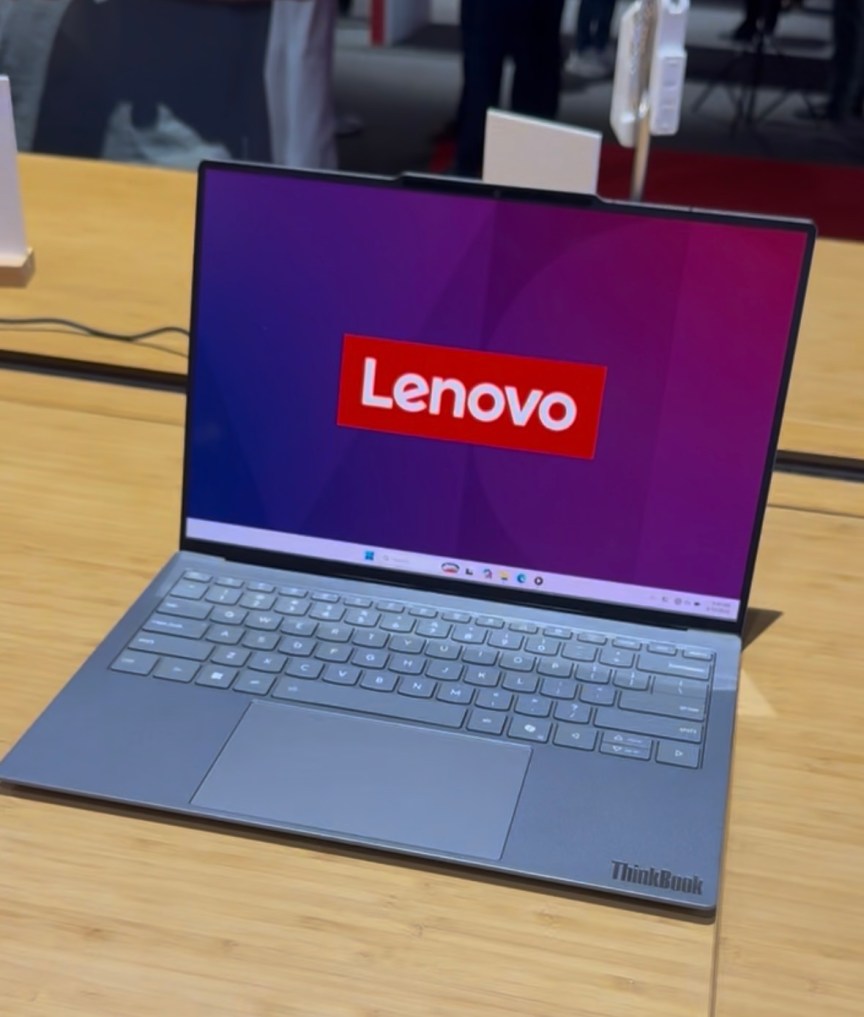
There wasn’t much to the ThinkBook laptop used for Lenovo’s Project AeroBlade concept that would get you to stop and take notice. Other than being thinner and lighter than the typical laptop, it looked like a run-of-the-mill business ultraportable. And the Project AeroBlade demo wasn’t particularly compelling on the surface. The laptop’s screen didn’t magically expand at the press of a button to draw oohs and aahs. But under the hood, there was some tech that I hope moves from concept to reality before I need to buy my next laptop.
Active cooling without fans (and their noise)
The concept of Project AeroBlade is moving air in and out of the ThinkBook without the use of any traditional cooling fans. Lenovo calls it Active Flow, a solid-state active cooling system. Instead of fans, Active Flow uses small AirJet modules from Frore Systems. We’ve seen Frore’s AirJet modules before, but this is the first time we’ve seen them in an actual laptop.
AirJet modules use ultrasonic vibrations to pull cool air into the laptop and expel hot air out of it. These tiny modules are about the size of a mobile processor and are just 2.7 millimeters thick, and yet they are incredibly powerful. According to a Frore representative, an AirJet creates 10 times the back pressure, or suction, of a traditional laptop cooling fan.
With four AirJet modules inside instead of a pair of cooling fans, the ThinkBook that Lenovo used for its Project AeroBlade was impossibly thin and light. It was a 14-inch laptop that was only 11mm thick, or about 0.4 inches thick, and weighed just 1.8 pounds. When I picked it up, it felt like a movie prop — an empty shell of a laptop rather than an actual operating machine.
In addition to being very compact, the laptop looked extra polished with a bottom panel that was solid and smooth. Because the AirJets are more effective at moving air in and out of the laptop, the ThinkBook could be designed without any bottom intake vents. All of the air is pulled in and pushed out of a thin vent along the laptop’s back edge.

Powerful and portable
The promise of Project AeroBlade is getting higher-powered CPUs in thinner and lighter designs. With fanless laptops, you must sacrifice some performance in the form of a low-voltage or throttled processor for the thinness and lightness.
The ThinkBook on display was running a mainstream Core Ultra 7 Lunar Lake 17-watt chip. I wonder if it’ll be able to accommodate a 25-watt Panther Lake or just a lower-wattage WildCat Lake that’s closer in thermal design power to Lunar Lake. And with the laptops we’ll soon see with Nvidia’s RTX Spark, can we look forward to a combination of a 38-watt RTX Spark and AirJet active cooling in the near future?
Lenovo’s Latest Laptop Gives Off MacBook Neo Vibes
Another AirJet benefit is acoustics. Like a fanless laptop, the ThinkBook operates in silence but with active cooling that moves air in and out. I could not hear or feel the AirJet modules’ vibrations as they worked.
Further, without any moving parts, the laptop should last longer. Traditional cooling fans get gummed up with dirt and dust and, with their moving parts, are a common point of failure. I’d equate it to solid-state drives generally lasting longer than hard drives with spinning platters.

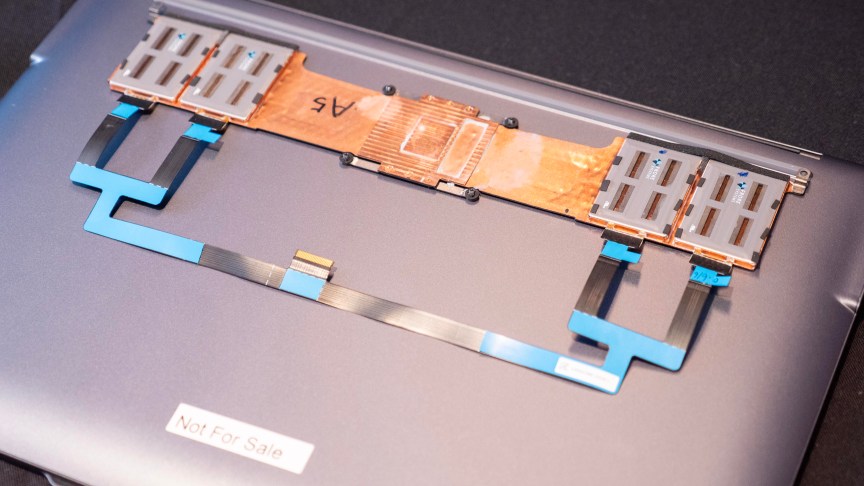
Lenovo wouldn’t comment on when this concept might turn into a final shipping laptop. And Frore didn’t say if it was working with other laptop manufacturers in addition to Lenovo. But given how much thinner and smaller the AirJet modules are in comparison to cooling fans, plus the fact that they can be located in different areas of the motherboard where heat dissipation is needed the most, implementing them will require a rethinking and reworking of laptop motherboard architecture. This reengineering will require some time, but I’m hoping we will see Lenovo release an AirJet-cooled ThinkBook next year. I also hope Frore’s AirJet tech will spread to other laptops beyond Lenovo’s.
I can envision a not-so-distant future where cooling fans inside laptops become as antiquated as traditional spinning hard drives.


See full bio
Read the full article here