



The first high-profile politician to resign due to an NSW Independent Commission Against Corruption inquiry was the man who set it up. Coalition premier Nick Greiner had promised to establish an anti-corruption body in the lead-up to the 1988 election after a series of scandals involving ministers and the judiciary. It was to be fearless, armed with strong powers and independent from the executive government.
It was formally established in 1989. A few years later, it pursued Greiner himself over allegations he’d engineered a public service job for an MP to secure a byelection in his seat.
Greiner was the first of three premiers, and many more ministers, party officials and public servants, to have their careers abruptly ended due to an ICAC inquiry. Many feel hard done by. While any organisation with such power should be subject to ongoing scrutiny, the people of NSW have been well served by the corruption watchdog’s independent, watchful eye on elected and public officials.
Over almost 40 years, there have been more than 80 inquiries. Some are forgettable; some are part of NSW folklore. The Aldi shopping bag full of cash. The bottle of Grange that led to the resignation of Liberal premier number two, Barry O’Farrell. The half a dozen-odd inquiries that involved corrupt former Labor MP, Eddie Obeid.
Often forgotten in the mists of time, but no less gripping or consequential, were the 1992 inquiry in which murderer Neddy Smith named corrupt police and said they’d given him the “green light” to commit crimes, and a 2002 investigation into the dramatic theft of 2000 zoological specimens by the Australian Museum’s pest inspector, which included a stuffed lion he put in his four-wheel drive.
This year has already been a bumper one for ICAC. First came a probe into the conduct of the “Pink Ladies” at Parramatta Council, who were accused of plotting to stack the council staff with their friends and cronies. Then came a hearing, still under way, into conflicts of interest and biased recruitment processes at the University of Wollongong (on Friday, chancellor Michael Still stood down).
But the year’s most consequential inquiry is yet to come. This week, ICAC announced imminent hearings for Operation Rosny, an inquiry that’s expected to ricochet across councils, developers, Catholic education and, most significantly, politics – particularly the NSW Liberal Party. As a state election approaches in March, the party is holding its breath in anticipation of who might be named or called upon as a witness.
The hearing begins at the end of the month, and will last for eight weeks. It will probe allegations of dodgy donations, claims of attempts to damage the career of a cabinet minister and unseat the building commissioner, and accusations that money from Catholic Schools NSW was used to prop up branch stacking schemes.
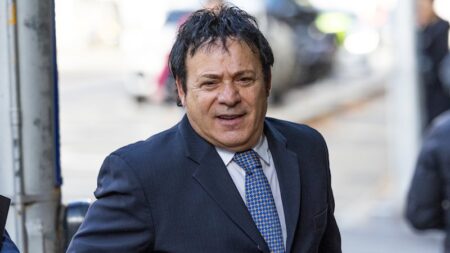
It will examine the actions of fugitive developer Jean Nassif; of two brothers of the former premier Dominic Perrottet, Charles and Jean-Claude; of influential members of the Liberal Party; and of Strathfield councillors Sharangan Maheswaran and Karen Pensabene.
The Herald’s coverage will be knowledgeable and comprehensive. The team will include Kate McClymont, who has been covering ICAC inquiries since it probed allegations by Kings Cross identity Louis Bayeh that he gave cash and gifts to a NSW MP in the late 1990s; Alexandra Smith, who covered every twist and turn in the inquiry that led to the resignation of Liberal premier number three, Gladys Berejiklian; and Bevan Shields, whose experience in state and federal politics gives him peerless insight into the characters and machinations at both levels, and how they intersect.
For those who need a primer ahead of a big few months in the commission, and in NSW politics, Ben Cubby takes you through what we know so far in this piece; Smith takes you back to where it began, a speech in parliament four years ago; and Shields explains why the hearing will rock Sydney.
Have a good weekend.
Start the day with a summary of the day’s most important and interesting stories, analysis and insights. Sign up for our Morning Edition newsletter.
From our partners
Read the full article here