





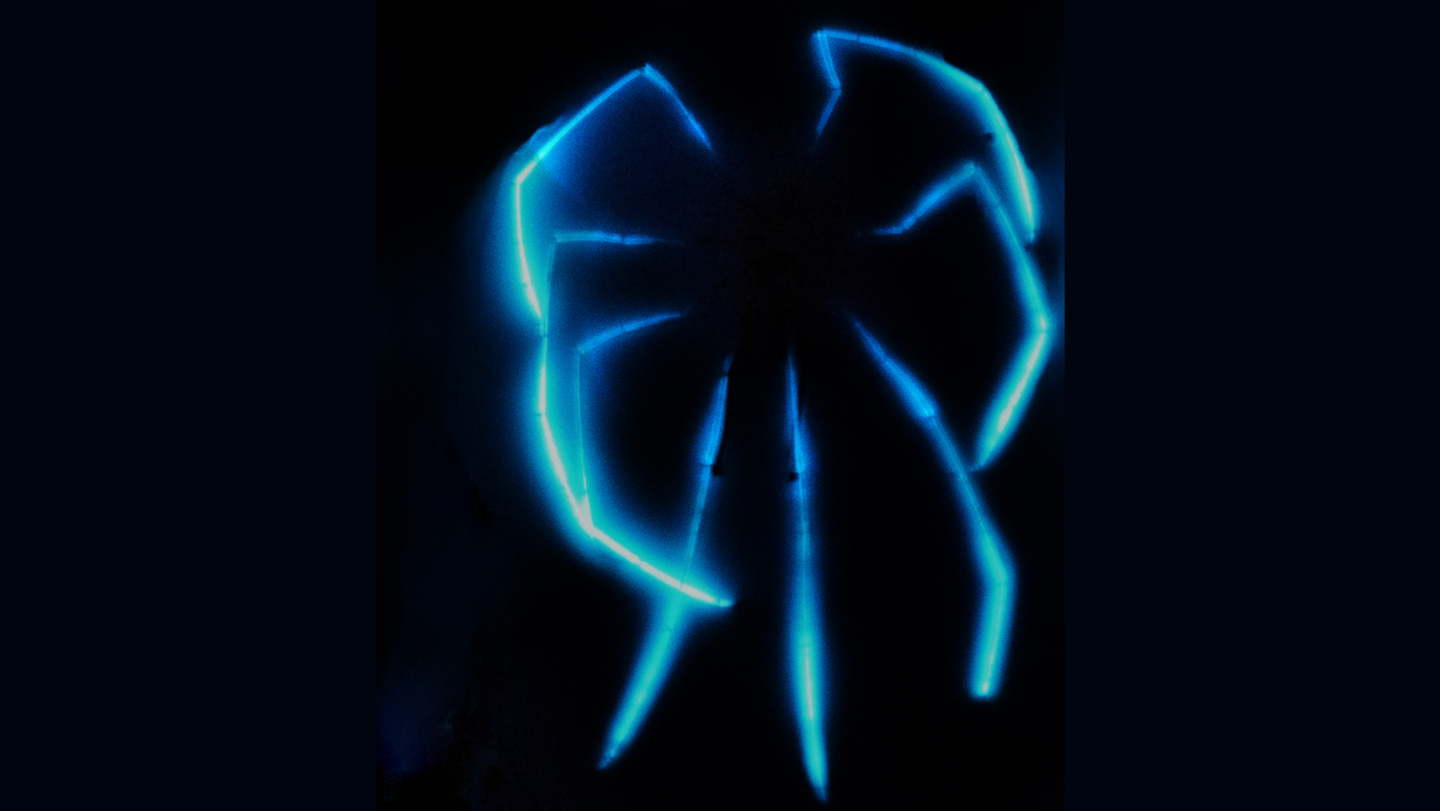
In the deep, dark Australian Abyss, what’s visible can be scarier than the unseen. There, giant sea spiders with glowing 25-centimeter-long legs may scuttle like disembodied apparitions.
Photos of these creatures unambiguously confirm that they exhibit bioluminescence, researchers report in the October Deep Sea Research Part I: Oceanographic Research Papers.
“It’s quite impressive for people scared of spiders,” says Jérôme Mallefet, a marine biologist with the Catholic University of Louvain in Belgium.
Mallefet and his colleagues discovered this phenomenon on a 2017 expedition to survey part of the deep-sea trench off southeastern Australia. Working out of a makeshift darkroom aboard the RV Investigator, he tested any of the 25,000 specimens suspected of bioluminescence hauled up in nets from up to nearly 5,000 meters deep. Some 76 percent of deep-sea creatures produce their own light — and it’s a trait that dates to 540 million years ago.
“I spent most of my time in 6° Celsius, in a dark cold room,” Mallefet says. “I believe I was a little bit crazy, but I like that.”
Poking the biggest of these sea spiders(Colossendeis tasmanica) raised a dim light. But adding potassium chloride, which can excite bioluminescent cells, had them glowing for up to 10 minutes, Mallefet and his colleagues showed. Another giant sea spider, C. minor, also exhibited bioluminescence.
The images confirm sporadic descriptions of bioluminescence in sea spiders, including a particularly poetic one from more than a century ago: “The creature, as it lay on its back, shone like a star, all its legs being lit along their ventral surface with a strange blue radiance.”
Most of the glow is on the underside of their legs, where their digestive tract is located, Mallefet says. That suggests that these spiders might get their bioluminescent properties from creatures they eat like sea anemones, the team speculates.
Three sea spider species — C. tasmanica, C. Minor and another without bioluminescence — also fluoresced in green when Mallefet shone ultraviolet and blue light on them. Several amphibians and even platypuses are also fluorescent, glowing under certain wavelengths of light.
Mallefet isn’t sure why sea spiders fluoresce, but speculates the bioluminescence could be to attract mates. Or, since the light is visible only in the appendages, they might use it to see prey on the seafloor and, once zeroed in, collapse onto their victims, using a needlelike appendage in their proboscis to liquefy and suck up tissue. But this kind of scientific enlightenment will require taking imaging to the next level, with deep-sea video.
Read the full article here