


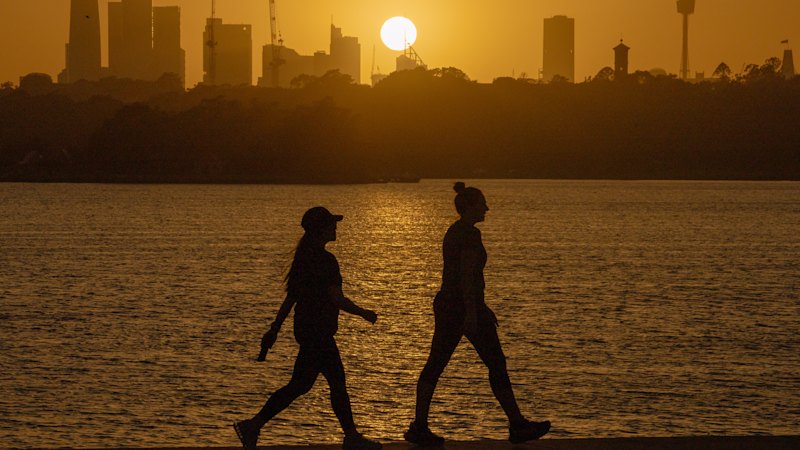
A total fire ban is in effect for Sydney on Saturday, with the city set to reach up to 33 degrees just five days into spring.
An extreme fire danger has also been recorded for the region stretching from the coast to Mount Victoria, coming days after Sydney experienced its warmest winter in 167 years of records.
Sydney is forecast to record 27 degrees at noon on Saturday, stretching to 33 degrees by 1pm.
The Bureau of Meteorology’s Robert Urbaniak said the “very dry, very windy” conditions combined with low humidity would increase the risk of fire.
“There will be mean winds of up to 50km an hour, together with wind gusts of up to 70km an hour. Combined with very low relative humidity, around 20 per cent, that will basically drive the fire danger,” he said.
“When the humidity goes right down, it dries out the fuel.”
The temperatures are above average for this time of year, he said.
“The average maximum temperatures [for September[ in Penrith are 23.5 degrees, in the east about 22.5 degrees. And by contrast today we’re looking at a maximum of 32 in Penrith and 33 in the city, around 10 degrees warmer than average.
“These wouldn’t be September records but they are unusually high, especially for early in September, and combined with the wind being so strong, it’s relatively out of the ordinary.”
Fire bans are issued by authorities when hot, dry and windy weather conditions dramatically increase the risks of fires breaking out. No fires are allowed out in the open.
Electric barbecues can be used and gas barbecues if they are being used by a responsible adult, no combustible material is within two metres, the operator has access to an “immediate and continuous” supply of water, and if they are being operated within 20 metres of a private dwelling or is in a designated picnic area approved by the relevant authority.
The fire danger rating is forecast to return to moderate over the coming days.
As more Sydneysiders flock to beaches, the NSW government this week also announced the installation of two shark listening stations in Sydney Harbour and an increase in the hours shark surveillance drones would be flying along the coastline.
More to come
Get to the heart of what’s happening with climate change and the environment. Sign up for our fortnightly Environment newsletter.
From our partners
Read the full article here