






Holiday shopping is expected to look much different this year with tighter budgets and higher prices. CNET’s annual holiday shopping survey found that close to three of every four holiday shoppers (73%) plan to buy tech this holiday season, and they expect to spend an average of $808 on tech products and services during that time. But is that enough, given the RAM shortage driving higher everyday costs?
CNET’s shopping team has been tracking price increases across tech since mid-2025, and CNET’s director of commerce content, Russell Holly, says even steep discounts aren’t lowering prices as much as before. But there’s a lot that goes into holiday shopping this year, including a smaller shopping budget and frustrations such as misleading discounts and inflated baseline prices.
The holidays are fast approaching, and early holiday sales are coming up, like Amazon’s Prime Big Deal Days on Oct. 6-7, and Walmart’s Deals & More sale on Oct. 5-11. So you’ll need to do some planning and know when to buy tech must-haves amid the shopping chaos. Here’s what US adults expect during the upcoming holiday shopping season and how to find deals without overspending
Key findings
- Nearly one-third (32%) of US adults plan to start holiday shopping before November, and 27% plan to shop during sales.
- US adults plan to spend less on holiday shopping compared to last year. This year, holiday tech shoppers plan to spend an average of $808 on consumer tech products and services – that’s $123 less than last year’s holiday shopping average.
- Most shoppers (84%) expect purchasing frustrations like misleading discounts (43%), instant product sellouts (39%) and inflated baseline prices (35%).
- US adults plan to buy toys and kitchen items more compared to tech items like headphones, phones, TVs and laptops.
Most US adults plan to shop early and spend less
Most US adults aren’t waiting until the usual Black Friday and Cyber Monday sales in November to start holiday shopping. CNET found that close to one-third (32%) will start holiday shopping before November. Many have already started or plan to by October. By month, 27% of US adults plan to shop in November, while 18% plan to shop in October. And as the holidays inch closer, 11% say they will shop in December.
Over a quarter of US adults (27%) plan to take advantage of savings events, like Amazon’s and Walmart’s upcoming holiday sales, while 18% of those shopping between October and November don’t plan to. The big question is whether or not the sales are worthwhile. Holly says it comes down to when you find a deal that’s worthwhile.
“The best time to buy is the moment you see something you want on an actual discount, because increased prices can come at any time,” Holly said.
Even if tech’s not high on your shopping list, the right deals may make you reconsider.
CNET’s deals team spends hours making sure sales are legitimate — not just a fake price drop. And in the coming weeks, they’ll track deals on devices like laptops, headphones, wearable devices and smart home gadgets, plus alternatives to more costly tech, to help you determine what’s worth buying now or later.
You can also check an item’s price history to see if you’re getting the best deal by using price trackers like CamelCamelCamel and comparing prices across retailers before buying. But as Holly noted, if you want to upgrade your personal devices, don’t wait. Look for the best price you can find and buy it right away. Otherwise, prices may go up while you wait.
US adults plan to spend $123 less than holiday shopping last year
Last year, CNET found that US adults planned to spend an average of $931 on holiday shopping. This year, shoppers are planning to spend less.
On average, they expect to spend $808 on holiday shopping. That’s $123 less than last year. Some generations plan to spend more, such as Millennials, who anticipate an average holiday shopping outlay of $1,074. Boomers will spend around half that amount — $582.

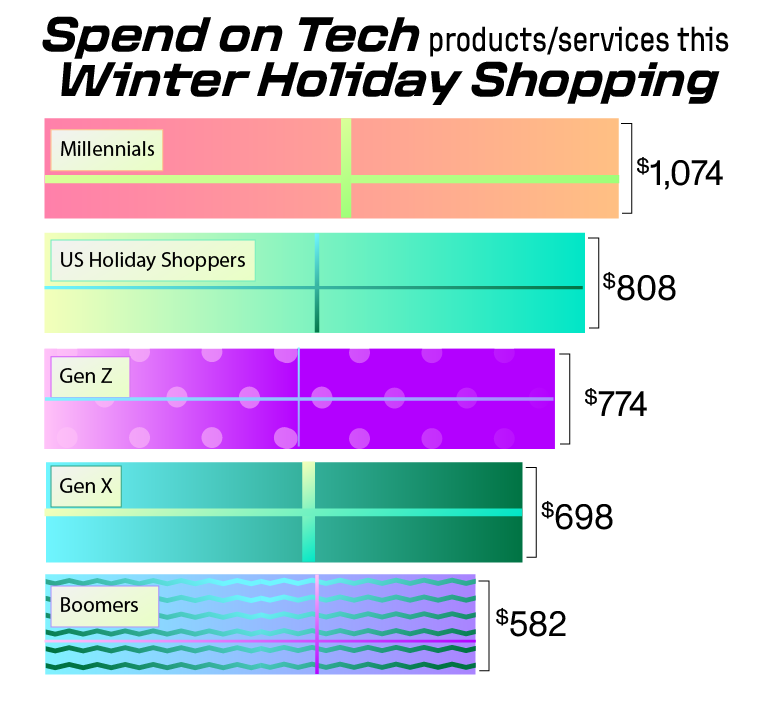
Higher everyday living costs could explain why holiday budgets are lower.
“Everything else being more expensive means less left over for gifts,” said Holly. “There’s very little indication that component prices are going to come back down anytime soon, so if you’re hoping for the kinds of prices you saw even two years ago, I would say you’re going to be waiting quite a while.”
Balancing holiday gifts and everyday basics on your usual income can be a lot to handle. Now’s the time to set holiday expectations, including a budget and a list of must-haves, along with more affordable options that still meet your needs.
Then keep checking prices and deals from your trusted retailers and be prepared to buy when you spot good savings. Most importantly, try to avoid using credit cards and buy now, pay later plans that can lead to debt. The Federal Reserve’s recent rate hike will push borrowing costs higher, making debt more expensive through higher credit card and loan interest rates.
Nearly 3 in 4 plan to buy tech this holiday season
CNET found that 73% of shoppers plan to buy tech products or services this season, but what most US adults plan to buy and how much they plan to spend may surprise you.
Thirty percent of shoppers plan to purchase toys, and 25% plan to buy kitchen items, like air fryers and cookware. But shoppers don’t plan to buy as many personal electronics and home entertainment products. Only 20% plan to buy headphones or earbuds, and even fewer plan to buy video games for consoles (18%) or laptops and TVs (11%). More shocking is that only 13% plan to buy phones. We’ve seen prices increase across popular tech devices and brands due to the RAM shortage, which has led to low supply and high demand for memory chips.

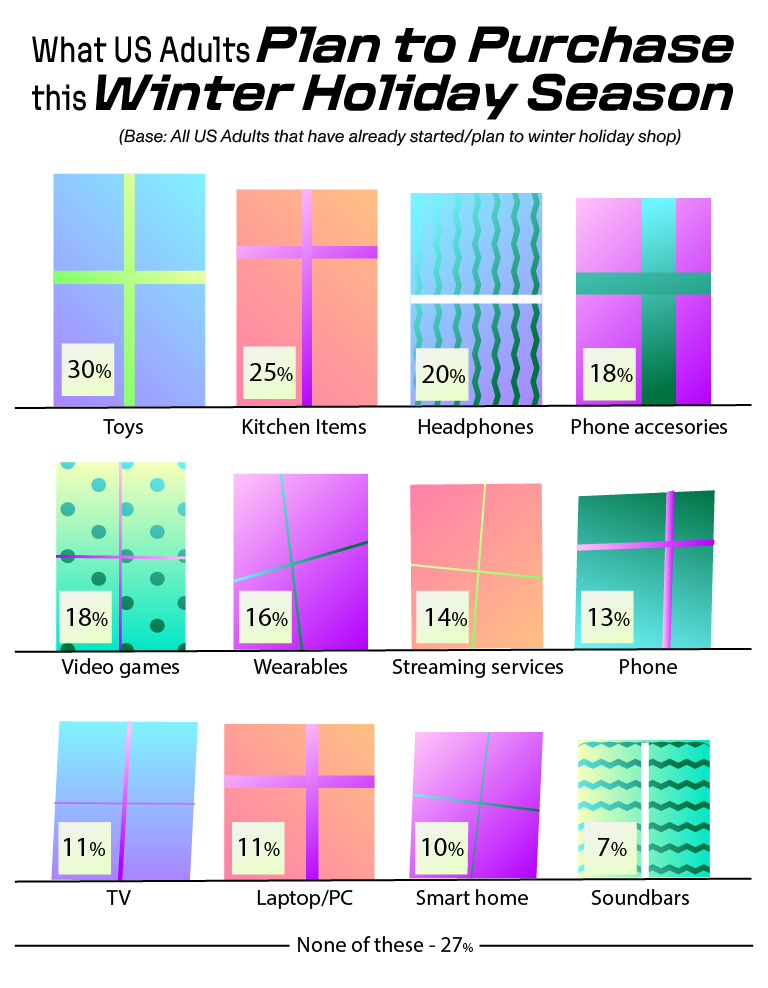
Some of the latest releases cost way more than the average $808 most US adults plan to spend. For instance, the $2,000 iPhone Duo by itself costs even more than the average $1,704 that Millennials plan to spend on tech this holiday season. And less costly phones are still beyond holiday budgets, like the $1,200 iPhone 18 Pro Max, and even the iPhone 18 Pro is $1,200. Trade-in offers and sales can help lower that cost if you’re planning to upgrade, but shop around and compare deals before buying.
Increased prices may make you reconsider whether to stick with your current model or upgrade, but remember, you have options.
“If the current laptop works well enough, upgrading can either be viewed as a luxury purchase for later or shifted to buying used or refurbished models to save extra,” Holly said.
You may also consider a slightly older model of the device you’re looking for. It could still have all of the features you need, but cost less. Another money-saving option is to consider refurbished tech that’s in excellent or good condition from a certified refurbished retailer. You may still notice some price increases due to demand, but it could still cost less than the newest models.
US adults are bracing for higher prices and fake deals
Most US shoppers (84%) expect the holiday shopping season to come with a few hurdles this year. Forty-three percent are concerned about deceptive pricing practices, such as retailers raising original prices before discounting them for a sale. Others are concerned about deals selling out immediately because of low stock or automated buying bots (39%).
Take Nintendo’s Zelda Switch 2 to commemorate the Legend of Zelda’s 40th anniversary. It costs $520, and preorders are sold out. But earlier this year, Nintendo announced a price increase for the regular Switch 2, which would start at $500, up $50 since its launch. So Zelda and Nintendo fans are juggling limited availability and higher prices for one item.
There’s not much you can do about preorders selling out or limited stock of an item, but it’s best to have a backup plan. Consider other retailers or device options that you’ll still be satisfied with — like a Nintendo Switch 2 and the digital download of The Legend of Zelda: Ocarina of Time when it’s released.
But if you’re more worried about fake deals or sales being a money grab by retailers, Holly said that historically, there have been some great sales ahead of the holidays. It’s still best to do your research before buying to make sure you’re getting a deal by comparing retailer prices before and after announced sales and using price tracking tools, like CamelCamelCamel. Heads up that many retailers, like Amazon, have flash sales with specific times of deeper discounts, and you’ll need to act fast, so it’s best to plan your holiday shopping now.
“The best thing anyone can do ahead of a shopping event is prepare,” said Holly. “Find your favorite price tracker tool before the event starts, have a general idea of what you’re looking to buy and be sure to keep an eye out for bigger discounts when you bundle things together.”
Methodology
CNET commissioned YouGov Plc to conduct the survey. All figures, unless otherwise stated, are from YouGov Plc. The total sample size was 2,615 adults, of whom 1,552 were interested in purchasing consumer tech products or services this winter holiday season. Fieldwork was undertaken Sept. 3-6, 2026. The survey was carried out online. The figures have been weighted and are representative of all US adults (aged 18 and older).


See full bio
Read the full article here