





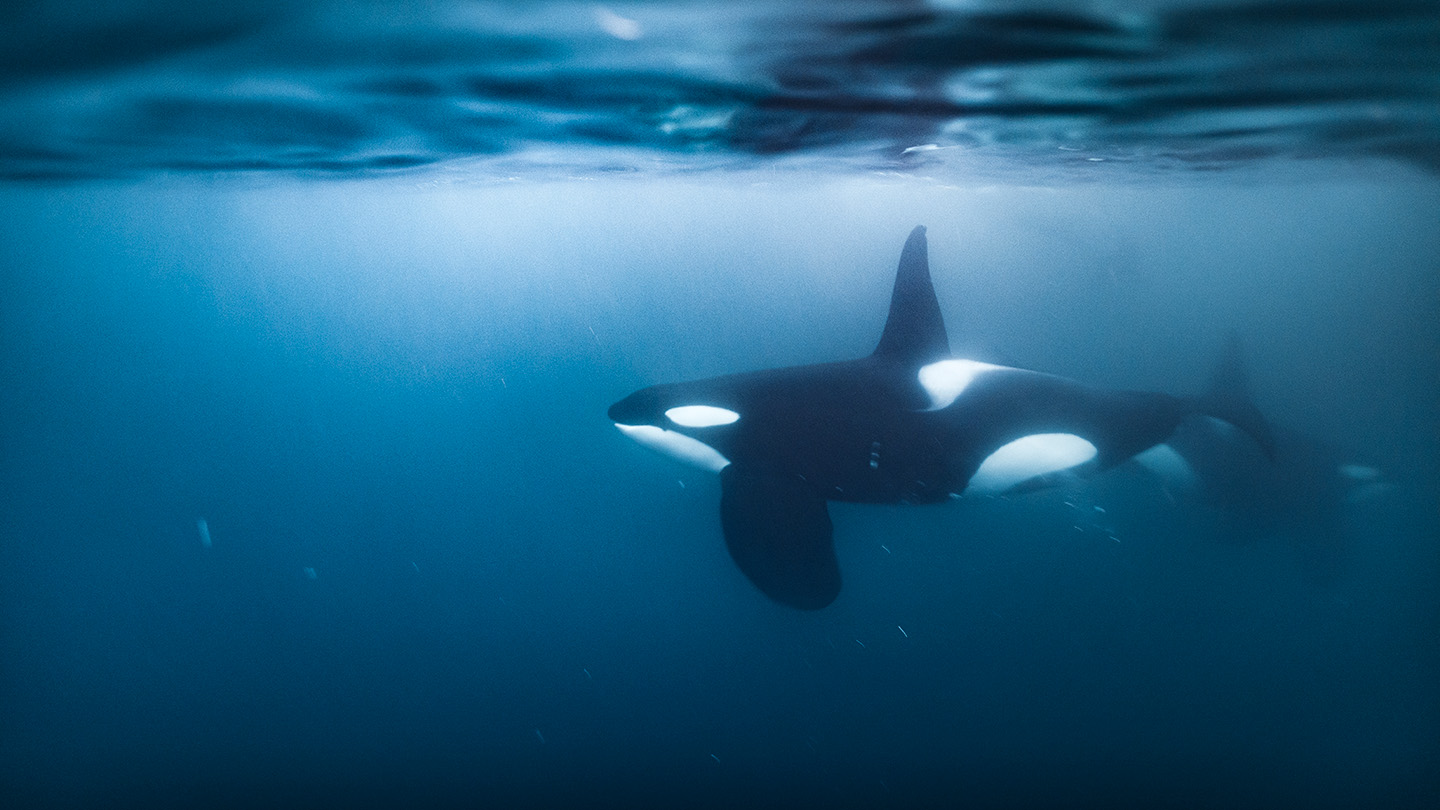
Orcas have been known to slap around stingrays, punt seals into the air and otherwise play with their food. But killer whales don’t just toy with live prey. Some also seem to enjoy destroying the carcasses of their kills like piñatas.
Scientists documented this brutal activity among orcas (Orcinus orca) in the Gulf of California in 2024 and 2025. In both cases, one adult orca held a dead sharp-tail sunfish (Masturus lanceolatus) steady while another slammed into it with enough force to smash the sunfish into smithereens.
Killer whales might pulverize sunfish to break them into smaller bites for young orcas — or they might just find it entertaining, researchers report July 23 in Frontiers in Ethology.
“I was absolutely gobsmacked” by this behavior, says Marianne Nyegaard, a marine biologist at Auckland Museum in New Zealand who was not involved in the work. She’d seen a couple videos of orcas battering sunfish on social media before the new paper did a deep dive on this phenomenon. “I thought it was the coolest thing I had ever seen,” she says.

Nyegaard is not necessarily surprised that orcas have come up with such a creative strategy to dispatch sharp-tail sunfish, which can get up to a few meters long. “Orcas will do all sorts of things,” she says. “They are so clever at figuring out how to hunt and deal with a ton of different prey types.” That hunting is often a team sport, as when orcas band together to ambush blue whales or collectively make waves to knock penguins off ice.
Orcas most likely annihilate sunfish this way to help feed their young, says Francesca Pancaldi, a marine biologist not involved in the work. After one of the sunfish explosions reported in the paper, she notes, a young orca began feeding on the small bits of carnage.
But that may not be the only reason for this practice, adds Pancaldi, of the marine science center in La Paz associated with Mexico’s Instituto Politécnico Nacional. “Killer whales are highly social animals, and a behavior can simultaneously provide nutritional benefits, reinforce social bonds and serve as an opportunity for younger individuals to learn hunting techniques.”
Read the full article here