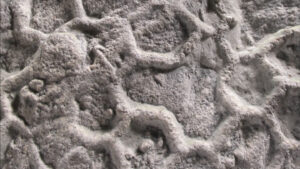






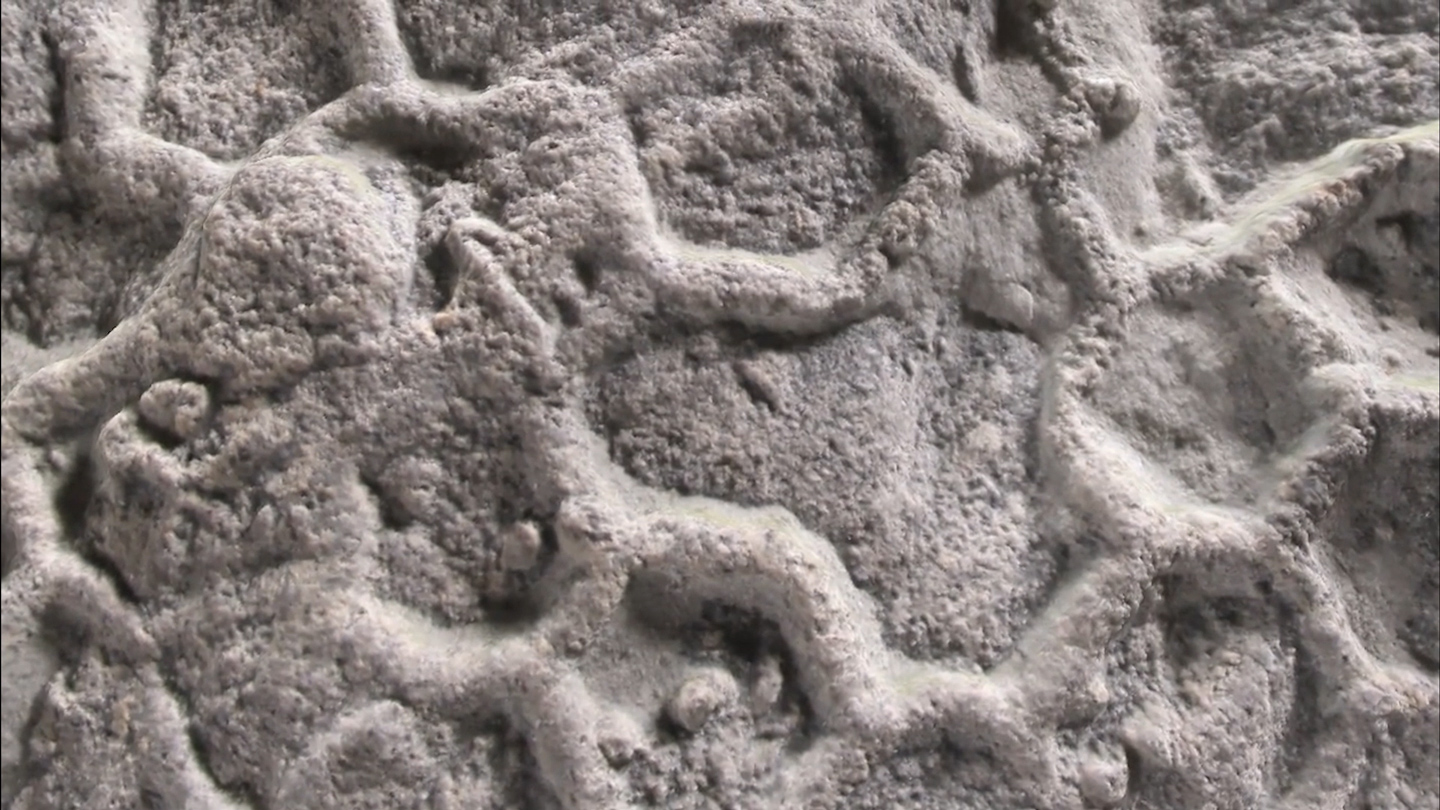
A honeycomb-shaped pattern in marine sediments has befuddled scientists for more than 150 years, but a new study points to a potential culprit.
The formations, known as Paleodictyon, are probably burrows created by arthropods, possibly a crustacean subgroup that includes the roly-poly, researchers report August 12 in Earth-Science Reviews. The work challenges previous hypotheses about Paleodictyon, particularly that they were created by wormlike creatures.
“Our study addresses one of paleontology’s most enduring enigmas,” says Andrea Baucon, a paleontologist at the University of Cagliari in Sardinia, Italy.
Renaissance artist and inventor Leonardo da Vinci probably sketched Paleodictyon’s characteristic forms after seeing them in ancient marine sediments now on dry land. The patterns appear on seafloors today, too. In the 19th and 20th centuries, scientists attributed the patterns not only to worms, but also to chemical processes and fossilized algae, among other things.
Baucon surmised that arthropods would be a more likely cause. So he and his colleagues tested the hypothesis by investigating prior research and making observations on fossils both previously and newly discovered. Among these was a 530-million-year-old Paleodictyon — one of the oldest specimens known — that they discovered in a quarry near Torre de Moncorvo, Portugal.
They conclude that digging Paleodictyon’s sharp corners would be impossible for soft-bodied, wormlike creatures, which can only burrow where the ground is weak. In contrast, arthropods’ rigid exoskeletons and jointed appendages are well-suited to the task.
Creating such a precise hexagonal network takes mobility and cognitive skills including efficient burrowing and spatial awareness, which align with known arthropod abilities, the team concludes. Furthermore, Baucon says, Paleodictyon appears in the fossil record at roughly the same time as the earliest fossil evidence of arthropods, in the early Cambrian Period, around 530 million years ago. This coincidence in timing is not proof, Baucon says, but it is consistent with the team’s hypothesis.
Stephen Hasiotis, a geologist at the University of Kansas in Lawrence who was not involved in the study, isn’t sure arthropods are the sole creators. “Without smoking gun evidence” from across geologic time and the various marine environments where the mysterious honeycombs have been found, Hasiotis says, there is still the chance that other living things, including segmented worms, created formations past and present. Nevertheless, he says, the team’s hypothesis will doubtlessly push Paleodictyon aficionados “back onto the trail of whodunit and why.”
Baucon and his colleagues suggest that researchers could create Paleodictyon observatories to catch its makers in action on ocean floors. “Technologies such as artificial intelligence could help us automate the search for the creator of this mysterious structure,” he says.
Read the full article here