





At the picturesque Laos town of Vang Vieng, local booze and foreign lives are cheap, which is why no one talks about the death of six tourists, poisoned by toxic backyard alcohol at a popular backpacker hotel.
At Nana Backpackers, business was booming post-COVID in 2024, and filled with young visitors, attracted by the cheap rates, clean rooms, outdoor pool and free nightly drinks.
Today it has been repainted, the pool is maintained, the gate is closed, but is not locked and occasionally tourists slip in for free games of pool.
It looks ready to open, but a sign at the front declares it remains closed, “Until problem is resolved and new orders.”
Who would make such orders is not clear.
A planned reopening was cancelled when relatives of the poisoning victims went online to warn potential customers to stay away.
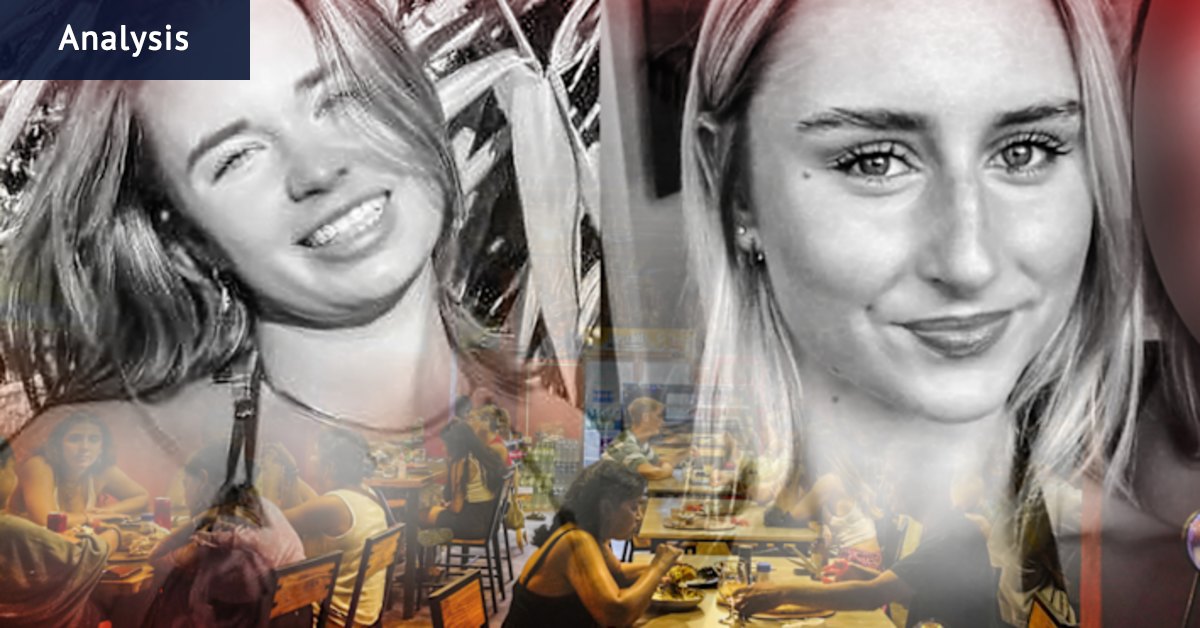
In November 2024, Victorian teenagers Holly Morton-Bowles and Bianca Jones, both 19, checked into Nana Backpackers Hostel. They joined other guests for free whisky and vodka shots near the pool.
This time the drinks contained methanol. How and why remains a mystery.
Morton-Bowles, Jones, British lawyer Simone White, 28, Danish residents Anne Sofie Coyman, 20, and Freja Vennervald Sorensen, 21, along with James Louis Hutson, 57, died after drinking the shots.
Despite continued lobbying through diplomatic channels the families of the Melbourne teenagers have few answers to their many questions.
The Laos government made all the right noises, expressing sorrow, and vowed to punish the offenders, declaring it was “conducting investigations to find causes of the incident and to bring the perpetrators to justice in accordance with the law”.
It ignored offers from the Australian Federal Police to provide specialist assistance, including forensic experts. The offer was refused because the Australian officers would have exposed what was an obvious and clumsy cover-up.
When it is in-house, it is easy to lock the door.
Within days of the deaths authorities announced the arrest of eight Vietnamese nationals who worked at Nana. What wasn’t said was there would be no public hearings and no serious criminal charges.
Ten people were fined $185 each (about a month’s wages) for the destruction of evidence. The Vietnamese were kicked out of Laos and the case has seemingly stalled.
Laos is a communist, one-party state, and it was easy to shut this tragedy down. Police and hospital staff were told not to speak. There will be no inquest and no one will be held to account.
Vang Vieng, with a population of 25,000, relies on tourism and foreign currency. In the local currency, Kip 100,000 is worth $6.50 Australian.
Since COVID, the local garment manufacturing industry has collapsed, and as it imports all its fuel, the Iran war is hitting them hard. There is a two-hour wait to fill up even a motorbike.
The government has spent more than 10 years trying to change Vang Vieng’s reputation from a wild party town, where anything goes, by encouraging older tourists, keen to explore the rivers, caves and hiking routes.
In 2011, 27 tourists died by drowning or suffering fatal trauma injuries while “tubing” – floating down the river and buying drinks from floating bars. Hospitals were treating up to a dozen young foreigners for misadventure injuries every day.
After a young Asian tourist, the son of a prominent politician, drowned on a river booze trip on the Nam Song River many of the floating bars were closed.
Having spent a decade changing the local image, publicity about six visitors dying from poisoned alcohol was bad for business and needed to be buried as soon as possible.
But there are two locals who want to tell the truth, but fear they will be targeted by authorities for breaking the unspoken conspiracy of silence. They have contacted Naked City to tell their story via a computer meeting. We will call them Frank and Mali.
Mali says he has lived in the region for years while Frank emigrated from Europe.
They say Nana sits on a large block near the heart of the town. “It was a house, there was a bank there, and then it was turned into a hotel before it became a backpackers,” says Mali.
“The building is owned by a politician and was leased to a Vietnamese man. He was quite nice.”
Just weeks before the deaths the reviews on the hostel were positive.
“Amazing owner. Best pool player ever. If you beat him, you can win a beer. Very friendly atmosphere. Best place in Vang Vieng.”
“The staff was really welcoming. The pool was nice. The location was good.”
“Beautiful hostel in town. Super nice staff and perfect location, clean and comfortable bed and clean bathroom. They also have happy hour from 8 to 10pm, free vodka and whiskey shots. It’s a great place to meet people, and they organise events very often.”
Frank says he met an older European tourist who said he went to Nana for the free drinks on the night of the poisoning. “He said he went there about an hour before and was approached by two guys he thought were from the UK who aggressively told him he wasn’t welcome,” Frank says.
“A staff member told him they had already had an argument with Hutson.”
Hutson, a US citizen had stayed at Nana for weeks, while most guests stay for days. He was the odd one out in the hostel that caters for young tourists, many on the banana pancake trail – Cambodia, Thailand, Vietnam and Laos.
The older man was found dead in his room surrounded by empty alcohol bottles, while the others became ill before deteriorating.
The remaining five victims were all young, attractive females leaving Frank and Mali to wonder whether they were targeted or their smaller frames made them more vulnerable.
What still remains unclear is whether the methanol was produced in a flawed backyard distilling process or deliberately added to local whiskey and vodka to add potency.
A bed at the Nana cost just a few dollars, which meant profit margins were small and the two-hour block of free drinks an additional expense.
Frank says local police have always been open to bribes. Locals who break traffic laws may have to pay a $1 bribe while tourists will have to pay $5. Those of heavy build will be asked for more as being fat is seen as a sign of affluence.
One Australian caught speeding was released without charge after agreeing to buy lunch for five police. The original demand was lunch for 20 but it was bargained down.
Frank says there are more accidental deaths of tourists than are reported with cases dealt with quietly with minimal media attention. “What happened at Nana [the cover-up] was exactly what was expected.”
Both Mali and Frank say there has been a push to bring in older adventure tourists. “I counted 15 hot air balloons in the sky,” says Mali.
But the party side of Vang Vieng has not gone away.
“At some of the restaurants if you ask for the special menu there is an extra page with pizzas and pancakes that come with dope, cocaine, magic mushrooms or heroin,” says Frank.
“The cocktail sessions [at Nana] were to help the backpackers meet each other, and they often then headed to a restaurant about 15 minutes away that has a special menu. After the poisoning, police closed it for about 10 days.”
There are reports that some of the restaurants have deals with the local police. If the drugs are consumed on the premises it is ignored but if tourists take the drugs with them, they will be arrested and forced to pay a bribe to be released.
A former Victorian detective who has a second career in South-East Asian law enforcement said the number of non-fatal alcohol poisoning cases in Laos, Thailand, Vietnam and Cambodia was “an epidemic” that included tourists suffering temporary blindness, massive migraines, memory loss and being robbed while unconscious.
Much of the alcohol is brewed in open shacks by teenage workers. If the distilling process is botched the brew contains methanol, often in non-fatal doses.
“They [the backpackers] put it down to drinking the local rocket fuel when it is actually the methanol. If in doubt, stick to beer,” he says.
Start the day with a summary of the day’s most important and interesting stories, analysis and insights. Sign up for our Morning Edition newsletter.
From our partners
Read the full article here