





There’s huge demand for affordable housing in Brisbane, but a perfect storm of circumstances means not much of it is being built.
New developments in the city are overwhelmingly luxury builds targeting the top end of the market, with these projects better able to absorb rising construction costs to cater for a surging demand of downsizers.
There were more than 40 off-the-plan projects with units listed for sale online in May. The average entry-level price in each building was about $2 million.
Just one had homes for well under $1 million; a tower on Lyons Terrace in Windsor, where one-bedroom units could be bought for $745,000.
The cheapest apartment in many buildings was well over $3 million.
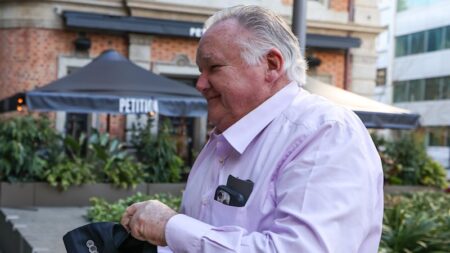
“It’s the high-end stuff that’s getting off the ground,” Ben Teague, managing director at luxury developer and designer Molti, told this masthead.
“Which is ironically not what is needed … I’m sort of shooting myself in the foot here because that’s the space we play in, but that’s actually not the stock that’s needed.”
Most developments also included additional amenities like pools, spas, saunas, gyms and barbeque areas that attract high ongoing strata fees.
There have been cheaper developments proposed – including a ‘mid-market’ tower announced for Kangaroo Point in April, and ‘co-living’ units in Fortitude Valley unveiled in March – but, particularly in the inner-city, they’re exceptions that proves the rule.
So with a huge shortage of affordable housing, why isn’t the market scrambling to fill that void?
Oxford Economics Australia economist Michael Dyer said multiple factors were conspiring to push some developers away from mass-market offerings.
The rising cost of construction, labour shortages, the financing model used by many developers and government policy often made it difficult for cheaper units to be profitable.
“Fundamentally what a developer is trying to solve is their end margin in delivering a new apartment building,” Dyer said.
“It just seems to be an area where [luxury] developers are more easily able to get those feasibilities to stack up.
“South-east Queensland is definitely a market where … particularly as we head into the rest of this decade, competition for resources will be fierce.”
Supply chain pressures during the COVID pandemic – and more recently the Iran War oil shock – have driven up the price of building materials, while the large infrastructure pipeline in the lead up to the 2032 Olympics has swallowed up construction workers and lifted labor costs.
Other costs associated with building including government fees and charges are also high, and have surged since the pandemic.
Molti’s feasibility studies on potential projects revealed some would be unprofitable even if the land was given to them for free due to the rising cost of construction, Teague said.
“In that more affordable space I can’t even imagine how difficult it is to get things to work,” he said.
There continues to be significant unfulfilled demand for high-end units across the city, which has contributed to the flow of capital into developments with higher margins.
Teague said the narrative that this was being driven largely by investors and retirees from southern states didn’t tell the full story.
Buyers at a new Molti building in Kangaroo Point dubbed Heirloom – where units start at about $10 million – had been exclusively Brisbane downsizers.
“We actually thought heading into it we’d be getting a lot of inquiry and demand from Melbourne and Sydney. It’s just not the case,” he said.
“In that luxury space we’re finding … it’s coming locally.”
The LNP state government has prioritised a supply-side response to the housing crisis, with policies primarily intended to make it easier to build – in some cases by removing affordable housing mandates, which they have argued drive away investment.
They say developers were not building enough as existing regulations were too burdensome, and any new supply – even at the top of the market – would still soften prices by reducing overall demand.
The Schrinner council’s signature housing plan has been its “tall not sprawl” policy, with new zoning rules allowing larger towers in several suburbs including Stones Corner, Mount Gravatt, Fortitude Valley and Wynnum.
Labor oppositions at both levels of government have argued for a more interventionist response, calling for mandates requiring new developments to include a certain percentage of housing priced below a threshold deemed affordable.
At Brisbane City Council its representatives have said they would not stand in the way of out-and-out supply. In May, Labor voted against plans that passed with council support to allow new units in the bayside suburb of Wynnum.
The Greens have gone further, pushing for dramatically increased government-backed construction of social and affordable housing. They argue the free market has failed to deliver the housing Brisbane needs, and new public projects are the solution.
Dyer said there were no easy fixes to Brisbane’s housing squeeze in the short term, but there were steps the government could take to ease pressure.
He said a pre-sale finance guarantee introduced in other states including South Australia could help increase funding for mass-market units, while the height and floor space bonus offered to developers in NSW had the potential to increase the appeal of building cheaper homes.
This policy allows developers to build taller and bigger buildings if they include up to 15 per cent affordable housing in their plan.
“We’re seeing there’s some projects where that has actually helped them move forward,” Dyer said.
“Just getting that little bit of extra … however many units, it means they’re able to get that feasibility to kick into something viable.”
Start the day with a summary of the day’s most important and interesting stories, analysis and insights. Sign up for our Morning Edition newsletter.
From our partners
Read the full article here