





NEWYou can now listen to Fox News articles!
This is part five of a series examining the challenges confronting the NATO alliance.
For more than three decades, the U.S. carried the largest share of NATO’s military burden while many European allies spent far less on defense than Washington wanted.
The imbalance survived the Cold War, multiple U.S. administrations and repeated debates over burden sharing. Only in recent years — following Russia’s 2022 invasion of Ukraine and renewed pressure from President Donald Trump — have many NATO members begun significantly increasing defense spending.
So why did the gap persist for so long?
Defense analysts say the answer lies in a combination of post-Cold War optimism, domestic political priorities and an American defense umbrella that convinced much of Europe it could safely spend less on defense without sacrificing its security.
GLOBAL SYSTEM TOOK ADVANTAGE OF AMERICA ON TRADE AND DEFENSE. THAT FREE RIDE IS OVER
“For much of the post–Cold War period, it is fair to say that Europeans underinvested in defense, partly because threats were low, and partly because a series of U.S. presidents did everything they could to convince Europeans that we would stay there forever,” Barry Posen, a professor of political science at the Massachusetts Institute of Technology, told Fox News Digital.
The collapse of the Soviet Union reinforced that mindset.
With the primary threat NATO had been created to deter suddenly gone, governments across Europe moved to collect a so-called “peace dividend,” redirecting resources toward domestic priorities and away from their militaries.
Between 1992 and 1999, defense spending among European NATO members fell 22%, helping establish a pattern of underinvestment that would persist for decades even as the United States maintained troops in Europe and continued serving as NATO’s ultimate security backstop.
GERMANY UNVEILS NEW INCENTIVES TO BOOST MILITARY RECRUITMENT AMID GROWING RUSSIA THREAT
As defense spending declined, many European governments expanded or maintained social welfare systems that consumed a growing share of public budgets. Programs such as healthcare, pensions and higher education became deeply embedded in domestic politics, often making them harder to cut than military spending.
With the U.S. continuing to provide the bulk of NATO’s military power, many governments faced little immediate pressure to reverse course. Critics of the alliance’s spending imbalance argued that American taxpayers were effectively subsidizing Europe’s security, allowing allies to devote a larger share of public resources to domestic priorities.
The result was what some defense analysts describe as a “moral hazard” problem: because the U.S. commitment to NATO was viewed as ironclad, allies could spend less on their own militaries without facing the full consequences of those decisions.

NATO CHIEF WARNS EUROPE CAN’T DEFEND ITSELF WITHOUT US AS TENSIONS RISE OVER GREENLAND
Over time, that dynamic became self-reinforcing. As European militaries shrank, many allies grew increasingly dependent on American capabilities ranging from logistics and intelligence to missile defense, strategic airlift and nuclear deterrence.
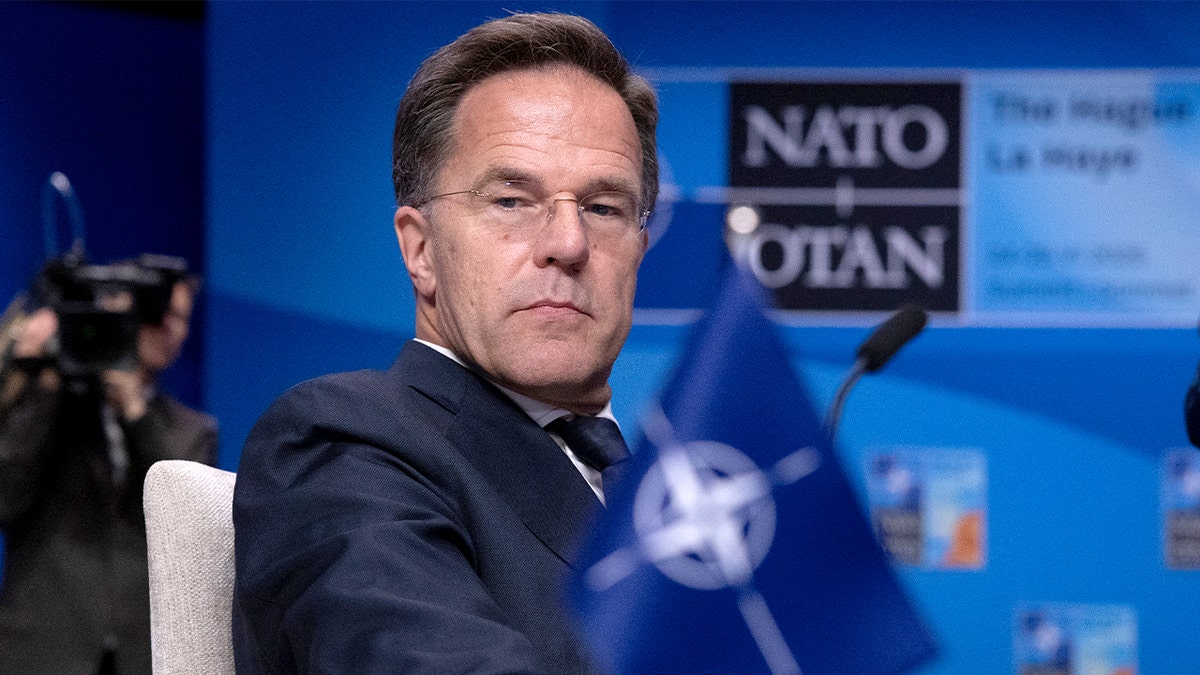
“We are still having a strong, conventional U.S. presence in Europe,” NATO Secretary-General Mark Rutte said earlier in 2026, “and, of course, the nuclear umbrella as our ultimate guarantor.”
American frustration over burden sharing is nearly as old as NATO itself.
In 1953, President Dwight D. Eisenhower warned European allies that “the American well can run dry” and pressed them to assume a larger share of the alliance’s defense burden. The issue resurfaced repeatedly over the following decades as successive administrations sought greater European contributions to collective defense.
The concern persisted long after the Cold War. In a blunt 2011 farewell speech in Brussels, then-War Secretary Robert Gates warned of a “dim if not dismal future” for NATO if European governments continued underinvesting in their militaries. Gates cautioned that there would be “dwindling appetite and patience” among American lawmakers and taxpayers to bear a disproportionate share of the alliance’s defense costs.
Yet despite decades of warnings, the underlying incentives changed little.
Washington repeatedly reaffirmed its commitment to NATO and maintained a large military presence on the continent, reducing pressure on allies to rapidly increase defense spending.
“Every administration has been pushing allies to spend more money on their own defense,” former Deputy Assistant Secretary of Defense for Europe and NATO Jim Townsend told Fox News Digital.
The issue gained renewed urgency after Russia’s annexation of Crimea in 2014, when NATO established a benchmark for members to spend at least 2% of GDP on defense. While spending gradually increased, progress remained uneven across the alliance.
“Nations slowly began going to that. But it’s been slow,” Townsend said.
For years, burden-sharing disputes followed a familiar pattern: American officials urged allies to spend more, European leaders promised improvements and NATO continued to rely heavily on American military power. What finally broke that cycle, Townsend said, was the combination of Russia’s growing aggression and Trump’s willingness to challenge assumptions that had shaped the alliance for decades.
“What really woke everyone up were two things,” Townsend said. “One was the 2022 invasion by Putin the second time. And then the second was Trump.”
Unlike previous presidents, Trump openly questioned whether the United States should defend allies that failed to meet defense spending commitments. During his first term and again during his return to office, Trump argued that NATO members were taking advantage of American taxpayers and suggested U.S. protection should not be unconditional.
Whether European leaders viewed Trump’s approach as pressure, a warning or a negotiating tactic, it altered assumptions that had shaped the alliance since the end of the Cold War and accelerated a debate that had simmered for decades.
The shift culminated at NATO’s summit in The Hague, where allies agreed to a new goal of spending 5% of GDP on defense and defense-related investments by 2035. The agreement marked a dramatic leap from NATO’s long-standing 2% benchmark and reflected a growing consensus that the alliance faced a far more dangerous security environment than the one that emerged after the Soviet Union’s collapse.
The agreement also signaled that many allies had come to the same conclusion American presidents had voiced for decades: the post-Cold War era of reduced military spending was over.
TRUMP PUSHED NATO TO SPEND BIG — NOW COMES THE HARDER QUESTION: CAN EUROPE ACTUALLY FIGHT?
But analysts caution that rebuilding military power is far more complicated than increasing budgets.
Europe remains dependent on the U.S. for capabilities ranging from air defense and logistics to intelligence and defense industrial capacity, Townsend said. Even as governments commit more money to defense, translating those investments into military readiness will take years.
John Byrne of Concerned Veterans for America said the challenge extends beyond equipment and spending levels.
“They don’t have the experience,” Byrne told Fox News Digital, referring to the decades in which large multinational military commands were overwhelmingly led by American officers.
CLICK HERE TO DOWNLOAD THE FOX NEWS APP
Running large coalition military operations requires years of institutional knowledge and leadership experience, he said — something that cannot be rebuilt overnight.
“You can buy equipment,” Byrne said. “You can’t instantly buy command experience.”
Read the full article here