





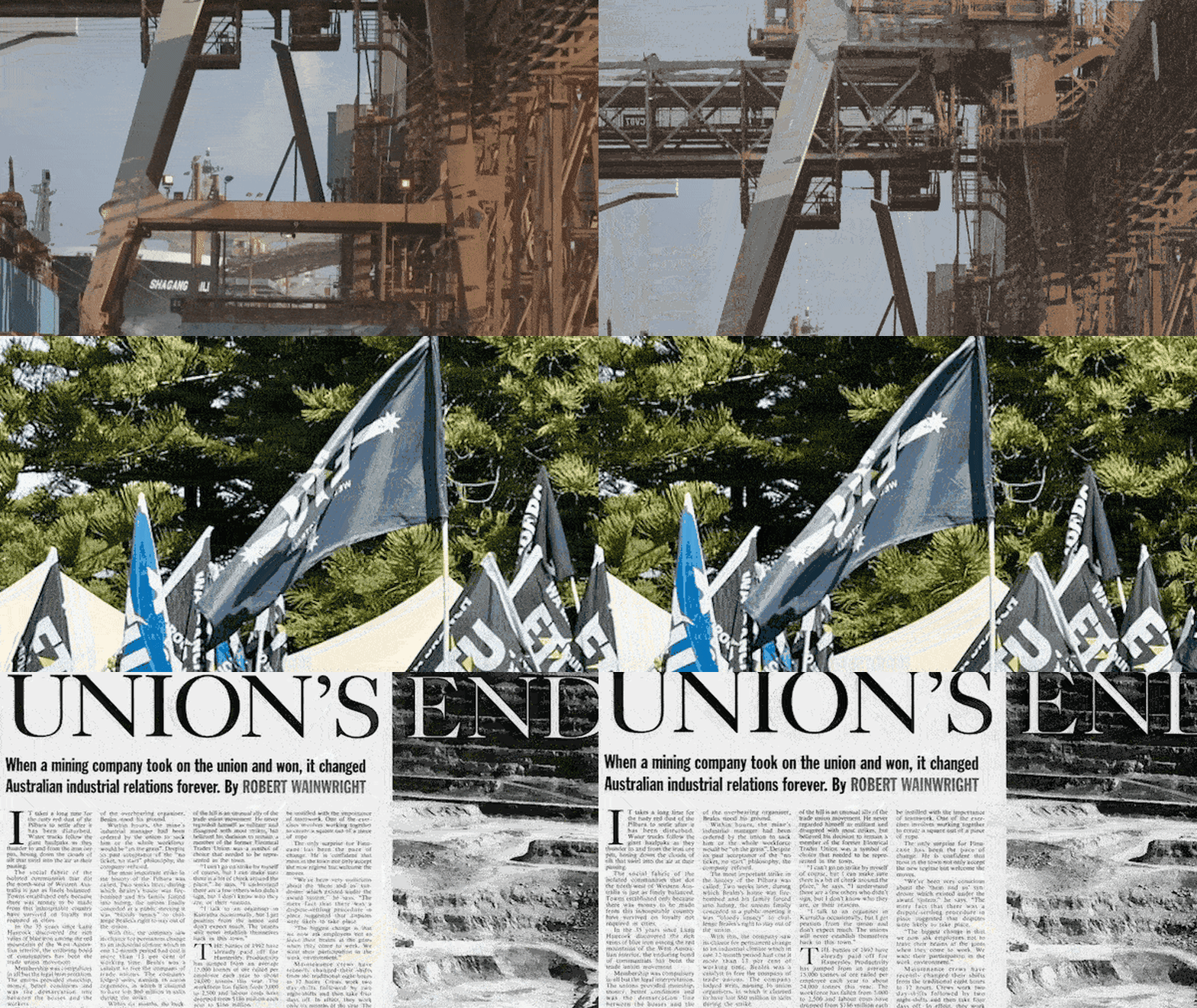
It’s difficult to comprehend the sheer scale of money that flows from Australia’s iron ore mines, concentrated in the dusty expanse of Western Australia’s Pilbara. Last year alone, Australia sold more than $116 billion of the rusty red rock, tipping $23 billion into government coffers.
But a major chunk of those shipments could come screeching to a halt for an unknown period as workers in the key export hub of Port Hedland, 1600 kilometres north of Perth, weigh up strike action in pursuit of pay packets as high as $240,000 a year.
As big as the dispute is, it is just the first outbreak of a much broader industrial war between a labour movement seeking to take advantage of federal Labor’s industrial reforms and re-unionise Australia’s mining industry, and some of the country’s largest companies, who are warning of major disruptions as they reckon with an increasingly competitive export landscape.
While an official call on whether a formal strike will take place is yet to be made – with negotiations ongoing and the form of industrial action still requiring a vote – estimates of the cost of a strike are staggering.
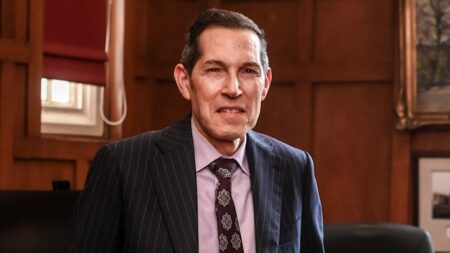
Dr Eric Lilford, a minerals and energy economist with Curtin University’s WA School of Mines, said a 24-hour shutdown of BHP’s Port Hedland operations would be likely to see the miner alone take a hit of around $116 million, based on the company’s throughput estimates.
However, while losses from a one- to two-day strike could be recovered through inbuilt contingency measures, Lilford warned it would also have broader national and global ripple effects.
“A protracted shutdown of BHP’s Port Hedland operations, anything beyond 48 hours, would rapidly escalate from a costly delay into an operational crisis, disrupting rail, shipping, stockpiles, global supply chains and ultimately cashflow,” he said.
One BHP worker, who lives locally and spoke to this masthead on the condition of anonymity due to concerns of being blacklisted, said workers who had been with the company for a decade or more had seen conditions and wages steadily deteriorate.
On top of that, he claimed there had been an increasing preference for fly-in, fly-out workers over locals.
“I think due to a bit of pushback from some of the community, with BHPs obligations to the town, that they’ve made a little bit of an effort the last 12 months to try and re-employ more locals to keep that in town,” the worker said. “But I think long-term their preference would much rather be FIFO, considering the expansions to [workers’ camps].”
The electrical worker felt the unions were trying to negotiate fairly with the company, but believed BHP was dragging out the process.
“We’re coming up to nearly a year – about 10 months of negotiations – and we’ve had like five or six meetings,” the worker said. “They’re the ones who keep cancelling the meetings, we’re all trying to do everything by the book, and they’re just playing their own game.”
He said the work carried out by union members kept the company’s operations running around the clock, and many of the local workforce lived in Port Hedland for the lifestyle and would love to continue working for the company if a fair agreement could be reached.
Since the start of this century, the Pilbara’s workforce has been largely union-free.
Hamersley Iron led the charge in the early 1990s. It battled its workers at the fabled Tom Price mine, rolling out individual contracts in a bid to boost productivity.
At the time, newspapers decried the end of unions in the Pilbara. “When a mining company took on the unions and won, it changed Australia’s industrial relations forever,” The Sydney Morning Herald wrote.
However, unions and the BHP started negotiating their first agreement in more than a decade in WA’s Pilbara iron ore mines in 2024, using a window opened by changes to industrial laws by the Albanese Labor government.
Now workers represented by the Electrical Trade Union, the Australian Manufacturing Workers Union and, as of Friday, the Australian Workers’ Union, are contemplating striking around Port Hedland.
Lilford, the mining academic, said collective bargaining structures in the region collapsed from the late 1990s.
“This created a workforce environment where unions had little practical power to organise industrial action,” he said. “Companies such as BHP and Rio Tinto systematically shifted their Pilbara operations from unionised award structures to individual workplace agreements.
“This was a deliberate strategy to prevent the re-emergence of collective bargaining power.”
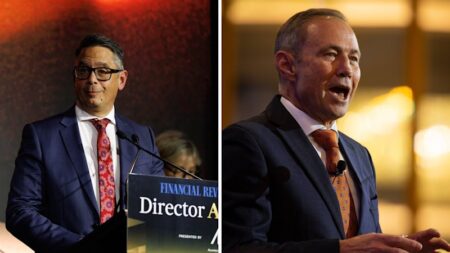
Mining industry veteran Owen Hegarty, who had a long career with Rio Tinto, founded gold explorer Oxiana, and is now a non-executive director of Fortescue, said what followed was decades of calm.
“It was certainly peaceful,” he said. “Productivity there is really very good.
“Given the size and scale of it [the Pilbara’s operations], the IR impact in terms of disputation and hold-ups and stuff-ups, and so on, over a period of time has been pretty small.”
Morningstar equity analyst Jon Mills said the reason Rio Tinto and BHP were able to persuade their workers to de-unionise back in the day was because it allowed them to pay them more in return for increased productivity.
“Which is how it should work,” he said. “These workers are not underpaid in any way, shape, or form. But the laws have been changed, and unions are doing what we expect unions to do.”
Under the Albanese government, Australia’s workplace laws have changed to give unions much more power to force companies to the negotiating table, allowed for forms of multi-enterprise bargaining that were forbidden, and stopped companies using labour hire to effectively get around pay deals with their direct staff.
Mills said “companies will respond by automating more stuff and finding savings elsewhere. It’s going to increase costs and, potentially, it could lead to higher iron ore prices. The price of iron ore is what really matters for BHP and Rio.”

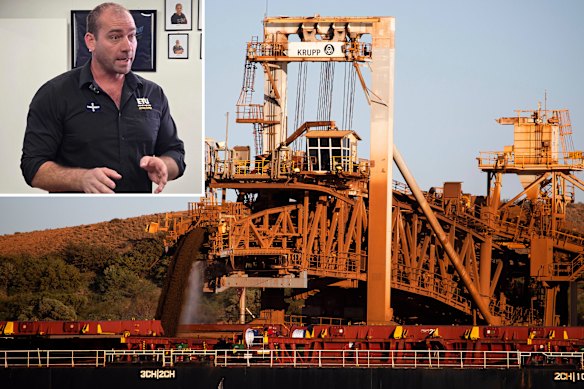
Morningstar has its long-term price forecast for iron ore at around $US71 ($101) a tonne because of falling steel production in China, which accounts for about 55 per cent of global output, and increased steel recycling using electric ark furnaces.
Iron ore earnings are forecast to decline from $116.4 billion in 2024-25 to $114.4 billion in 2025-26 and further to $107.4 billion in 2026-27, due to weaker prices, according to Australia’s chief economist office.
Highlighting the wage demands of its members last week, ETU WA secretary Adam Woodage pointed to a desalination plant project in the northern Perth suburb of Alkimos, where he said electricians could earn about $240,000 a year.
“BHP do not pay all their electricians $240,000 a year to work in the Pilbara,” he said. “There shouldn’t be wage disparity of up to $40,000 in the Pilbara, or anywhere, for people doing the same job.”
But Chamber of Minerals and Energy WA chief executive Aaron Morey said history showed industrial conflict drove investment, jobs and opportunity offshore. “Which is exactly what happened in the 1970s and 1980s, leading to the rise of Brazil’s iron ore industry,” he said.
Now, Australia’s iron ore miners are facing fresh competition from the giant Simandou mine in the West African nation of Guinea, which is ramping up production. And China’s state-owned iron-ore buying conglomerate has been putting pressure on prices.
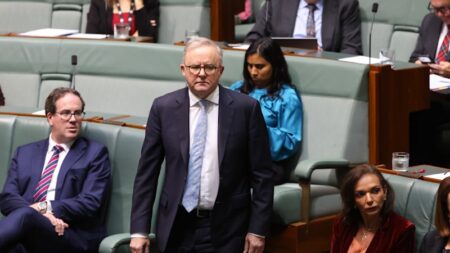
In Canberra, Labor’s Resources Minister Madeleine King said workers were entitled to work together to get the conditions that they deserved for their hard work.
“This is a matter for the workforce and for the companies themselves, but what I do believe is the workers are fully entitled and indeed should seek to get the best conditions they can,” she said. “It’s part of the operations. It is the powerhouse of this nation, but it would not be a powerhouse without those workers.”
A BHP spokesperson said the company was working in good faith on new workplace agreements across its iron ore operations.
“We are proud of our people and the critical work they do every day to help keep Australia’s iron ore industry running,” the spokesperson said. “We’ve listened to our people, and we have put forward fair, competitive and reasonable offers that lock in industry-leading pay and conditions and preserve the flexibility needed to keep our operations safe, reliable and productive.
“Every Australian benefits from a strong iron ore sector. We are eager to keep negotiating constructively for a fair deal, while making sure we can keep operations running safely.”
Just this month, BHP announced a $160 million investment in Port Hedland, the company’s largest community infrastructure commitment made in WA.
It includes an $80 million upgrade to Hedland Senior High School, $20 million to deliver a new aquatic centre and $10 million towards the construction of service worker accommodation.
AMWU WA state secretary Steve McCartney said industrial action was always a last resort.
“The solution is straightforward. BHP needs to come to the table prepared to negotiate genuinely and stop delaying the process,” he said. “If the company puts forward a fair offer that recognises the contribution of its workforce, this dispute can be resolved.”
“The joint unions are finalising the form and timing of the protected industrial action in consultation with members. Once those decisions are made, the required notice will be provided to BHP in accordance with the Fair Work Commission’s orders.”
Woodage said ETU members wanted a negotiation, not a fight. “We want a safe, fair and productive industry – nothing more, nothing less,” he said.
“We aren’t here to make history, we are here to make the present fairer, safer and more productive.
“The fact that it’s big isn’t lost on anyone, but our feet are planted firmly on the ground, and we are advocating for present needs of the men and women who keep the iron ore industry running today.”
The Business Briefing newsletter delivers major stories, exclusive coverage and expert opinion. Sign up to get it every weekday morning.
Read the full article here