



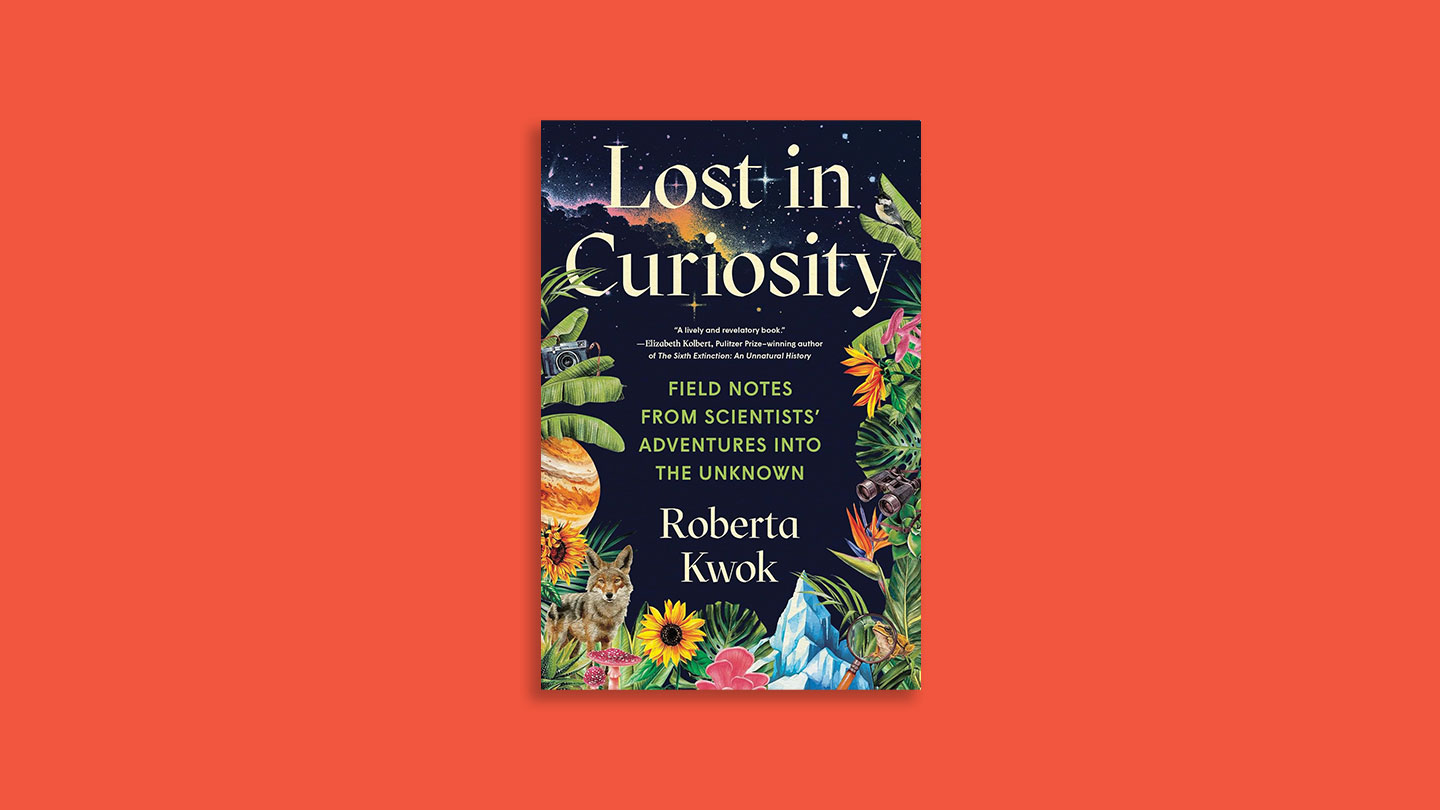
Lost in Curiosity
Roberta Kwok
Sourcebooks, $27.99
Earning my Ph.D. was probably the hardest thing I’ve ever done, and I distinctly remember the first time I wanted to quit. I was a first-year grad student at the University of Chicago, and while taking images of my nanomaterial with a fancy microscope, I accidentally rammed the material into the instrument’s $10,000 detector. I spent the next hour in the bathroom in a tearful haze, scrolling on eBay for a replacement part and wondering how I could afford it.
I was fortunate — the instrument was unscathed. But it was the first of many scares, failures and mishaps, often beyond my control, that battered my short-lived scientific career.
Stories like mine fill science journalist Roberta Kwok’s debut book, Lost in Curiosity, which offers a look at science’s unglamourous side: the hair-pulling, gut wrenching, head scratching, “whoopsie” parts of the journey that are usually omitted from tales of discovery.
Lost in Curiosity corrects that narrative glossing over. The book opens with glaciologists racing to study ice melting in Greenland. Over many years, misfortunes in the form of bad weather, a helicopter reservation mix-up and a raging COVID-19 pandemic grounded the scientific team and nearly caused them to lose their expensive equipment. The ups and downs are as funny and as they are tragic, thrilling as they are painful. Readers will laugh, cringe and cry.
For outsiders who are unfamiliar with the scientific process, Kwok reveals its true nature: Doing science is hard. It’s also a team effort, far from the stereotype of the hyper-efficient lone genius (think Einstein, Darwin, Mendel). Though the book’s title evokes the whimsy of passionate nerds losing themselves in the joy of their curiosity-driven pursuits, often they are simply lost, trying to make sense of data or formulate a plan B for the next experiment. That’s just how science is — nature doesn’t give up its secrets easily.
Readers get a taste of the myriad questions that U.S.-based scientists are chasing, such as redlining’s effects on biodiversity, the nonrandom nature of the physics of crumpling and the race to find first exomoon. The disparate fields each experience frequent failures, hazy conclusions and logistical challenges that run the gamut from mundane to grand.
While Lost in Curiosity succeeds in selling the science and making you fall in love with the characters, it fails in taking a stand. The book lacks a throughline from chapter to chapter, and it’s up to readers to draw meaning from each grueling anecdote. Without clear takeaways, the book reads like a leisurely stroll through the sciences rather than an urgent expedition to some destination.
The book is also jarringly apolitical at a time when politics is deeply entangled with science. Since the start of the second Trump administration, the U.S. federal government has drastically curbed funding for science, eroded the independence of research institutions, ignored universally accepted facts and perpetuated misinformation. Science is already hard enough; I was left wondering if the scientists that Kwok writes about now face added obstacles: canceled grants, the erasure of federal data, layoffs.
But it’s clear from Kwok’s storytelling that these passionate people are incredibly resilient, a necessary quality for surviving the gauntlet that is scientific research. That gives me hope. If there’s anyone who can keep sciencing through this chaotic political moment, it’s them. The Energizer Bunnies, the generational problem solvers, the justice seekers, as Kwok calls them.
In one poignant scene, Kwok asks a coastal engineer how they find the optimism to keep going in the face of climate change. “I don’t think we’re completely screwed yet,” the engineer said. “I think if we start thinking that we’re too late, then we have lost.”
Buy Lost in Curiosity from Bookshop.org. Science News is a Bookshop.org affiliate and will earn a commission on purchases made from links in this article.
Read the full article here