





A space telescope is falling out of orbit, and a rescue mission showed up just in time—but both are doomed.
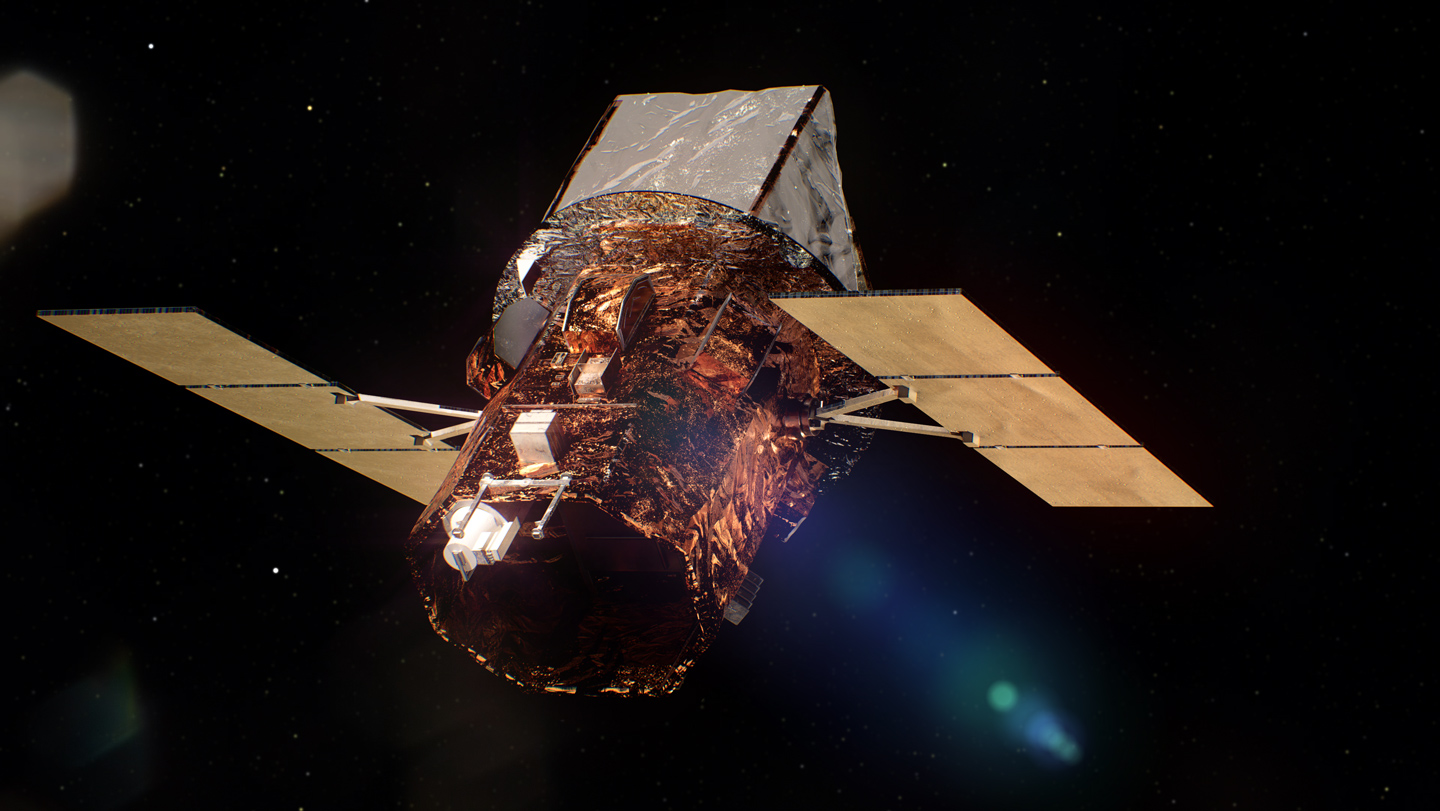
The dramatic situation unfolded roughly 340 kilometers above Earth, where NASA’s Neil Gehrels Swift Observatory, is losing altitude, thanks to atmospheric drag and a recent bout of unusually strong solar activity. The telescope, which has studied some of the brightest phenomena in the universe for more than 20 years, was always going to meet a fiery end incinerating in the planet’s atmosphere. But last year, NASA decided it wasn’t ready to say goodbye to Swift. The agency hired private company Katalyst Space to whip up a spacecraft to grab hold of the observatory and push it higher into space.
The robotic helper set off last month. It tumbled out of control as it approached Swift, and, despite efforts to get the mission back on track, NASA and Katalyst called off the rescue attempt on August 19. The mission is the latest demonstration of on-orbit satellite servicing, a long-held dream of the space industry, with robots tinkering with orbital infrastructure like cosmic mechanics. Expensive satellites, including space telescopes, are high on the maintenance list. The Hubble Space Telescope, for example, could use a boost someday. Katalyst sought to mount a similar mission to the 36-year-old observatory, and the Swift operation was meant to serve as a preview of that.
The Swift telescope, launched in 2004, observes gamma-ray bursts, flashes of radiation from outside the Milky Way that last seconds. Unlike other space telescopes, Swift is agile; when the observatory detects these luminous flares, it can swivel toward the afterglow within minutes, pinpointing the source. Researchers think that the longer variety of bursts are caused by “the deaths of very massive stars, and massive stars don’t live for very long,” says Huei Sears, an astrophysicist at Rutgers University in New Brunswick, N.J. These events allow scientists to briefly teleport to another galaxy and glimpse its particular stellar environment.
“Our home galaxy is just too metal-rich to host long gamma-ray bursts,” Sears says.
Satellite servicing is a growing field, with government agencies and commercial companies around the world practicing high-flying maneuvers. (Tech billionaires are interested, too: Before he was appointed to the top job at NASA, administrator Jared Isaacman offered to mount a SpaceX mission to raise Hubble’s orbit.)
“The technology to enable servicing is on a very good path,” says David Barnhart, an astronautical engineer at the University of Southern California in Los Angeles, citing advancements in rendezvous sensors, propulsion systems and, the all-important element, robotic arms. In July, the U.S. government dispatched a years-in-the-making spacecraft that will eventually inspect, relocate and even attach life-extending jetpacks to existing satellites.
Probes could someday refuel spacecraft, drag defunct satellites toward reentry or even haul historically significant objects higher into a long-lasting orbit, preserving space telescopes or even a space station like museum objects. Barnhart is most intrigued by the possibility of salvaging spacecraft parts: Imagine snipping off the solar panels on a dead satellite and attaching them to a new one.
But “there’s full expectations that the first missions may not succeed,” Barnhart says.
The Katalyst mission to save Swift is an example. NASA gave the company nine months to develop its refrigerator-size spacecraft, named LINK, and engineers rushed testing because the clock was ticking. Ahead of the robot’s arrival, NASA suspended Swift’s scientific maneuvering and powered off instrument detectors “to reduce drag and prolong orbital lifetime,” Brad Cenko, a NASA astrophysicist and the principal investigator on the Swift mission, says in an email. LINK’s troubles began just weeks after launch when its maneuvering gear malfunctioned. The Katalyst team managed to stabilize the rotating spacecraft with the help of its main propulsion engines, but the process eventually left both systems with insufficient fuel to save Swift.
There is no rescue mission for the rescue mission. Katalyst does plan to conduct various rendezvous and proximity operations, shortening the distance between LINK and Swift “to single kilometers in the coming weeks,” says Katalyst’s marketing director Esther Jeohn. The company did not respond to a question about LINK’s eventual fate, but Cenko says that the spacecraft is required to reenter Earth’s atmosphere within five years.
Swift dropped about 10 kilometers in the last month, Cenko says. The point of no return—when mission managers can no longer control the observatory’s movements—is somewhere below an altitude of about 300 kilometers. The latest modeling suggests Swift will plunge into the atmosphere in late November or December, Cenko says. If the team decides to resume science operations, which they’re currently discussing, reentry would happen even sooner. The observatory may still detect more extragalactic echoes from the deep, while scientists mourn.
“It’s always sad to lose something as beautiful and fantastic as a cathedral in space,” Sears says.
Read the full article here