




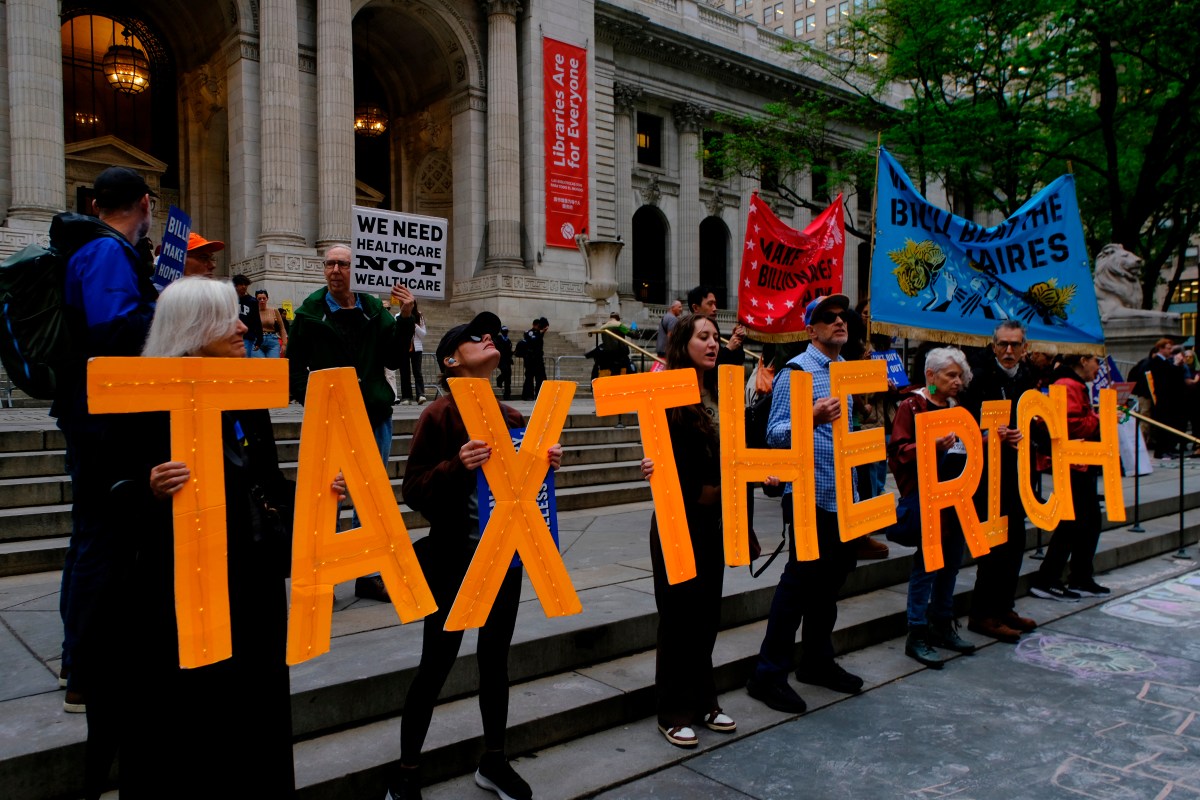
The odds that a controversial proposal to tax California’s wealthiest residents will appear on the state’s 2026 ballot seem to be rapidly shrinking as political opposition intensifies.
The prediction market Polymarket placed the chances of the 2026 Billionaire Tax Act qualifying for the November ballot at 31 percent on Tuesday morning, down from 90 percent at the start of the month and from 74 percent on Sunday.
The steep decline suggests growing skepticism among traders over whether proponents of the legislation can overcome legal and political barriers before the June 25 cutoff set by state officials, particularly as Democratic Governor Gavin Newsom and Democratic-aligned groups race to get rid of the measure.
According to Service Employees International Union‑United Healthcare Workers West (SEIU-UHW), the health care workers’ union that filed the initiative in October 2025, it submitted over 1.5 million signatures on April 27, almost double the required threshold. But state officials must verify the validity of at least 874,641 of those signatures by June 25, and the group is under sustained pressure to withdraw the proposal before the deadline.
The proposed initiative would impose a one-time 5 percent tax on individuals with more than $1 billion in net worth, potentially raising tens of billions of dollars for public programs such as health care, education and food assistance. However, critics such as Newsom say California already relies heavily on high earners for revenue—more than 80 billionaires on the 2025 Forbes 400 list live in the state—and that new wealth taxes could push them to relocate.
Newsweek has contacted Newsom’s press office and SEIU-UHW for comment via email outside regular working hours.
Newsom’s Pressure Campaign Intensifies
Newsom has emerged as one of the most prominent opponents of the plan and has been trying to persuade SEIU-UHW—which represents more than 100,000 health care workers—to stand down.
In recent weeks, the governor and his allies have worked to assemble a broad coalition against the measure, including labor unions, health care organizations and business groups. Groups representing teachers, construction workers and law enforcement have broken ranks with SEIU-UHW, raising pressure on proponents to withdraw the initiative before the deadline.
Responding to the backlash, SEIU-UHW chief of staff Suzanne Jimenez said in a statement shared with Politico, “The number of people who have privately resisted pressure to oppose the billionaire tax is far greater than the small number who have opposed it.”
“There is a big gap right now between the position some organizational leaders are taking versus the needs of their constituents, but that will not stop health care workers from achieving solutions that fight back against the Trump cuts to patient care in California,” she added.
The high-stakes fight has exposed deep divisions within California’s Democratic coalition, pitting progressive advocates and some labor groups against more moderate factions concerned about the economic fallout. For Newsom, who is seemingly poised for a presidential run in 2028, this tension also shines a spotlight on whether he can secure favor among key factions of the party.
Billionaires Join the Fight
The tax has drawn fierce opposition from many of California’s wealthiest residents, some of whom have already spent millions of dollars to defeat it or fund rival initiatives, according to the Los Angeles Times.
Per the outlet, in late December, PayPal and Palantir co-founder Peter Thiel—who has a net worth of $27.9 billion, according to Forbes—donated $3 million to the California Business Roundtable, which opposes the billionaire tax. Former Google Chief Executive Eric Schmidt—who has a net worth of $40.6 billion, per Forbes—donated $1 million to the same group in March.
Theil and Google co-founders Larry Page and Sergey Brin—who each has a net worth over $250 billion, appearing in Forbes‘ ranking, respectively, as the second and third richest man in the world—have already moved some of their businesses out of state, according to The New York Times.
How the Public Feels
Polling earlier this year suggested that the idea had initial public appeal. A UC Berkeley Citrin Center for Public Opinion Research–Politico poll found that about 50 percent of registered voters would support a one-time wealth tax, compared with the 28 percent who opposed such a measure. The poll was conducted between February 25 and March 3 with 1,220 respondents and a margin of error of plus or minus 3 percentage points.
However, it seems that recent political developments have weakened the measure’s momentum, as San Francisco voters recently rejected a separate tax on high earners.
What Happens Next
If state officials validate enough signatures and certify the initiative, the state’s billionaire tax will move to the November ballot, setting up one of the most closely watched tax fights in the country.
For now, betting markets and political division suggest the chances of California voters weighing in on the billionaire tax this year may be slipping fast.
Read the full article here