





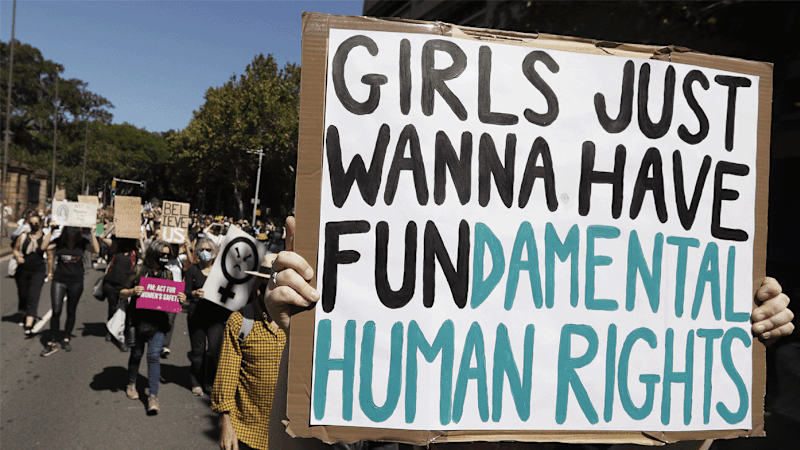
“This obviously happens every single day in every single postcode in Australia: sexual, family, and domestic violence, but there’s always – every six months, one year, two years – a series of high-profile events that cause a lot of headlines, and then we’re talking about it again,” says sexual consent activist and author Chanel Contos.
‘It’ in this case is sexual violence against women. And ‘it’ has been impossible to ignore. In the past two weeks alone, three young teen students from elite Sydney private all-boys Scots College were arrested and charged with the aggravated sexual assault of a 14-year-old girl, a week later three teens were arrested in south-west Sydney for a string of charges including aggravated sexual assault of a 17-year-old girl, and in the middle was the alleged Sydney Swans sexual assault allegation. These are just the stories that made the news.
“It’s frustrating at this point because it’s not as simple as one solution. There are so many things that need to be done from the government, from parents, from teachers, from individuals, from sporting clubs. It is everyone’s responsibility to be part of combating this culture because if you’re being complacent in it, it kind of makes you complicit in it,” Contos, a leading voice in consent education in Australia, tells The Morning Edition podcast host Samantha Selinger-Morris.
It’s clear, Contos says, that while consent education is still critical, sexual violence against women and girls has been heightened by the intersection of explicit and constant access to pornography.
In today’s episode of The Morning Edition, host Selinger-Morris and Contos discuss young men and sexual violence; how elite athletes tend to engage in sexual violence at disproportionately higher rates than the general population; and the relatively new addition of social media algorithms that radicalise boys into misogyny.
Click the player below to listen to the full episode, or read on for an edited extract of the conversation.
Samantha Selinger-Morris: Well, let’s get into this issue of a particular culture and whether it may or may not foster certain attitudes against women. And I wanted to ask you generally about elite all-male environments in particular, whether they be at school or in sport. Because there have been a couple of studies overseas of college campuses that have found that male athletes or men who sort of exist in all-male environments – such as fraternities or team sports like basketball – that they are overrepresented in reported acts of sexual assault and domestic violence compared to the general student body. So, can you walk us through, if you can, what is it about these environments that perhaps leads to that?
Chanel Contos: I think these institutions matter to everyone, because boys and men who are socialised in them disproportionately go on to hold positions of power in our country and in our economy. And that means the way that they are socialised, whether that’s with apathy or empathy towards certain groups, will dictate how our country runs, how our businesses run, what our parental leave policies are, the culture of institutions, our politicians, like all of these things. You know, we’ve had three prime ministers attend Sydney Grammar, and only one female prime minister. So, just to kind of show again the concentration of power in a select few schools in our country.
Well, I think what happens in all-male environments is that boys and men can often be socially rewarded from their peers by three key things: the first being physical ability, which is a spectrum, all the way up until, you know, boys getting in fights on the weekend is the extreme. And then the non-extreme, and the most celebrated by our society, is their physical sporting ability. But the other two things are wealth and sexual conquest, so you can understand how those would interact in these environments when you kind of get social status from being wealthy or from sexual activity with other girls or women.
Listen to the full podcast episode in the player above.
Hear the story behind the headlines on The Morning Edition podcast, every weekday from 5am on Apple, Spotify or your favourite podcast platform.
From our partners
Read the full article here