





Published on
On June 6, 1944, during World War II, nearly 160,000 Allied troops landed in Normandy, France, on what is known as ‘D-Day’, and they launched ‘Operation Overlord’ to liberate German-occupied Western Europe.
Over 4,400 Allied troops were killed on that single day, and more than half of them were Americans. The exact number of German casualties on D-Day is not known, but it is estimated between 4,000 and 9,000 killed, wounded or missing.
This year commemorates the 82nd anniversary of the Normandy beach landings, with only a handful of war veterans still alive to tell the story. And six of those last veterans have made the journey to France to commemorate the landings at the British Normandy Memorial.
French Prime Minister Sébastien Lecornu and the Pentagon’s second-in-command, Elbridge Colby, take part in the international ceremony at Langrune-sur-Mer on Saturday to honour those veterans.
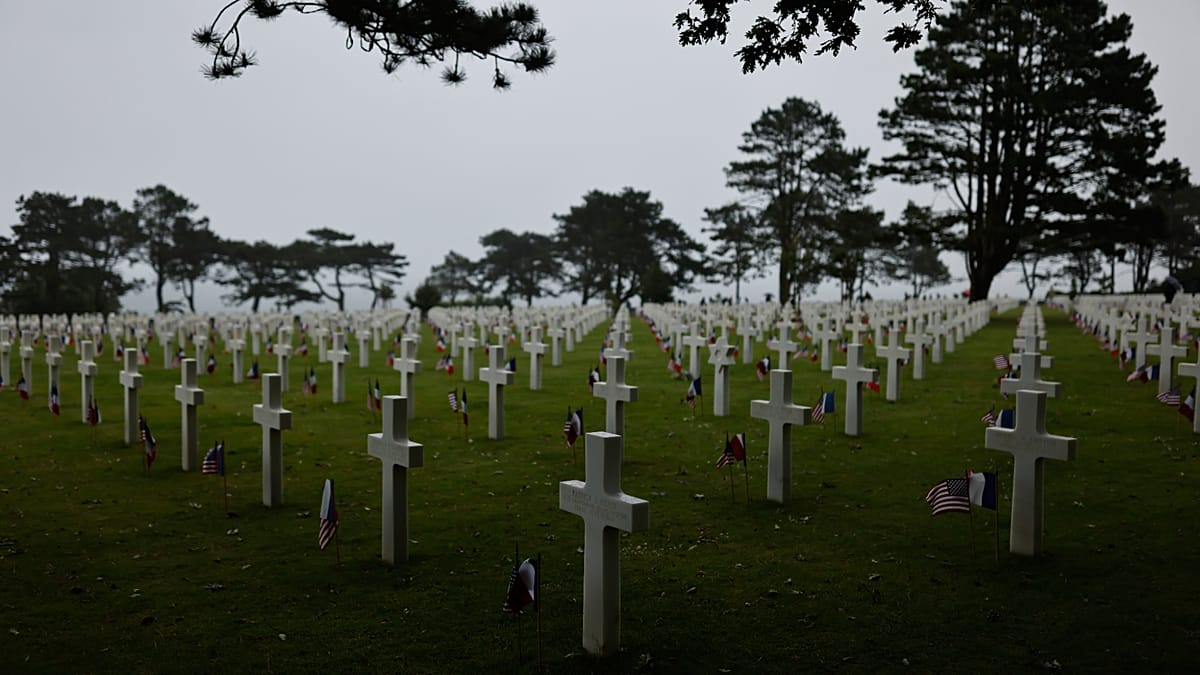
US Defence Secretary Pete Hegseth was also present at the ceremony and laid tributes at the American memorial honouring war veterans who took part in the invasion that helped change the course of the war.
Hegseth was joined at the ceremony by Chairman of the Joint Chiefs of Staff, Dan Caine, as well as other military personnel.
Referring to the servicemen who sacrificed their lives, Hegseth stated they “carried the hopes and prayers of a free world.”
“They crossed an ocean to fight for their country on a continent that they’d never seen, to save a people they did not know..()..Alongside the brave forces of Great Britain, Canada, France, Norway, Poland, and our other capable and steadfast allies, the United States military spearheaded a great crusade to shatter the Nazi war machine and liberate the continent,” Hegseth said.
UK Defence Secretary John Healey also paid his respects as he laid a wreath at the foot of the British Normandy Memorial, which lists 22,540 British names on its Roll of Honour.
As the largest seaborne military operation in history, D-Day launched with tens of thousands of troops landing simultaneously across 5 separate beaches in Normandy.
Following more than a year of intense strategic planning, the invasion was delayed by 24 hours due to severe storms, missing its original 5 June target date, which commanders chose to capitalise on rare optimal weather, low tides, and a full moon.
In military terminology, the “D” simply stands for “day”, marking the designated start date of a major operation.
Read the full article here