





Published on
The European Parliament will debate the situation in Ceuta next Tuesday in Strasbourg, in what is expected to be a heated political confrontation, following a decision by the Parliament’s political group leaders in Brussels on Wednesday.
The centre-right European People’s Party (EPP) and the European Conservatives and Reformists (ECR) also pushed to add a resolution to be voted on by lawmakers after the debate, in a move widely seen as an attempt to attack the Spanish government led by Socialist Prime Minister Pedro Sánchez.
The debate is expected to be contentious, with the EPP poised to confront Sánchez directly.
“The Prime Minister said [the Ceuta crisis] has been an attack on Spain’s territorial integrity. But he has not acted consequently”, EPP senior MEP Javier Zarzalejos said at a press conference on Tuesday.
Besides the EPP, otherright-wing conservative and far-right parties are also ready to attack Sánchez, linking the massive influx into Ceuta to the Spanish plan for the mass regularisation of undocumented migrants.
The Socialists and Democrats (S&D) group will be on the defensive, calling for European solidarity with Spain and criticising other governments for failing to present a united front following the sudden arrival of thousands of migrants in Ceuta.
“The narrative adopted by some prime ministers was simply shocking. They attacked Spain instead of showing support,” a senior S&D MEP told Euronews on condition of anonymity.
The final title of the debate reflects a compromise between differing political positions. The Parliament’s agenda lists it as: “The recent hybrid attacks and instrumentalisation of migrants in Ceuta and the need for a coordinated response to protect the EU’s external borders.”
The resolution, expected to be put to a vote next Tuesday, is likely to trigger a dispute over amendments shaping its final wording, with right-wing groups expected to press for a tougher stance on migration and criticism of Spain’s handling of the crisis.
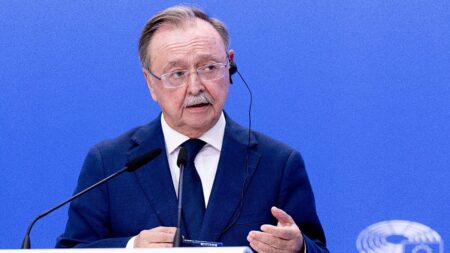
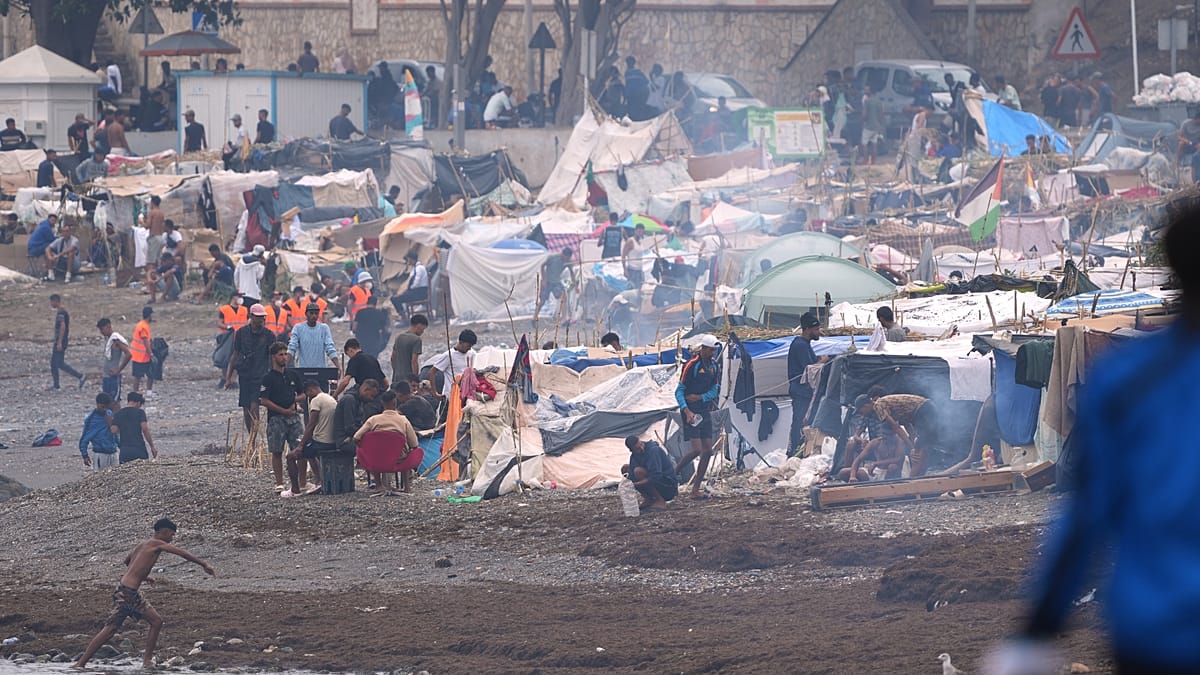
The Spanish exclave is “on the brink of collapse”, according to its president, after the massive arrival of some 80,000 irregular migrants on 30 July. Several thousand of them, including unaccompanied minors, are still in the city, sparking a humanitarian crisis and making the overall situation “untenable”, Ceuta’s president said.
Meanwhile, Madrid has been plunged into further chaos after a leaked police report suggested that Moroccan forces played a role in pushing migrants into Ceuta, a claim Sánchez has so far not confirmed.
The crisis also had consequences at the European level, with twenty-two EU countries calling for an emergency meeting in August and Italy reintroducing border checks at its air and maritime borders with Spain.
On Wednesday, the European Commission decided to provide Spain with €114.7 million in emergency assistance to help manage the situation, following a request submitted by Madrid on 24 August.
Read the full article here