



A five-member Northern California tribe has received tens of millions of dollars in federal and state-administered funding despite years of allegations from its own members that tribal leaders are exploiting its sovereign status, according to court documents, letters, and audits reviewed by The Post.
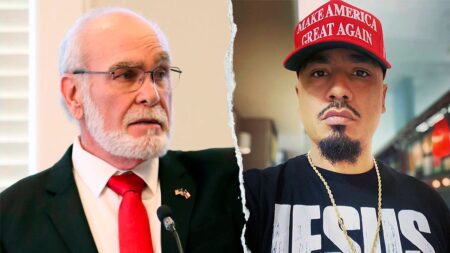
The Alturas Indian Rancheria dates back to the early 1900s in Modoc County. By 2005, only five members remained: siblings Phillip and Wendy Del Rosa; their cousins, siblings Jennifer Chrisman and Joe Burrell; and an outsider named Darren Rose, who had been adopted into the tribe.
The group has received more than $8 million in federal funding since 2013, according to USAspending.gov, the federal government’s spending database.
The Revenue Sharing Trust Fund Distribution, which takes money from the bigger tribes and distributes a percentage to the smaller ones, has given the Alturas Indian Rancheria more than $26 million since 2005 — each quarter it receives $275,000, according to the Gambling Control Commission and a court judgement against Rose in 2015.
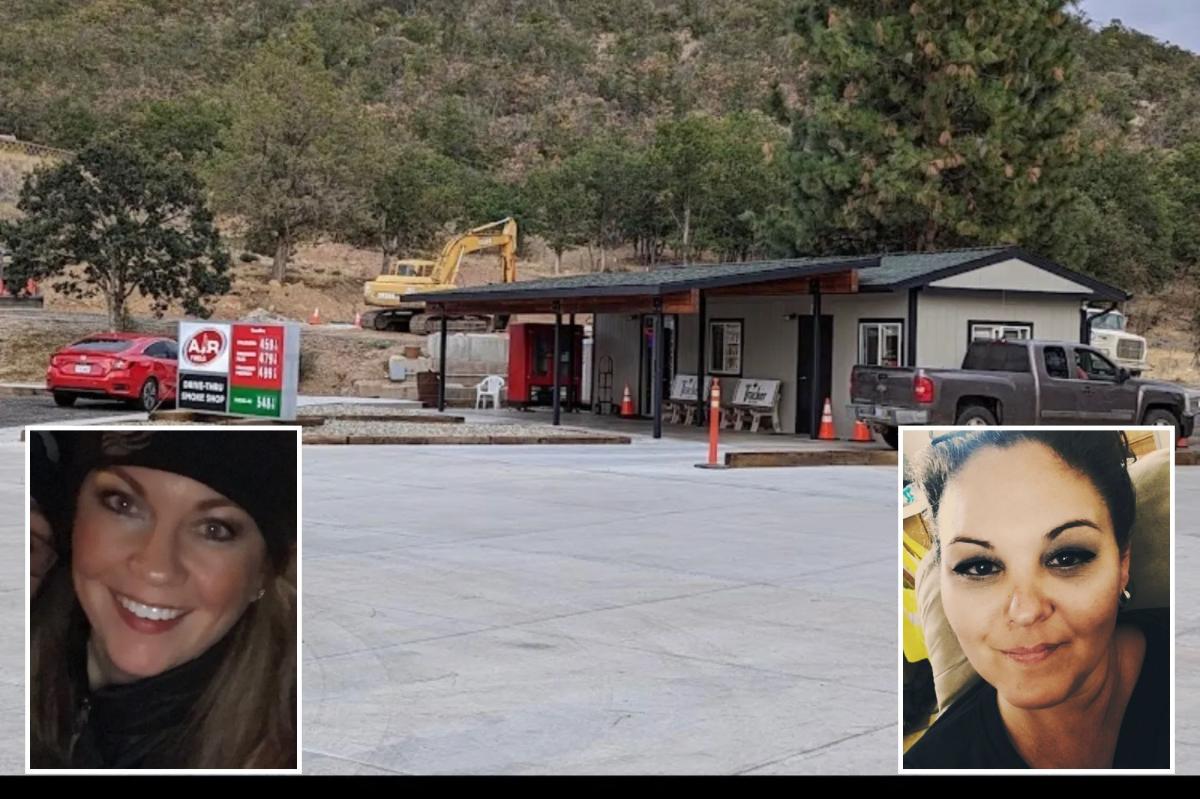
Factor in a gas station, a casino, a concrete company, a moving truck company, and a cigarette plant that all operate as tribal entities and Alturas Indian Rancheria allegedly brings in millions every month, according to two members who are sounding the alarm.
“They’re running these quote unquote tribal businesses under the tribe’s name, but it’s their private businesses,” Wendy Del Rosa said, alleging that both her brother, Phillip, as well as Rose, have said multiple times they don’t pay taxes. “They’ve told me that for years: We’re natives, we don’t pay taxes.”
Rose called the allegations false, saying the businesses are tribe-owned and the profits go into a tribal account.
“It goes into a tribal account that the tribe owns and the tribe watches it,” Rose said, adding that “Phillip and I are both signers on it, but no, it’s a tribal account.”
Both Del Rosa and Jennifer Chrisman say they have been effectively iced out of the tribe, which continues to operate through a business committee that oversees all the decisions and is helmed by Phillip and vice chaired by Rose.
“The Tribe is not operated as a tribe, rather, as a business for the sole benefit of Phillip Del Rosa and Darren Rose,” Chrisman said in a signed affidavit reviewed by the Post. “Millions of dollars of federal and state funds intended for the benefit of all the members have been embezzled by these two individuals.”
Del Rosa and Chrisman claim the two other members are treating the tribe as their personal piggy bank, while using the sovereign status to skirt taxes.
Phillip’s wife, Sarah, who is not a member of the tribe but works as a tribal assistant and oversees the casino, called the allegations false.
“The businesses are established for the overall betterment of the tribe,” Sarah told the Post. There isn’t any other distribution or benefit provided to the tribe outside of that — that does not automatically mean that Phillip and Darren are splitting everything down the middle and, you know, running these businesses to avoid taxes.”
But in 2010, Rose’s ex-wife Wendy Frazier testified in court that Rose received checks between $180,000 – $200,000 from the tribe every few months, and that the funds were deposited into an Alturas Indian Rancheria account that he and Phillip controlled.
Frazier further alleged she believed Rose used the money to buy her a $50,000 Cadillac in cash, big equipment, and a $250,000 RV.
A year later, Sarah, who at the time was working as the tribe’s bookkeeper, submitted a sworn declaration alleging that Rose stole tribal money and property, including approximately $340,000 from a tribal account, according to court documents.
“When doing payroll, although Darren held a paid position as Vice-Chairman of the Business Committee, he requested that his paychecks, amounting to $3000/pay period, be made out to the Alturas Indian Rancheria so he would not have to pay income taxes on the money,” Sarah stated in the sworn testimony reviewed by the Post.
Sarah is now married to Phillip, who serves alongside Rose in overseeing the tribe through the Business Committee.
Rose has also faced scrutiny for his business dealings in the past. In 2015, a California judge found Rose violated state tax laws more than 51,000 times by selling untaxed cigarettes through two smoke shops, costing the state more than $443,700 in tax revenue. The judge also found Rose gave evasive and misleading testimony and had failed to file tax returns for several years before slapping him with a $765,000 civil penalty that was later upheld on appeal.
“These two can’t just get to be able to run freely and do what they want to do and then lie and say, ‘oh, well, we’re helping out every member of the tribe,’” Chrisman, told the Post. “The tribe does not benefit from any part of it, except for those two.”
A 2013 forensic accounting review, which was initiated by the Tribe in response to a Department of Justice grand jury subpoena, traced tribal money flowing through businesses controlled by Rose and Phillip, flagging numerous undocumented transactions and transfers that had “insufficient evidence” of a legitimate tribal purpose.
The report highlighted a $50,000 payment to the maker of Phillip Del Rosa’s sprint race car engine, saying auditors found no evidence it was a legitimate tribal expense.
The audit explicitly stated it was “not asked to form any opinions about potential fraudulent activity.”
Sarah disputed the report’s findings, saying “it was not a forensic audit” and that “they had no proof of their findings.”
She provided the Post a letter from accounting firm Wipfli LLP stating it had issued unmodified, or “clean,” audit opinions for the tribe’s Grants and Contracts Fund for 2022, 2024 and 2025. However, the letter did not include the underlying audit reports, financial statements or account records, nor did it address the specific allegations raised by other tribal members regarding tribal business revenues or the alleged personal use of tribal funds.
Rose also rejected the allegations from his fellow tribal members, telling the Post all the money made from tribal businesses is reinvested back into the tribe, while arguing the companies don’t bring in nearly as much revenue.
Both Del Rosa and Chrisman said they haven’t seen any tribal benefits — whether that be financial, health care, or education — in more than a decade.
During COVID, the tribe, which at the time was listed to have only 3 members by the federal government, received more than $2.6 million — or roughly $886,233 per citizen, according to a report issued by the Harvard Kennedy School that analyzed US Treasury data.
“They took all of it and split it between the two of them,” Del Rosa told the Post. “I haven’t seen one dime or service, no health insurance, nothing, since 2014.”
Rose said the pandemic-era funding was reinvested in tribal businesses, rather than distributed among members like other tribes chose to do.
“We invested in the fuel stations and the casino,” he said.
Chrisman, who has terminal cancer, signed a contract in 2012 relinquishing her voting rights in exchange for guaranteed monthly payments and health insurance — however, she told the Post the health coverage ended just a few months later.
“The fact that I have terminal cancer, my husband, my kids and my parents are in debt because the lack of insurance. It’s greed at its finest,” Chrisman said.
Rose argued only employees of the tribe-owned Desert Rose Casino get health care, not the tribe itself.
But, a copy of the original contract reviewed by the Post and signed by the Tribe, granted Chrisman an employment agreement as an “Associate Gaming Commissioner” with “all benefits offered to other employees of the Desert Rose Casino (“Casino”), including health, dental, vision and life insurance.”
Sarah maintains that only employees of the casino can get health insurance, which Chrisman is not.
Chrisman’s brother, Joe Burrell, told the Post he was also pressured into signing a contract that would relinquish his rights as a voting tribal member in exchange for a monetary amount.
“He tricked us. He got us good,” Burrell said about Rose. “He seen a tribe that wasn’t all there, that needed help, and then he snaked in.”
Del Rosa told the Post the Tribe of five has turned into a tribe of two with Phillip and Rose holding the power, bringing in millions of dollars annually and providing no tribal services like health care or education for the other members or community.
“It’s taxpayer funds, it’s set aside to assist with tribal programs,” Del Rosa said. “It’s not set aside to have two members go buy luxury properties in Hawaii and fly on private jets.”
Property tax records show Phillip and Rose bought a $4 million property in Hawaii back in 2025, listing the mailing address to the Maui assessor as 900 Running Bear Road, Yreka — which is the address of the tribe.
Phillip acknowledged there is a vacation home but told the Modoc County Record no money from any tribal entity was used, rather it was purchased with a bank loan.
Neither Phillip nor Rose actually lives on or even near the reservation, instead telling the Post “there’s no economic benefit for us to live there.”
“The tribe has 20 acres, that’s all it is,” Rose said. “We travel there for business if we have to. No one lives there, no one ever has.”
Del Rosa said the situation unfolding in Modoc County is a result of a 2012 decision from the Bureau of Indian Affairs (BIA) that recognized Phillip, Rose and Del Rosa as the governing body of the tribe.
It was supposed to be on a limited basis to maintain government relations, but Rose and Phillip formed another governing body — the Business Committee — which the BIA recognized on an interim basis and remains in place to this day.
Del Rosa said she has repeatedly asked the BIA to withdraw recognition of the Alturas Business Committee, but it falls on deaf ears.
“To briefly recap, the current recognized governing body of the Tribe was appointed by the BIA over a decade ago on “an interim basis to ensure that essential 638 Contract governmental services are provided to the members of the Tribe,’” Del Rosa’s attorney wrote in a July 8 letter to the Bureau of Indian Affairs, which the Post has reviewed. “No essential governmental services were ever provided to any members of the Tribe … This has to stop,” she said.
The BIA did send Rose and Phillip a cease and desist letter in June for “unauthorized commercial activities,” first reported by the California Globe.
The letter, which the Post has reviewed, states Phillip and Rose are improperly operating a gas station, smoke shop, and concrete batch plant on federal trust land that is for the benefit of Indian landowners with undivided interests.
However, Rose told the Post they are working with the BIA to finalize a lease agreement.
“We own the majority of the land and we control it and the BIA knows it,” he said.
Both Del Rosa and Chrisman are now calling on the federal government to revoke the tribe’s federal recognition, saying it’s the only solution to make sure the tribe doesn’t misuse state and federal funds.
“I think that’s the only way to stop them, because they’re going to keep doing what they’re doing,” Del Rosa said. “They’re a tribe of two, even though there are other members, and they’re just becoming extremely wealthy, breaking laws, you know, no accountability.”
A sentiment echoed by Chrisman and her brother, Burrell.
“These two men operate like everything belongs to them, and nobody should get anything,” she said.
“We’re a five member tribe, we’re small, we’re in Northern California — no man’s land, so nobody looks at it,” Burrell added.
In a statement to the Post, the Department of Interior said the BIA’s legal authority to intervene in disputes is limited by tribal sovereignty.
“The Department of the Interior honors tribal sovereignty and supports tribal self-determination,” the statement said.
Read the full article here