





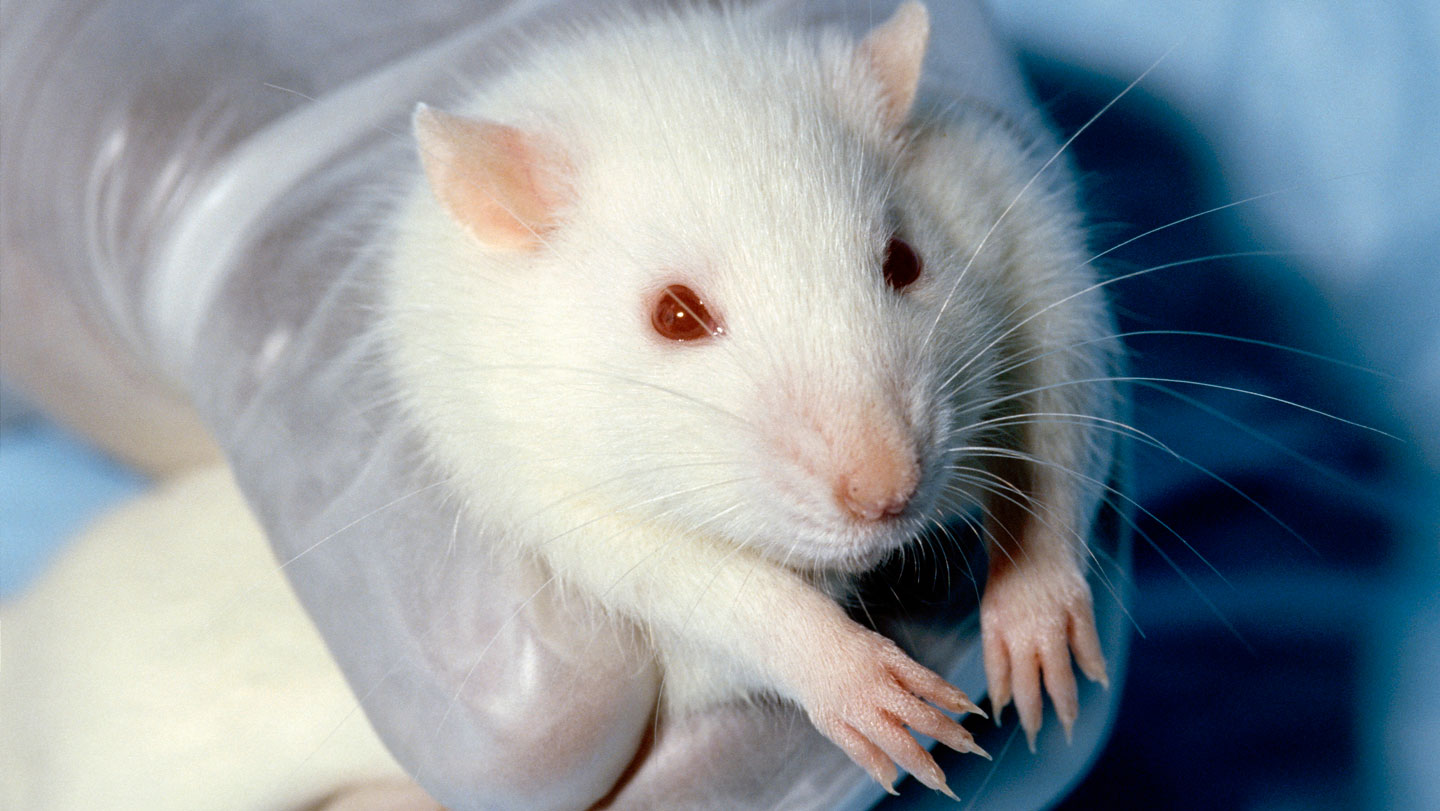
For nearly a decade, Vincent Bombail has been tickling rats. It’s been a standard technique used in the study of animal happiness. But not all rats particularly enjoy the experience, data show.
Female rats prefer gentler, more playful tickling than males, Bombail and his colleagues report April 15 in Biology Letters. The findings suggest that the same physical experience evokes a different emotional response in different individuals, potentially influencing the results of studies on animal happiness.
“This research helps us understand these animals as playful but also rich and complex and having opinions,” says Daniel Weary, an animal welfare scientist at the University of British Columbia who was not involved in the study. “Understanding the affective lives of animals is actually one of the coolest and most difficult questions there is in science,” he says.
As early as the 1930s, researchers deliberately exposed rats to standardized negative experiences to study the physical effects of stress. Figuring out how to study positive experiences took longer. It wasn’t until the 1990s that researchers developed the standard tickling protocol, where a researcher flips a rat over, pins it on its back and tickles its belly. The protocol is intended to mimic the rough-and-tumble play of young male rats.
When Bombail, an animal behavior researcher at Scotland’s Rural College in Edinburgh, started using the protocol, he almost immediately noticed considerable variation in rats’ reactions. So, he set up an experiment to “ask” the animals whether they preferred the pinning-and-tickling protocol or a gentler, more playful approach. In the gentler sessions, the rats could chase and be chased by the experimenter’s hand, then tickled, but spent less time pinned.
In the experiment, the rats experienced a high-pinning tickling, low-pinning tickling, or a control treatment with no researcher interaction. Directly after each treatment, the rats dug through a different type of material, like pieces of felt, ribbons or cardboard, to find a buried treat. The happier a rat felt after the tickle treatment, the more fondly it would remember its subsequent treat, forming a more positive association with the type of material in which the treat was buried.
Across several trials, the researchers allowed rats to choose between the control material and each of the tickle-treatment materials. The male rats appeared to like the high-pinning and low-pinning tickling treatments equally, choosing both tickling-paired materials more frequently than the control material.
The females reacted differently. They preferred the high-pinning tickling only slightly more than no interaction but frequently chose the low-pinning protocol material over the control, indicating a strong preference for this form of tickling.
These findings, Bombail says, correspond with the natural play behaviors observed in young male and female rats. “The males are a bit more physical and rougher, whereas with the females, there’s a bit more running, escaping, etc.”
Next, Bombail plans explore the physiology of positive emotions. Scientists have discovered so much about the biology of stress — how negative experiences affect hormones, the immune system, the gut microbiome and more — but now, Bombail says, “I want to start looking at the biology of feeling good.”
Read the full article here