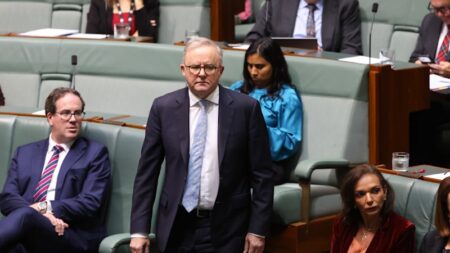





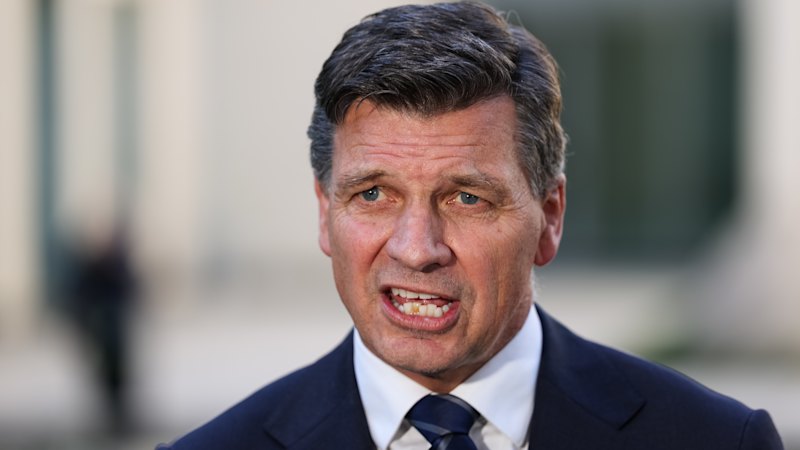
James Massola (“Borrowed time? Some Libs wonder”, June 26) quotes at length a colleague of Angus Taylor expressing doubts about the Liberal leader’s longevity. Andrew Hastie’s name is usually put forward as a stronger, more dynamic replacement. Might I suggest an alternative scenario? Hastie is very smart, and he is young. He knows the Liberals are at best very long odds for the next election, so why risk losing? He has plenty of time. The Liberals could try what I will call the Burnham-Lazarus option. Love him or hate him, the most effective opposition figure around is Tony Abbott. At present, he is president of the Liberal Party; is it too fanciful to believe that Abbott is eyeing a lower house seat, perhaps on the Central Coast? Abbott could then do an Andy Burnham and sweep into parliament to rescue the Liberal Party after giving Taylor a tap on the shoulder. The conservative side of politics is not averse to the Lazarus phenomenon. It happened to Menzies, Peacock, Howard – why not Abbott? Ken Webb, Coogee
There seems no question that Angus Taylor and Matt Canavan – together with opposition home affairs and immigration spokesman Jonno Duniam, James Paterson and others – are working on their CVs in readiness for new careers following the 2028 federal election. Careers for which they won’t remotely need to reinvent themselves. Given their lack of respect for the rights of and application of the law to (returning Australian) citizens whom they hold in contempt – such as the “ISIS brides and children” – they will be impeccably qualified to take up work at ICE in the United States. Alex Mattea, Kingston (ACT)
It is starkly obvious where Angus Taylor’s problems stem from – he doesn’t have a clue what he stands for personally, except for some ingrained sense of entitlement that he should be prime minister. And if he personally has no vision or moral principles, then how can he instil anything into the party that he leads? Unlike his mate, mentor, predecessor and now Liberal Party president, who was a brutal and cruel opposition leader but ineffectual prime minister, Taylor is simply an ineffectual opposition leader. Stand for something, Mr Taylor. Stop hedging your bets and therefore wasting everybody’s time with your visionary impotence. It’s no real surprise that Labor can outwit you, but One Nation too? Step up or step aside. Tony Bennett, Broke
I’ve noticed a recurring theme of late. Whenever a new Liberal leader is appointed, they are given a few weeks’ grace period, but then the seeds of doubt, real or imagined, concerning their leadership abilities are sown. Need to wait and see. Ross MacPherson, Seaforth
It is hard to think on your feet when you are facing an existential threat to your existence unless you have a clear vision of what you stand for and are willing to fight for your beliefs. Pauline Hanson’s comments on multiculturalism at the National Press Club provided a great opportunity for Angus Taylor to distinguish his party’s policies on this issue in an unambiguous way. He failed the test. At present, Andrew Hastie is the only Liberal willing to draw a line in the sand on One Nation policies and show some leadership. Gordon Lambert, Kiama Downs
Methinks Angus’ leadership grab was a little Hastie. Michael Britt, MacMasters Beach
Persona grates
There’s a lot of posturing going on about “freedom of speech” by supporters of the Stefanovic podcast, with a well-known criminal using one of his many pseudonyms (“How Karl became persona non grata”, June 26). It’s similar to some media insisting on presenting alternative views to science, under the illusion of “both sides of the story”, when the alternatives advanced are not supported by evidence. Bill Forbes, Medowie

Fee-fi-fo-PHON: don’t even think about it, Karl. Les Shearman, Darlington
Who is this Karl Stefanovic who is getting so much free publicity? Does anyone really care? James Mahoney, McKellar (ACT)
Teally good idea
Good on Allegra Spender and Zali Steggall for launching Community Strong Australia as an alternative political group (“Spender and Steggall will pick teal party candidates”, June 26). The donation laws stitched up by Labor and the Coalition last year all but closed the door to new independents entering federal parliament, right when we most need representatives who act in the interests of their constituents. Community Strong Australia backs community-first politics, intergenerational equity on housing, debt and climate, and an evidence-led approach to policy. If the major parties won’t open the door to politics that serves the people, let’s help communities build a new one. Amy Hiller, Kew (Vic)
At last, an innovative ray of hope on the political landscape. No party hacks, power brokers or backroom intrigues, but a collective of independents able to vote according to conscience and community, with no leader but a “caucus” of all parliamentary members, producing non-binding policies. This is an ideal model, and therein lies its weakness. Ideals work in theory but rarely in practice. The model relies on members to suppress their ambitions and egos in deference to the party. Possibly more likely with all female MPs. Regardless, it is a salve to the reactionary One Nation revolt and I wish it well. Rowan Godwin, Rozelle
I welcome the formation of a community independents party, but I feel Zali Steggall and Allegra Spender could have chosen a better name. May I suggest the Community Independents Alliance? Shortened to the CIA, it would be both memorable and lend an air of intrigue to the ballot paper. Michele Nicholas, St Ives
I’m assuming the fiscal conservatives won’t be happy if Community Strong Australia’s treasury/finance spokesperson is a Spender? Graham Fazio, Cootamundra
The new name for some of the teals, Community Strong Australia, has had mixed reviews. It would probably help voters if the parties were simply known by their colour preferences, with acronyms to match. We already have the GREENS (Going Radical Espousing Everything Natural). The TEALS would be The Environmentalists And Left-Leaning, the Liberals BLUE (Big Losers, Underwhelming Effort), One Nation ORANGE (Ostentatiously Right And Nobbling Green Energy), while Labor’s RED would be Running Everything Decisively (or the D could stand for Down, depending on your point of view). Doug Walker, Baulkham Hills
Trashing treasure

The over-riding sadness in Damien Woolnough’s essay on Lincraft’s demise is the slowly evaporating sense of community as online “everything” takes hold (“Vale Lincraft – and its pattern books and jumpsuits”, June 26). The enthusiasm he recalls of customers exchanging ideas and knowledge of their individual projects, while discovering new ideas and ranges within a store, completely vanishes with only a computer keyboard to make an online purchase. The same lack of interaction takes place when a restaurant “cleverly” places a QR code as a menu replacement. The customer is required to view the menu via their phone, the order goes to the kitchen and finally a real person delivers the order to the table. Recently, I tried to reserve a table at a nearby restaurant but soon realised that I was talking to a chatbot. I hung up, and the restaurant never got my reservation. More and more AI-assisted ways of life are taking over, and the loser is the humanity related to life and living. Greg Vale, Kiama
Protect precious native forests
The collaboration between the federal and NSW state governments that has generated the Improved Native Forest Management Plan is to be welcomed (“Carbon credits deliver NSW logging off-ramp”, June 26). Its strong endorsement by Dr Ken Henry, chair of the Australian Climate and Biodiversity Foundation, is encouraging. His view that it was a “high integrity process” and that its “carbon credit method could be used to exit an unsustainable industry” is good news. The proof, of course, will be in the pudding. As reported in the article, Victoria ended native forest logging in 2024 but recent investigations have raised serious questions about the integrity of this decision. Logging continues under the guise of salvaging timber affected by storms and fire. Native forest logs are being shipped from Tasmania to Victoria for milling. Millions of dollars allocated by the Victorian government to assist with transitioning workers and their communities out of the industry are unaccounted for and appear to be being used to still prop it up. Our Victorian experience suggests that Penny Sharpe’s depiction of it as “a pathway to ensure a sustainable forestry industry that is aligned with the government’s environmental and economic priorities” needs to be viewed with a great deal of caution. Tom Knowles, Parkville (Vic)
The mystery has been, and remains, why we continue to use taxpayers’ dollars to subsidise a loss-making industry. The despoliation of our native forests for a handful of jobs needs to stop. Earning carbon credits is a perfect off-ramp, as is the mooted increase in local tourist and conservation jobs. While we’re at it, we should give serious consideration to improving Indigenous employment prospects by introducing widespread cultural burning practices into the newly protected areas. Greg Baker, Fitzroy Falls
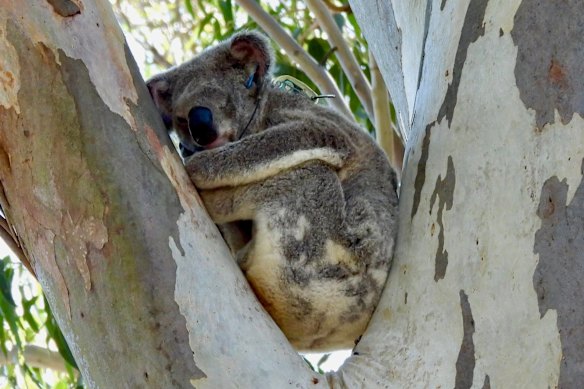
Neither the Wilderness Society nor the Australian Conservation Foundation are fans of carbon credits. They say a better way to finance our national parks would be to eliminate government subsidies, such as diesel fuel subsidies, and redirect that money into maintaining our national parks. Also, it is a fact that taxpayers cover the NSW Forestry Corporation’s financial losses, to the tune of $32 million in its hardwood logging last year alone. Obviously, that money would be better spent looking after and expanding our national parks and the wonderful biodiversity, including our precious koalas, they sustain. End native forest logging now. Margot Vaccari, Berowra
Stop the rorts
I read with despair the article by Dr Marie Healy (“NDIS price for my disabled sister’s mat: $100. We paid $5”, June 26). What is wrong with a business that feels it must rip off the government once it gets a contract? You hear of it happening time and time and time again. It nearly seems more the rule than the exception to massage the deal to get the most money out of it, and who cares what the outcome is? Notwithstanding the lack of prescience in predicting this greed, the same thing happened with the pink batts debacle. Greedy, get-rich-quick, businesses were all eyes for (taxpayers’) money and not their responsibilities. A tradesman doing some work in my ceiling commented that my pink batts had actually been installed correctly rather than what he had commonly seen, where they had been just thrown in unwrapped from their packaging. Businesses supplying services using government money should nearly be forced to do a cunningly devised ethics test to weed out these unscrupulous rip off merchants, a lot of whom would be jumping loudly onto the bandwagon of complaint about government overregulation and waste. Geoff Holmes, Woonona
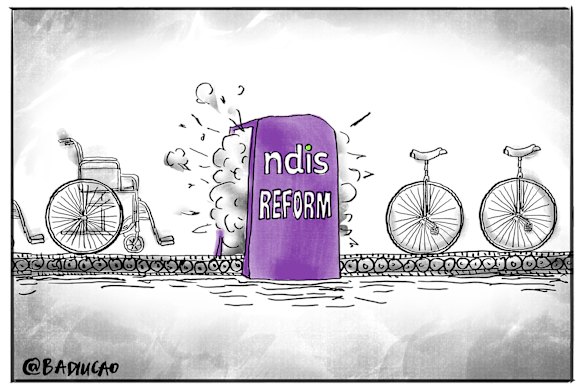
I can commiserate with Dr Healy. My wife and I recently took our disabled son off the NDIS. We never received a cent of his funding as it went directly to the company running his activity group. Formerly a community group which provided excellent care and support for our son, it deteriorated markedly once the new company took over. There was a high turnover of staff and more clients. Staff were negligent. My son was nearly run over and their response was to demand more funding for an extra staff member. If the government is serious about reining in the cost, then it should get rid of the private operators and make the whole scheme a public service staffed by government employees. However, since they are so wedded to economic rationalism, the spivs and shonks of “private enterprise” will continue to milk the scheme dry. Ryszard Linkiewicz, Caringbah South
Aged care rip-offs are similar to that mentioned by Marie Healy. My sister needed a sponge-type seat for her wheelchair: $1500 compared to $50 at the local pool and rubber shop. They said they get a lot of requests to do similar jobs that NDIS and Aged Care patients cannot afford. My sister was also quoted $48,000 for a motorised wheelchair (which had jumped from the previous quote of $32,000 about a month earlier). She said no thanks, I’ll just continue to get someone to push me. Similar for a bed available from a department store for about $2000. Her provider wanted $10,000. She is terminally ill and bed-bound, but people still tried to rip her off before she went into a nursing home, staffed mainly by Filipinos, Indians and others who are wonderful to her. Colleen Northam, Taree
Degrees devalued
The failure to once again reduce the high fees for humanities degrees introduced by the Morrison government exposes the hypocrisy of the current Labor government and Jason Clare specifically (“Fears reform makes entry harder for city students”, June 26). Having been very critical of the Morrison government introducing the Job-ready Graduates Package, Labor has done nothing in the last four years to terminate it. At a time when there is such a need to encourage students to undertake humanities degrees, the current government penalises those who do with punishingly high fees. These degrees are known to build essential, transferrable “soft skills” that are highly valued by employers across all industries, including problem-solving, critical thinking, ethics and emotional intelligence. Humanities-degree graduates are known to have high employability when they join the workforce. It is time for Education Minister Jason Clare and the government to show some leadership and rid us of this diabolical, distortionary and misdirected Morrison-era scheme. I think Gough Whitlam, an arts and law graduate, would be turning in his grave to know that Clare and the Albanese government once again missed an opportunity to reform this illogical and unfair program. Greg Fraser, Lyneham (ACT)
Ban won’t help
Out of curiosity I went to my search engine, Qwant, and typed in xxx (“Albanese plans to go harder on teen social media ban”, June 26). It didn’t take me long to find several sites, and sights, that didn’t require any age verification. If I can find this stuff inside two minutes then so can children. Either the ban is a blanket ban or there is no ban. The key? Ignore the first page of results. Go to the next one with names that don’t appear in the news, where the regulators clearly don’t go. David Neilson, Uralla
Technology takeover
Undrinkable water in Georgia, relentless humming in Arizona, so much electricity used in Virginia, Maryland, Ohio, and Illinois that electricity prices have spiked, backlash in Texas and Kentucky (“Fighting against a common enemy”, June 26). These are good reasons for Australia to be careful in considering when and where the AI juggernaut enters this country. Josephine Piper, Miranda
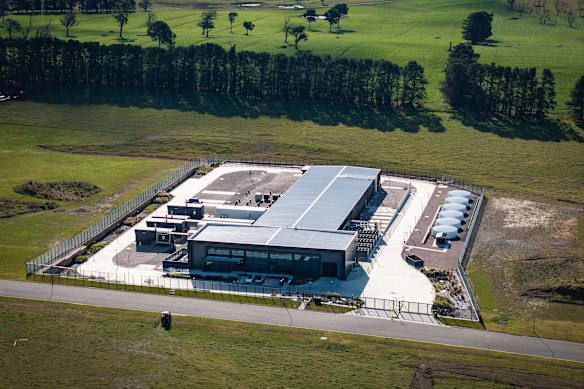
I, for one, would be happy if AI-for-the-masses was to just curl up and die. Sure, give specialists in health and environmental sciences their ultra-fast data analysers, but the rest of us can do without fake images, fake content, dubious searches and something arriving on our doorstep before we even thought about ordering it. AI companies are like drug pushers, making vast amounts of money by constantly feeding an expensive habit of addicts who rapidly become brain dead. The vast majority of AI “applications” are killing imagination, creativity, thoughtfulness and humility. Andrew Scott, Pymble
AI is an issue for jobs and we see them being shed every day in all sectors so fast that there is bound to be anxiety. Add in data centres being built in Australia and you have a perfect recipe for people’s frustration growing daily. However, there are several benefits that anyone can see, many of us already use it, from simple letter writing to getting answers to complex issues. This is cast in stone and no one can change it. Having said that, governments of all stripes for decades have talked about increasing productivity and AI is doing exactly that, except for physical work. It is a conundrum; we want AI, but want to control its inroads in all areas of the economy, which is already there and used. How are we going to turn back
the clock? Mukul Desai, Hunters Hill
We may well tame the beast but what about China et al? There’s an awful inevitability about AI. The post-human era beckons. Flawed as we humans are, I’m not sure I want to be around for this new bout of “progress” (but a seat in the grandstand might be interesting). Brian Haisman, Winmalee
- To submit a letter to The Sydney Morning Herald, email [email protected]. Click here for tips on how to submit letters.
- The Opinion newsletter is a weekly wrap of views that will challenge, champion and inform. Sign up here.
Read the full article here