





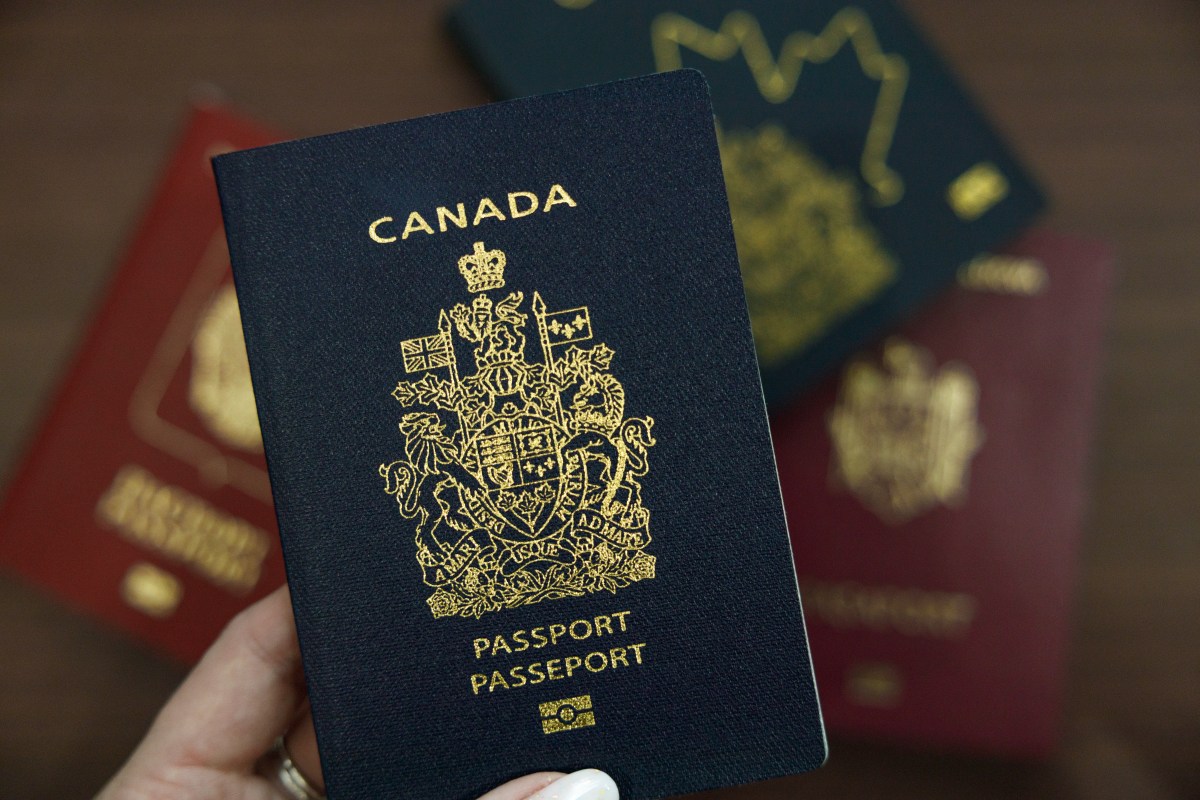
Applications from Americans seeking a Canadian passport have risen since the country introduced a major change to its citizenship-by-descent rules late last year, according to an Ottawa-based immigration consultant.
Cassandra Fultz, the founder and director of Doherty Fultz Immigration Inc. who immigrated from the U.S. to Canada in 2008, told CTV News earlier this week that demand for proof of Canadian citizenship “has exploded” since the country passed Bill C-3 in December.
How Have Canada’s Citizenship Rules Changed?
Until late last year, Canada had a strict first-generation limit on citizenship by descent, which the Ontario Superior Court deemed unconstitutional in 2023, leaving the government no choice but to change the law.
Bill C-3, also known as An Act to Amend the Citizenship Act (2025), replaced what the Canadian government called “now-outdated provisions that caused many people to either lose their Canadian citizenship or not acquire it in the first place.”
For those born outside Canada before December 15, 2025—when the bill came into effect—citizenship by descent is no longer limited to the first generation born or adopted abroad. As long as they have an ancestor who was a Canadian citizen when they were born—a parent, grandparent, great-grandparent or great-great-grandparent—they are likely eligible for citizenship.
Those born on or after December 15, 2025, to a Canadian parent also born outside of Canada can be eligible for citizenship if their parent was a Canadian citizen when they were born and they spent at least 1,095 days in Canada before then.
“There is a line there,” Fultz told CTV News. “But anyone who is already born up to that date, there truly is no limit.”
Both groups have to apply for proof of Canadian citizenship and obtain it before being able to claim a passport from the country.
How Does This Affect Americans With Family Ties to Canada?
The door to claim citizenship by descent in Canada “is now wide open” after the bill’s passing, according to Fultz. “And if you are eligible, you can walk through it.”
That applies to millions of Americans across the U.S., especially those in New England, a region with historically strong ties to Canada. CIC News reported that an estimated 3 million Americans in New England are currently eligible for Canadian citizenship under the new rules, with many of them likely being able to trace their ancestry back to Canadians who moved to the U.S. between 1870 to 1930.
According to Fultz, her company had “already started seeing a huge demand for this type of work, all the way back to this time last year.” Applications, she said, are coming from all across the U.S.
“There’s no geographic limit,” she said. “This interest, it truly transcends geographic lines. It transcends generational lines.”
To apply for proof of Canadian citizenship, U.S. nationals need to provide evidence of their descent from Canadian ancestors, including, for example, birth certificates and baptismal records.
Why Would So Many Be Interested in a Canadian Passport?
For Americans who obtain dual citizenship with Canada, there are several benefits, including the right to enter and settle in Canada and being able to travel with one of the world’s more powerful travel documents.
According to a recent ranking by Henley & Partners, the Canadian passport was the seventh best in the world (giving is holders access to 182 countries without a prior visa), while the U.S. passport ranked 10th (granting visa-free access to 179 countries).
A Canadian passport also allows Americans to move north and access a health care system where patients pay significantly less for care than in the United States.
This prospect of Americans, specifically retirees, heading across the border for access to the health care system has already received criticism from some Canadians.
On Reddit, an Ontario-based user commented on the reported rise in applications for Canadian citizenship from Americans: “Call me a cynic, but I’m not exactly thrilled at the prospect of a bunch of Americans getting a Canadian passport, then likely spending the rest of their working years still in the U.S. … but then retiring to their ‘new home, Canada!’ in their old age to take advantage of the free healthcare system they never paid a dime into.”
Additionally, Americans who obtain dual citizenship but do not move to Canada or acquire any business or property in Canada do not need to pay income tax in the country or file a tax return there.
Obtaining Canadian citizenship—and a passport—might become a lengthier process for Americans as more people apply for it. In January, legal studio Pryor Cashman wrote that at the time, applications for a certificate of Canadian citizenship were taking one year to process, but timings were expected to lengthen as the volume of applications was forecast to “increase dramatically, especially given Canada does not have a double taxation regime.”
Are you a U.S. national seeking Canadian citizenship, or who obtained Canadian citizenship over the past year? We’d love to hear from you. Email [email protected].
In a polarized era, the center is dismissed as bland. At Newsweek, ours is different: The Courageous Center—it’s not “both sides,” it’s sharp, challenging and alive with ideas. We follow facts, not factions. If that sounds like the kind of journalism you want to see thrive, we need you.
When you become a Newsweek Member, you support a mission to keep the center strong and vibrant. Members enjoy: Ad-free browsing, exclusive content and editor conversations. Help keep the center courageous. Join today.
Read the full article here