





Air quality alerts have been issued across parts of California and North Carolina, warning millions of residents about pollution levels that could pose serious health risks—particularly to vulnerable groups.
While the underlying causes differ, both regions are facing conditions that can significantly impact respiratory and cardiovascular health. Therefore, the National Weather Service (NWS) and officials are urging affected residents to “remain indoors” until conditions improve.
California: Wildfire Smoke Drives Dangerous Pollution
Large parts of Southern California, including Los Angeles, Riverside, and San Bernardino counties, are under air quality alerts because of fine particle pollution (PM2.5) from ongoing wildfires. The alerts are in place until Wednesday afternoon.
The warnings come as multiple blazes—including the Sandy, Bain, and Verona fires—continue to burn across the region, producing thick smoke that has spread into densely populated areas.
Thousands of residents have been forced to evacuate as fires rapidly expand, with some incidents alone displacing tens of thousands of people and blanketing nearby communities in smoke.
Air quality officials say particle pollution levels can vary depending on wind and fire activity, but may reach “unhealthy” levels, particularly near active fires.
Wildfire smoke contains microscopic particles—known as PM2.5—that can travel deep into the lungs and even enter the bloodstream. Exposure is linked to asthma attacks, reduced lung function, heart problemsand even premature death.
Research also shows these particles can trigger inflammation and increase the risk of cardiovascular events like strokes and heart attacks.
North Carolina: Ozone Pollution Hits the Triad
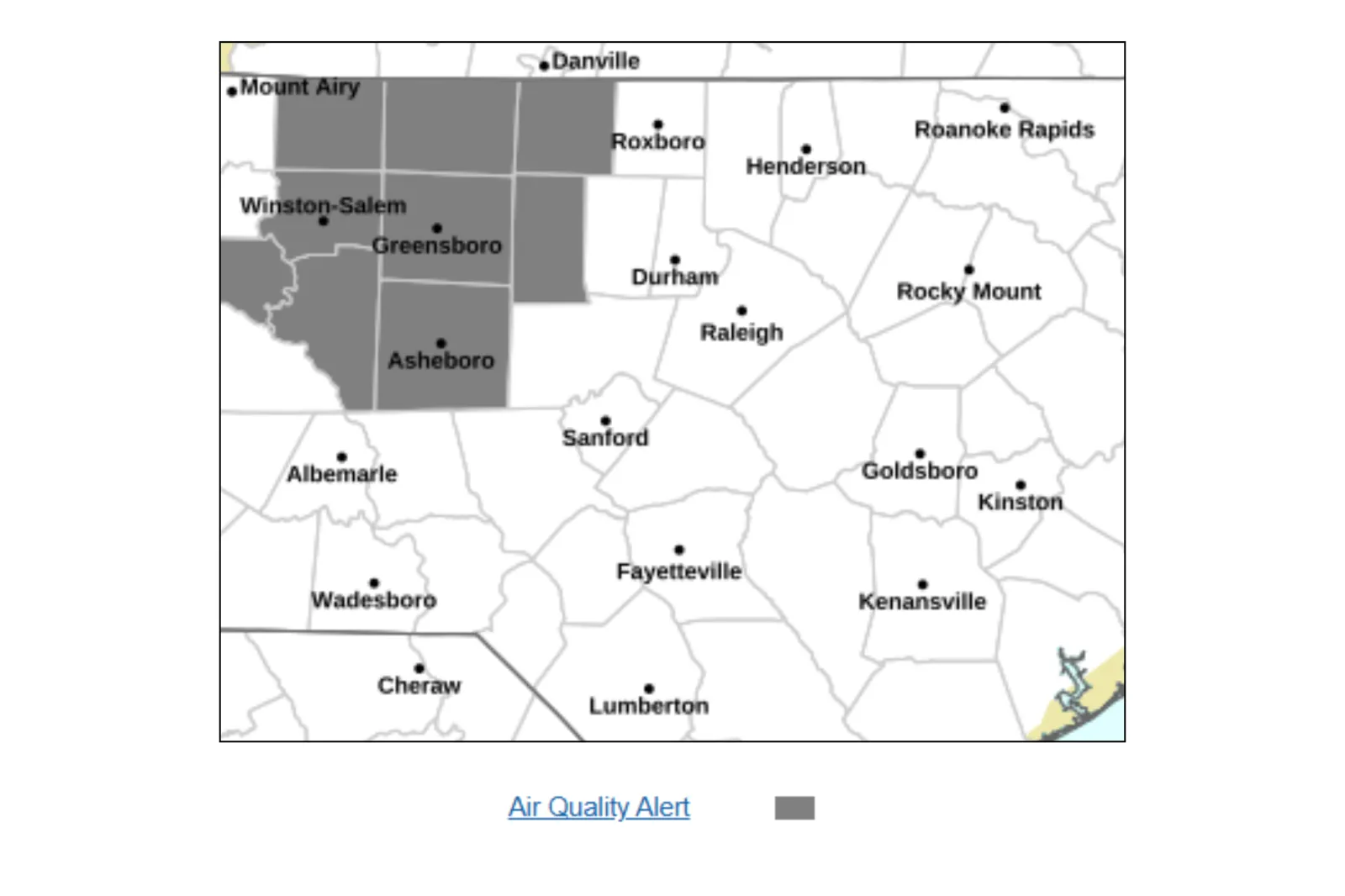
In North Carolina, a different form of pollution is driving alerts. A Code Orange Air Quality Action Day has been issued across the Triad region for the counties of:
- Forsyth
- Guilford
- Alamance
- Davidson
- Randolph
- Davie
- Rockingham
- Caswell
- Stokes
The alert remains in effect until midnight Wednesday and signals that ground-level ozone may reach or exceed levels considered unhealthy for sensitive groups.
Ground-level ozone—the main ingredient in smog—forms when sunlight reacts with pollutants from vehicles, power plants and industrial emissions, particularly during hot, stagnant weather conditions.
High temperatures, strong sunlight and limited wind are currently affecting the region, helping ozone accumulate.
Unlike wildfire smoke, ozone is an invisible gas—but that doesn’t make it any less harmful. It can:
- Irritate the airways
- Trigger coughing
- Cause chest pain
- Worsen asthma and other lung conditions
Children, older adults, and people with heart or lung disease are especially vulnerable.
Why Air Pollution Is So Dangerous
Both PM2.5 from wildfire smoke and ground-level ozone are among the most harmful air pollutants.
- PM2.5: Tiny particles of pollution that can penetrate deep into the lungs and bloodstream, causing inflammation, respiratory illness and heart disease.
- Ozone: A reactive gas that damages lung tissue and reduces lung function, even in otherwise healthy individuals.
Health experts warn that even short-term exposure can lead to serious complications, particularly for high-risk groups.
What Residents in Affected Areas Should Do
Authorities urge people in affected areas to take precautions to reduce exposure:
- Stay indoors with windows and doors closed
- Avoid strenuous outdoor activity
- Use air conditioning or air purifiers where possible
- Wear a well-fitting N95 mask if you must go outside, especially in the smoke-filled areas in California
- Limit driving and activities that increase pollution, particularly in the high ozone areas in North Carolina
Sensitive individuals, such as those with asthma or heart conditions, should be particularly careful.
Which States Have the Worst Air Quality?
Air quality challenges are not limited to these two states.
National data from the World Population Review shows that California consistently ranks among the worst in the U.S. for air pollution, driven by wildfires, heavy traffic and geography that traps pollutants.
Other states frequently ranking near the bottom include Arizona, Nevada and Illinois, largely because of industrial emissions and fine particulate pollution.
Meanwhile, states like Hawaii, Alaska and Maine tend to have the cleanest air.
The Key Takeaway
While California and North Carolina are facing different types of air pollution, both situations highlight the growing health risks tied to wildfires, extreme weather and human activity.
Officials stress that monitoring alerts and taking simple precautions can make a significant difference in protecting health during poor air quality.
Read the full article here