





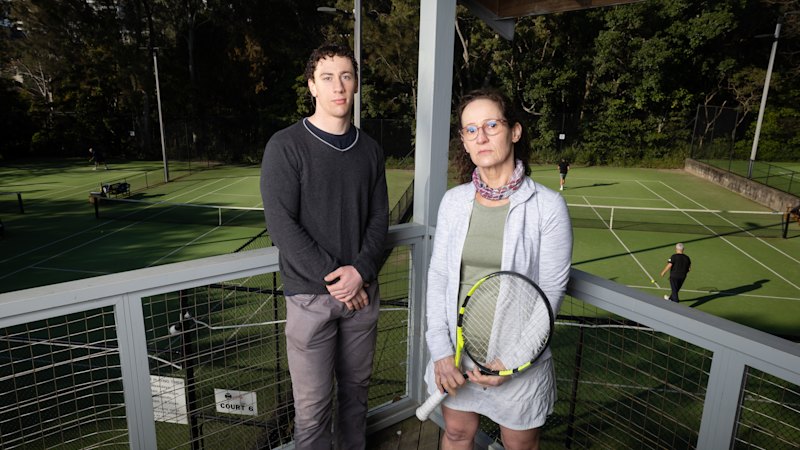
One of Sydney’s longest-running community tennis centres has been ordered to vacate its north shore home after an Aboriginal land council secured ownership of the site, setting up a high-stakes dispute that has drawn involvement from sporting champions, politicians and prominent media figures.
The Northern Suburbs Tennis Association (NSTA) will be required to hand over the keys to the eight-court Talus Street Tennis Centre at Naremburn by September 30 after receiving a formal eviction notice from the Metropolitan Local Aboriginal Land Council (MLALC), which took ownership of the Crown land reserve as part of a successful land claim in 2022.
The move threatens to end almost 50 years of tennis at the site, where generations of players have graced its courts alongside Australian champions Evonne Goolagong Cawley and Pat Cash.
The eviction notice has stunned members of the centre, which records more than 62,000 player visits annually and is regarded as one of the busiest community tennis facilities of its size in Sydney.
It has also thrust the reserve into an increasingly contentious debate over NSW Aboriginal land rights laws, particularly when land returned under the legislation is home to long-established community facilities.
At the centre of the dispute is the financial arrangement governing the site.
When the MLALC acquired the reserve, it inherited existing lease arrangements involving the NSTA, which has occupied the site since 1978, and Love’n Deuce, the private operator that has managed the tennis centre for about four decades.
Under those arrangements, the NSTA pays annual rent of $46,000 – a figure the MLALC has long argued falls well below the market value of a commercial operation occupying more than a hectare of valuable north shore land.
MLALC chief executive Nathan Moran said the land council had spent the past year reviewing the arrangements and considering whether to increase the association’s rent or seek an alternative operator willing to pay what it considers a fair return.
“As the owner, we have to cover insurance, rates and maintenance of the site, and the challenge is for us to ensure the site does not become a financial liability when it was meant to be provided as recompense under land rights,” Moran said.
“Paying $46,000 for operating eight commercial courts does not pass the pub test.”
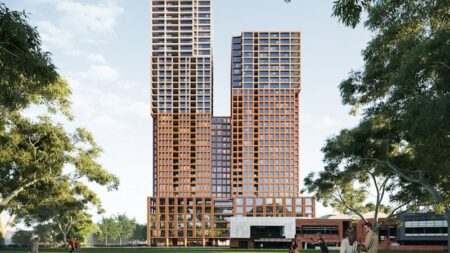
The land council has also been examining redevelopment options. Earlier this year, it submitted plans to the NSW government’s Housing Delivery Authority for an 18-storey, 303-apartment tower on the reserve. The proposal was rejected by the panel, although it noted alternative planning pathways remained open should the land council pursue redevelopment in the future.
NSTA president Wayne Pascoe said the association was prepared to consider paying substantially more to remain at the site but had been unable to secure a meeting with the land council to negotiate.
“Of course we were willing to look at the arrangements and increasing the amount we pay, and it’s been disappointing we haven’t had that opportunity,” he said.
Pascoe said the association had spent more than $10 million building and maintaining the facility since 1979, including more than $500,000 on upgrades during the past three years.
Financial records show the association generated $614,223 in revenue in 2025 and recorded an operating surplus of $98,465.
The prospect of losing the courts has alarmed club members, staff and residents, many of whom fear the community facility could be permanently lost.
Love’n Deuce executive director Paul Francis has established an advisory group including veteran broadcaster Ray Martin and former television presenter Steve Liebmann in an effort to negotiate a solution with the land council.
“People play here from age two to 82. I’ve got over 30 staff and their families, and some have been here 25 years. They’re already looking for other jobs, which breaks my heart,” Francis said.
“It’s not just about tennis. It’s about the social interaction. People have made lifetime friends here.”
Cammeray resident Jo Chapple, who regularly uses the centre while caring for her son with a disability, said the site’s value extended well beyond the courts.
“The less recreational sites we have in our city, the less liveable it will become,” she said.
“Everyone is completely shocked.”
The dispute is unfolding against the backdrop of a broader political battle over Aboriginal land claims in NSW.
Earlier this year, the NSW government proposed limiting the transfer of Crown land occupied by community and sporting assets to Aboriginal land councils following a string of successful claims involving prominent sites including Paddington Bowling Club.
The proposed legislation has faced strong opposition from Aboriginal organisations, including the NSW Aboriginal Land Council, which has argued the changes threaten to undermine established land rights.
Willoughby MP Tim James, a patron of the tennis centre, has called for government intervention, arguing the community facility should not be lost.
“It doesn’t sit right with me that a community asset that has served generations of local families is being forced out of a site it’s occupied for more than 40 years,” he said.
The Morning Edition newsletter is our guide to the day’s most important and interesting stories, analysis and insights. Sign up here.


From our partners
Read the full article here