





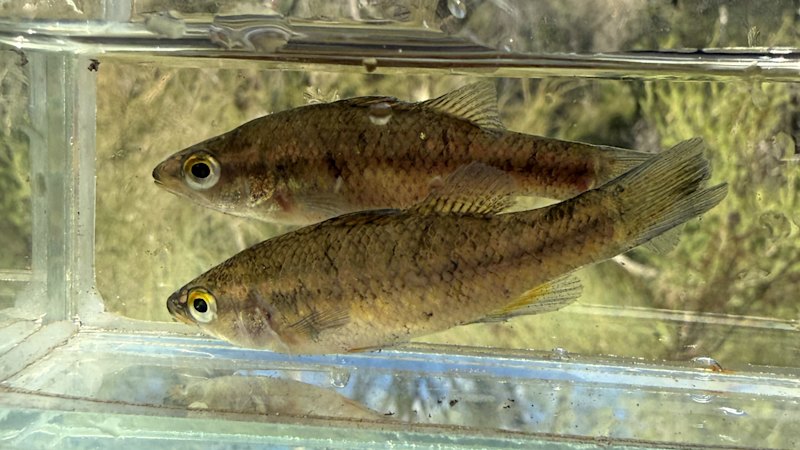
A research trial has led to a surprise discovery of a rare fish in the Perth Hills previously thought to be extinct north of Margaret River.
Three years ago, members of the Bibbul Ngarma Aboriginal Association (BNAA) undertook eDNA sampling as part of their BoorYul-Bah-Bilya program to assess the health of the Mandoon Bilya (Helena River).
The team expected to find a lot of information through the testing – eDNA detects the species present in an area through the DNA left behind in the environment – but they never imagined they’d come across Balston’s pygmy perch.
BNAA executive director and environmental scientist Francesca Flynn told WAtoday it took a while to confirm the eDNA sample was correct, but a recent survey with the Department of Water and Environmental Regulation left no doubt the fish was alive – and thriving.
“We went out with [DWER] and did this fish survey, and surveyed a lot of sites along that river, and it was there, in the area where we thought it was,” she said.
“It was amazing to find it. We were all really excited. I was crying. It was really special to think that little fish has survived, and it’s there.”
The team found 13 fish during the 24-hour survey.
BNAA BoorYul-Bah-Bilya ranger Trei Winmar was one of the team members who helped find the pygmy perch and said it was a “really great opportunity.”
“We have only just started as BoorYul-Bah-Bilya Rangers, so to have already found this fish has been great timing for us. Not many people get to see this fish, so it was amazing to be there and be part of the discovery,” he said.
“Hopefully, it will lead to us doing more of this kind of work – getting out on Country, discovering what’s still out there, and learning how we can better protect our rivers.”
Balston’s pygmy perch was understood to live across much of the South West region, but was long believed to have disappeared from most rivers and wetlands north of Margaret River.
The small fish typically grow to about 6cm in size and live in thick reeds along the edge of a river.
The fish species was located in the upper catchment above the Mundaring Weir and Flynn said she believes it’s because of the location that the fish were able to survive after all these years.
“What it means is that the river is, which we knew anyway, resilient and strong and special,” she said.
“It has really not been impacted like the other rivers have. A lot of the other rivers have had agriculture and mining and clearing and all kinds of stuff, whereas this river has been left alone.”
This discovery is not the first for the BNAA team. In 2024, the group found a new quokka population in the Perth Hills.
Famously associated with Wadjemup (Rottnest Island) the quokka populations are also known to exist in the South West and Great Southern’s forests; however, numbers have declined over the years.
“This was another win for eDNA because we found another locally extinct species that was thought to be long gone from this area,” Flynn said.
“We have a fauna monitoring program to understand what type of animals are living in the river … and this animal showed up on the fauna cameras.
“We were all excited, so we went out one day and collected some poo from in front of the camera and got it tested with eDNA again … and it was quokka poo.”
Flynn said the quokkas live along the creek lines in the similar spots the pygmy perch was found.
“There are more out there than you think,” she said.
“We’ve never seen one running across the road or in the bush or anything, they’re very well hidden, there’s absolutely no sign of them when you go out checking the cameras, except for their poo, but they’re out there.”
Flynn hopes the two discoveries can help bring better protection for the catchment area and the Helena River as a whole.
“There are a lot of things that this means, but ultimately, we hope it leads to better protection of this area, greater recognition that this is a very special place that is worth your protection, and also a lot more effort and resources to be devoted to understanding this fish … and the quokkas,” she said.
From our partners
Read the full article here