





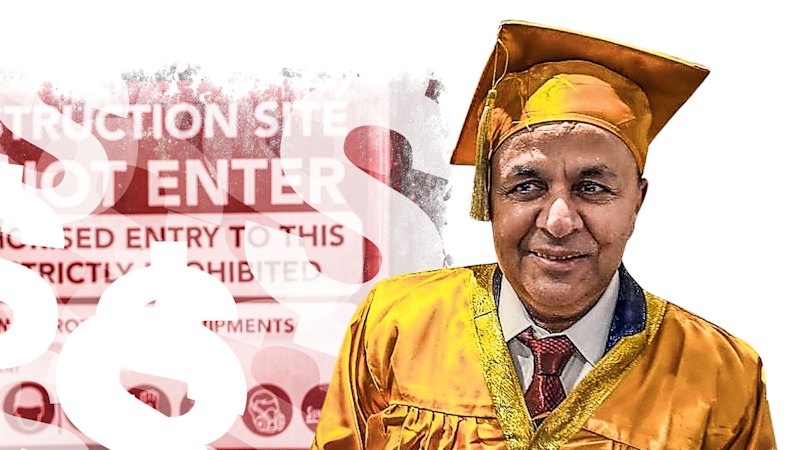
Five years ago, he was lauded as the “Baron of Blacktown”. Bathla Group founder Bhart Bhushan’s irresistible migrant success story – from a taxi driver to reclusive multimillion-dollar property developer – was celebrated across western Sydney.
His company was credited with changing the face of the region by building thousands of properties at prices that appealed to first home buyers.
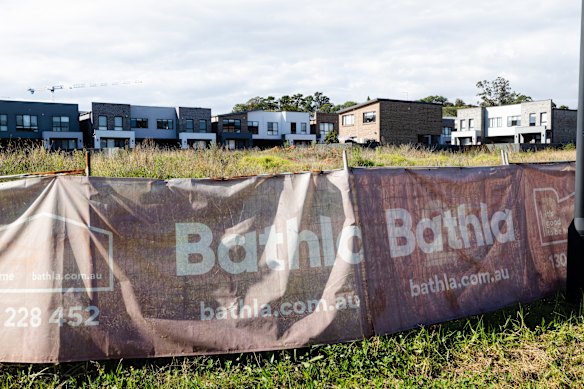
Bathla became a major sponsor of the Western Sydney Wanderers soccer club, while family members set about building a palatial spread in the city’s rural north-west. The red Bathla logo became omnipresent on fences, signage and cranes at sites from Box Hill and Marsden Park to Schofields, Castle Hill and beyond.
Today, however, all of it – his reputation, the fortunes of Bathla Group, and his family members’ dream home – lies in tatters.
The company went into voluntary administration with $3.4 billion of debt last week. It was the news many had dreaded, but expected, for weeks. The collapse leaves thousands of victims, including buyers with money tied up in unfinished developments, residents of homes with defects, as well as unpaid subcontractors, tradies, suppliers and staff, with little to no recourse.
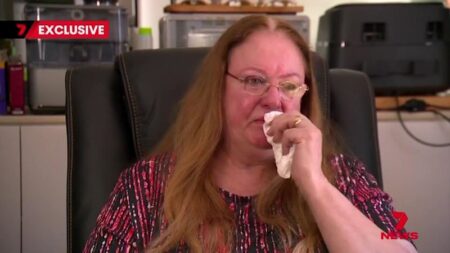
“We’ll be left in the dust,” said McDonald’s restaurant manager Harris Mazoudier, who has a Bathla apartment in Schofields that he says is riddled with defects.
The scale of Bathla’s debt is so extraordinary – equivalent to the cost of 17 of Australia’s futuristic F-35 fighter jets and their support systems, training, weapons, and infrastructure – that it poses the question: how did it come to this?
Indian-born Bhushan and his brother Rajinder Mohan founded the Universal Property Group, now known as Bathla, in 1997.
It was good timing. Western Sydney was undergoing rapid population growth, inflation was low, interest rates were falling and a new generation of migrant families was looking to buy.
While his formal qualifications are unknown, the then-33-year-old Bhushan was ambitious, shrewd, charismatic and a skilled negotiator. He took the lead while the quieter Mohan was said to be content to work behind the scenes.
The following year, they celebrated their first development of five red-brick townhouses in Girraween, the multicultural western suburb where their company headquarters is based.
Located around the corner from the highly ranked and then soon-to-be-selective Girraween High School, it was a smart move to attract the aspirational migrant buyers and members of the Indian diaspora they were targeting for sales.
Over the next decade, the brothers transformed the family business into an aggressive and fast-paced development machine, buying up swaths of land and completing 1000 townhouses, duplexes and houses before turning their attention to apartments.
Key to their success was value in a price-conscious market. “They gave people opportunities in the cheaper end of the market,” said Blacktown MP Stephen Bali, whose electorate is home to many of Bathla’s developments. “Low-cost housing has a role and people pay what they can afford.”
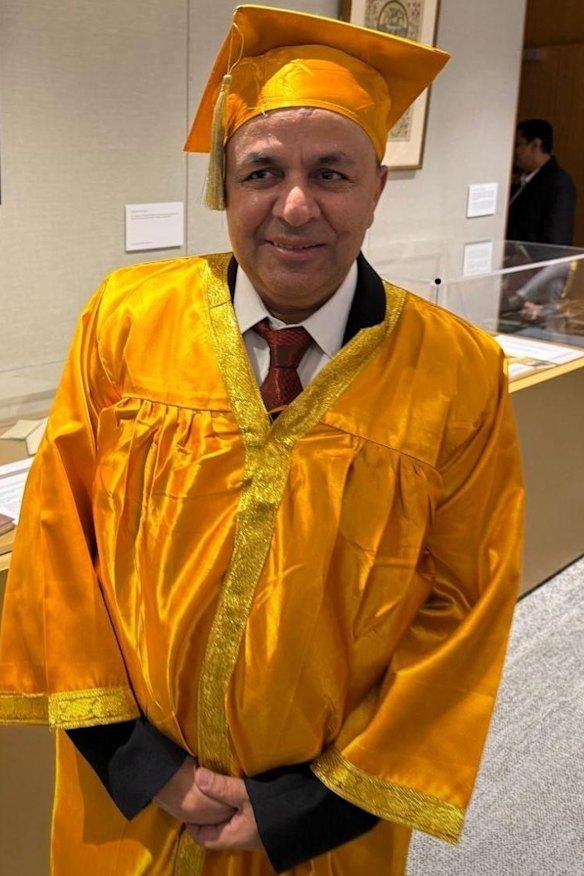
Now aged 62, Bhushan is described as “an enigma”. He never gives interviews, there’s only one official photo of him online, and he kept a low profile even when it came to his involvement with the Western Sydney Wanderers, which was terminated last week.
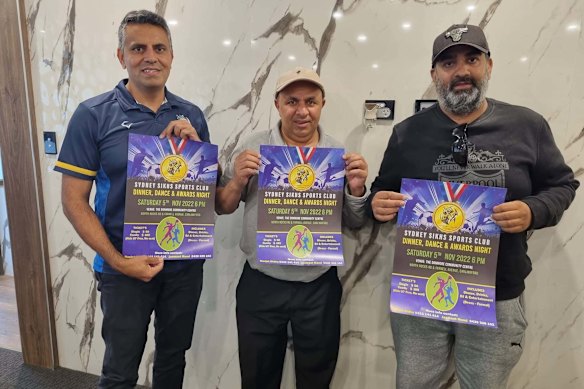
Bathla is also a long-term platinum sponsor of the Sydney Sikhs Sports Club, with an untagged Facebook photo from 2022 depicting Bhushan holding up a poster for an awards night.
“He’s reasonable to deal with, and he supported charitable organisations, which makes him human,” said Bali, who met with him several times. “But as a businessman, he was ruthless.”
Those who know him say he dreamt of a legacy family business and that he aspired to elevate the status of his company, moving into higher-quality homes.
But with a business model that was too risky for the banks, Bhushan financed his operations with loans from a string of private lenders that charge notoriously high interest rates. They included Ray White Capital, which reportedly lent Bathla $240 million, Centuria Capital and La Trobe Financial.

So what went wrong? Bhushan would describe “a perfect storm” of softening sales, the federal government’s May budget and the falling confidence of key markets. Spiralling construction costs also played a role.
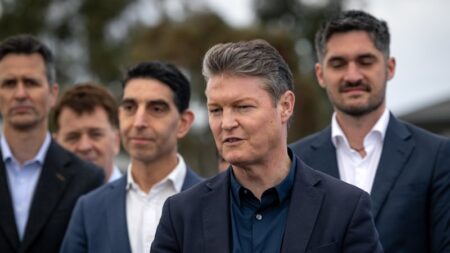
Western Sydney Leadership Dialogue chief executive officer Adam Leto says he’s not alone. Many developers in the area are struggling with tightening margins amid rising costs and falling demand.
“It’s a lot easier to sell a $1.5 million apartment east of Sydney Olympic Park than it is west of Sydney Olympic Park,” he says. “That’s the grim reality of it.”
In truth, there had been warning signs about Bathla for years. Growing debt. Unpaid contractors. A chorus of buyers disgruntled over unfixed defects. Court cases and tribunals.
When the end came, it came very suddenly. On August 25, the company made an announcement on its website and on social media titled “Bathla seeks orderly restructure of business”, and entered voluntary administration.

In its second decade, the company really hit its straps: by 2008, it had built 1000 homes; 10 years later, that figure had ballooned to 5000. Insiders say Bhushan was a master of efficiency and frugality in those years, keeping as much skilled work in-house as possible to control costs and driving a hard bargain on everything else.
Many of his staff were family, including his children and nephews, or foreign workers on working visas.
He was said to work 18-hour days; to be a micromanager who maintained a tight grip on control of all aspects of the business; and yet who dressed more like a labourer than a senior executive. And he loved to make a deal.
But the business was not without controversy. An investigation by corporate regulator ASIC raised flags over vendor finance Bhushan was offering to vulnerable buyers, many of whom were immigrants from non-English-speaking backgrounds, between 2004 and 2009.
In 2011, Bhushan and UPG agreed to an enforceable undertaking that meant borrowers could seek compensation if they believed they were the victims of unconscionable conduct.
The company was fined $135,000 by SafeWork NSW and it expressed remorse in 2018 after a surveyor’s assistant was seriously injured when he fell four metres and became impaled on concrete bars at a site in Doonside.
Concerns were also being raised over the quality of Bathla’s building work, described by some as “shonky” and prone to the results of cutting corners. Bhushan wanted to improve, according to those who knew him, but this seemed incompatible with his business model.
Former NSW Building Commission chief David Chandler, who blames non-bank lenders for the Bathla crisis, recounts meeting Bhushan briefly at an event.
“My message was to him, you would look a whole lot better in my eyes if you had an [Independent Construction Industry Rating Tool] rating,” he says. “But it didn’t happen.”
To get an ICIRT rating, a company has to undergo an independent assessment, including on financial viability, regulatory compliance, integrity and risk management.
As Bathla charged on in a seemingly unstoppable trajectory, Bhushan was increasingly locking horns over development with councils, often contesting decisions in the Land and Environment Court.
Bali, who was mayor of Blacktown at the time, said the council would refuse Bathla’s plans on the grounds of overdevelopment and inadequate amenity. “We would try and reduce [the number of homes in the development]. They didn’t like it and would take it to court to try and get it overruled,” he says. “The bill was over $1 million a year in legal costs.”
Schofields resident Mazoudier, who says there isn’t a single area of the Bathla apartment he bought off the plan that is unaffected by defects, was also pursuing legal action.
“The biggest one is the flooring, which needs to be pulled up and relaid,” he says. “The mixers in the shower are scratched; the kitchen cabinet has laminate peeling off; and the silicone in the bathrooms is poor and coming off.”
Residents of his building have raised the issues with Bathla representatives, he says, to no avail. “They didn’t seem to know what they were doing.”
By 2020, Bathla was expanding into regional NSW and to South Australia and Victoria. Two years later, it had started development on 2000 apartments and 1000 homes.
The Parramatta Advertiser crowned Bhushan the “Baron of Blacktown” in an article featuring the 50 most powerful and influential people in western Sydney.
On the surface, it looked like Bathla had made the big time and that he was flush with cash. At a series of formal “lucky draw” events for buyers of its Pinnacle Schofields apartment developments between 2021 and 2024, Bathla staff handed oversized cheques of between $20,000 and $500,000 to delighted prizewinners.
In events held in a function room at a leagues club and professionally filmed, guests were greeted with celebrity MCs, music, balloons, and a Bathla media wall for photographs and celebrations.

But even as the champagne flowed and Bhushan’s fame and business empire grew, cracks were starting to show.
Cashflow became a recurring issue: contractors were complaining of problems and delays in getting paid. Hoxton Park excavator Sanjay Sewak was among those chasing unpaid invoices.
“Getting my money was a real struggle,” he says. “I had to make several visits to their office in Girraween. It was very different from other customers that we deal with. It was always chopping and changing.”
Fed up, Sewak said he accepted several thousand dollars less than he was owed in order to get paid. The firm seemed “fairly inexperienced” with earthworks, he said.
He’s one of the lucky ones: a subcontractor told the Herald last week Bathla hadn’t paid him for between $700,000 and $800,000 worth of work, causing his own business to collapse from debts he was unable to pay off.
More signs emerged: developments were delayed, sites increasingly came under scrutiny from Building Commission NSW inspectors, and private lenders began warning investors of issues with Bathla.
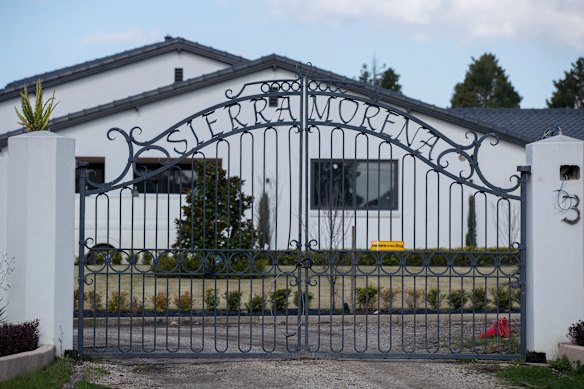
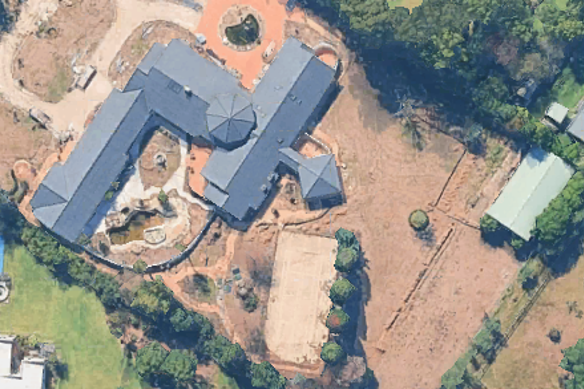
Work stopped on the extravagant $5.5 million family estate, Sierra Morena in Dural, which was planned to include a tennis court, swimming pools and a basketball court.
The trophy estate now sits in limbo alongside 2500 partially built Bathla properties, plus another 14,000 proposed homes that may never be completed.
Bathla was a house of cards that should have been exposed earlier, according to Environa Studio architect Tone Wheeler. He believes there were missed opportunities for regulators to intervene over building quality, site conditions and financing. “It is going to take down a huge part of this industry,” he says.
Lifting the bonnet of Bathla further reveals a web of hundreds of subsidiaries, each linked to separate developments. Some in the industry are suspicious, likening it to a Ponzi scheme and saying this could leave buyers without recourse if issues arise after subsidiaries are wound up.
There’s also reported to be some reluctance to complete partially built Bathla projects because of fears new developers may not be adequately indemnified for potentially substandard work.
It’s a very different picture to what Bhushan envisioned for his company almost 30 years ago.
“Was he good for Blacktown?” says Bali. “To me, no. He has left the legacy of overdevelopment and issues for the community. You need parks, reserves and amenity, not just jamming as many small units in as you can.”
With Ellie Busby and Anthony Segaert
Start the day with a summary of the day’s most important and interesting stories, analysis and insights. Sign up for our Morning Edition newsletter.
Read the full article here