





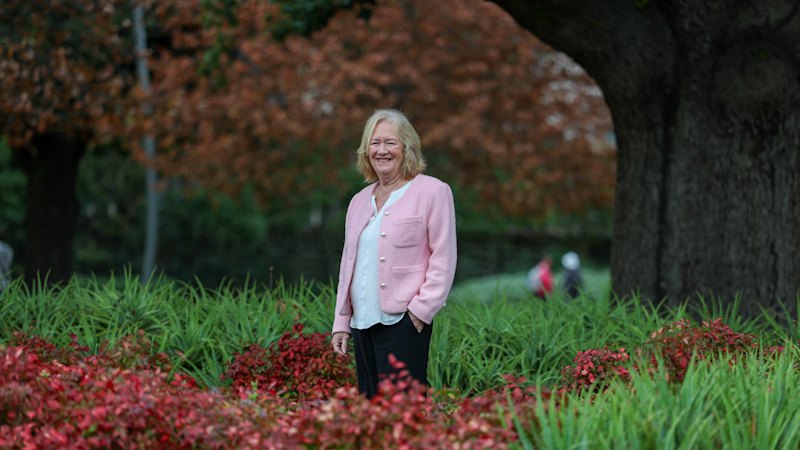
Carolyn McGrath was certain that she would be dead by now.
When she was diagnosed with multiple myeloma more than a decade ago, there was no hope of a cure for the cancer that was eating away at her bones and leaving her in agony.
The grandmother of seven went through years of gruelling treatments. Stem cell transplants and rounds of chemotherapy all controlled the blood cancer for a little while. But it came back, as it always did, developing a resistance to every treatment thrown at it.
The 68-year-old had run out of options and was edging towards a slow, painful death, when she was put on a global clinical trial using a bispecific antibody immunotherapy drug known as Elranatamab in a last-ditch attempt to save her life three years ago.
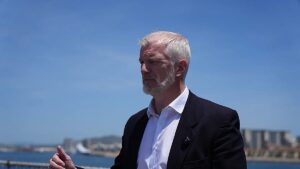
Professor Miles Prince, director of the Epworth Centre for Immunotherapies and Snowdome Laboratories in Victoria and a lead researcher on the trial, said what happened next was the type of “little miracle” he had spent his entire career working towards.
McGrath went into remission.
Of the more than 120 patients across the world who were in their final stages of the disease and who were put on the clinical trial, more than 60 per cent had their cancer shrink while being injected with Elranatamab. About 35 per cent had their disease become undetectable, and among many, their cancer has not returned in two years.
“I see patients daily now who should have otherwise been dead years ago,” Prince said.
Following the success of the clinical trial, which was run out of the Epworth and St Vincent’s hospitals, the drug has now been added to the Pharmaceutical Benefits Scheme, taking away a cost of more than $25,000 a month.
Hundreds of Australians diagnosed with myeloma who have exhausted every treatment are now using the drug. Without it, Prince estimated, most of them would have been dead within six months.
Multiple myeloma is incurable and has one of the lowest life expectancy rates of all blood cancers, with a 61 per cent chance of surviving for five years after diagnosis.
Australia has the highest incidence of myeloma in the world. It is something that has long perplexed researchers, but it is believed Australia’s heterogeneous population, the nation’s early diagnostic testing system and an ageing population all play a role.
Last year, more than 2700 Australians were diagnosed with multiple myeloma – a number expected to almost double by 2043.
But immunotherapy is revolutionising treatment for blood cancer, and advancements across the world are exciting scientists and doctors with its remarkable success of modifying a patient’s own immune cells to recognise and kill malignant cells.
“We’re shooting for a cure for these cancers,” Prince said. “The cure for myeloma, we can now see it coming. We’ve just got to get all the drugs right.”
When myeloma develops, it shuts down the body’s immune system to the cancerous cells, Prince said. “The body’s own white blood cells can no longer recognise and kill the myeloma cells, so they’re numb … basically the immune system is unresponsive to the cancer; it doesn’t see it.”
Elranatamab functions like a magnet that can supercharge a person’s immune system, acting as a bridge between the cancer cell and the immune system so that the white blood T cells can jump onto myeloma cells and kill them.
McGrath keeps the disease, which originates in the plasma cells of the bone marrow, at bay with a single injection once a month, administered at the Epworth Hospital.
“I reckon it is terrific,” she said. “I can’t believe it. I just think, ‘Oh my goodness, how lucky am I?’.”
McGrath, who lives in Tooradin, 57 kilometres south-east of Melbourne’s CBD, said her body responded dramatically to the drug for the first few months. Her hair started falling out, and she developed rashes and fevers. But now, she has no symptoms.
‘It really is a climate change moment as we move ahead. Ultimately, chemotherapy is becoming the fossil fuel and the immunotherapies are the renewables.’
Professor Miles Prince
Doctors have realised the trick is not to activate the immune system too much.
“I lead a completely normal life,” said McGrath, who is planning a trip to Western Australia with her husband this year.
Prince now treats an increasing number of cancer patients who go through their entire treatment without ever having chemotherapy.
“It really is a climate change moment as we move ahead,” he said. “Ultimately, chemotherapy is becoming the fossil fuel and the immunotherapies are the renewables.”
Earlier this month, the federal government made a landmark announcement that another type of immunotherapy – Carvykti, a CAR T-cell therapy – would be made freely available in public hospitals for people with multiple myeloma who do not respond to current treatments or who relapse.
“There’s been some key discoveries of what the Achilles heel of these blood cancers are, and we are now getting a grip as to how the immune system can treat other cancers in the same way,” Prince said.
He said researchers were turning their attention to how such treatments could treat solid tumours including breast, prostate and bowel cancers.
Prince said that while the new available treatments were welcome, the Australian government must stop “sleepwalking” into the future and urgently fund more pioneering immunotherapy treatments.
“This is the future of how we are going to treat cancers,” he said.
Start the day with a summary of the day’s most important and interesting stories, analysis and insights. Sign up for our Morning Edition newsletter.


From our partners
Read the full article here