





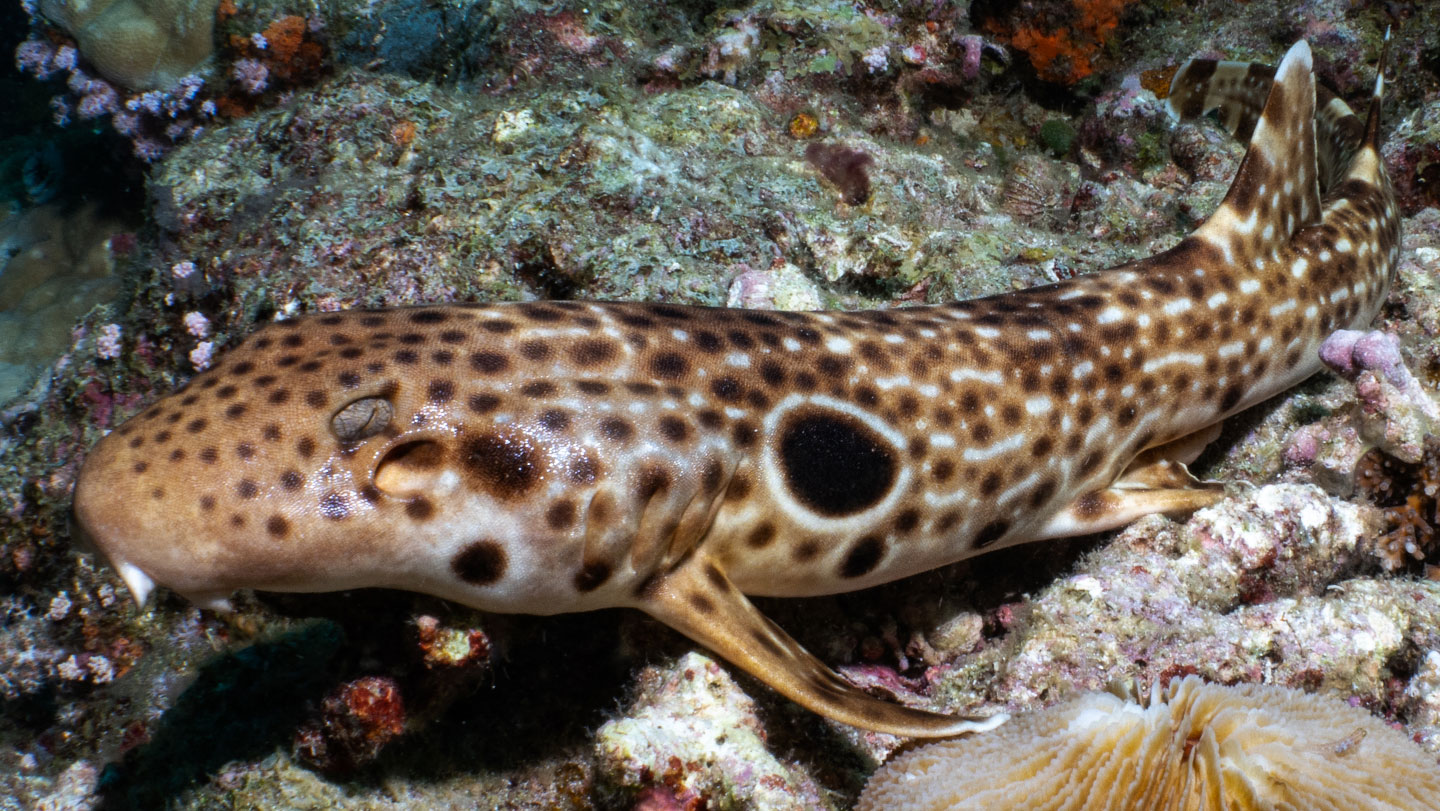
It sounds like a scene out of a horror movie: a shark that can walk. In reality, walking sharks “are the cutest sharks that you’ll ever see,” says marine scientist Jessica-Ann Blakeway.
So imagine her thrill when she and her team came upon a walking shark with unusual markings while diving at night on a reef in Milne Bay, Papua New Guinea. This one had “little white dashes along its body and lots of smaller brown dots,” Blakeway says, not the leopard-like spots of the other walking sharks they’d been surveying.

Hopeful it was a new species, the divers searched for more along nearby reefs over the following two days in March 2025. They ultimately found 12 altogether, says Blakeway, of the University of the Sunshine Coast in Queensland, Australia. Genetic tests revealed that the fish, now dubbed the Dudgeon walking shark (Hemiscyllium dudgeonae), is new to science. It’s only the 10th known species of walking shark, the team reports June 15 in the Journal of the Ocean Science Foundation. Locals call this slow-moving shark kadedekedewa, which means dog shark or lazy shark.
“Sharks sometimes get a bad name, but walking sharks are quite docile and easy to connect with,” Blakeway says. The fish use their muscular pectoral and pelvis fins to move across reefs or the seafloor in an undulating crawl. These small bottom-dwellers have also adapted to slow their heart and breathing to survive out of the water for a few hours. This allows them to hunt for crabs, worms or small fish trapped in shallow pools at low tide.
The new species was an unexpected discovery during surveys to learn more about the distributions of two other walking sharks, the leopard walking shark (H. michaeli) and the Papuan walking shark (H. hallstromi). “To our knowledge and based on interviews with local communities, the species don’t overlap,” Blakeway says.
The region’s tectonic activity isolated walking shark populations over millions of years, the team proposes. Since these sharks have very small ranges, they are even more vulnerable to reef degradation and fishing pressure. Five of the 10 species are currently listed as threatened with extinction on the International Union for Conservation of Nature’s Red List.
That should raise an alarm for more than just the sharks, Blakeway says. “Walking sharks are quite hardy, so if they’re struggling … other marine species will be struggling as well.”
Read the full article here