





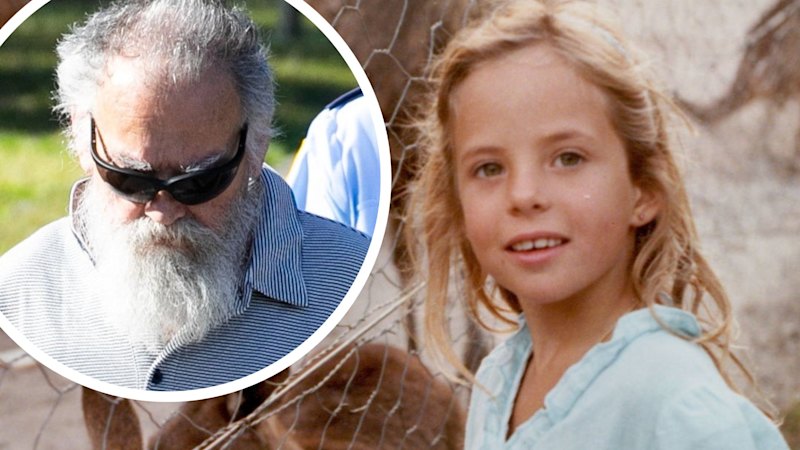
No tears were shed for serial child abuser Michael Anthony Guider, who drugged and killed nine-year-old Sydney girl Samantha Knight, when he suddenly died in prison in 2024.
Two years on, survivors hope a court will take “one of the final opportunities” to find answers from Guider’s life, including examining the location of Samantha’s body and to uncover the full extent of his heinous crimes.
Guider was 73 and was sitting in his cell in Long Bay prison, complaining about shortness of breath in September 2024. His heart was giving out.
He died in Prince of Wales Hospital, five kilometres and four decades away from Bondi, where he committed crimes against a dozen children during the 1980s.
A death in custody automatically triggers a coronial inquest, usually to examine the prison’s management of the deceased inmate’s health and wellbeing.
But when NSW Deputy State Coroner Rebecca Hosking convenes her court to explore Guider’s death on Monday, survivors hope the questions will dig deeper into Guider’s life.
“One of the greatest tragedies is that Samantha Knight’s family was never given the answers they deserved,” Chantelle Daly, who survived Guider’s abuse herself, told the Herald.
“Guider never honestly (in my opinion) revealed what happened to Samantha’s body, and, because of that, she was never found.
“No family should be denied the opportunity to bring their child home and lay them to rest. My thoughts remain with Samantha’s family and the unimaginable burden they have carried for so many years.”
Daly hopes this week’s inquest will examine whether Guider committed further crimes or victimised other people who were never fully investigated or understood.
“While he was convicted for some of his offences, there will always be questions about the full extent of the harm he caused,” she said.
What is known is that Guider drugged and killed the nine-year-old in 1986 after abducting her from near her home in Sydney’s east.
But it was not until February 2001 that Guider was arrested for the crime, after he told fellow inmates he dosed the young girl with sleeping pills, and “must have put too much” in her drink because she wouldn’t wake up.
He was in prison at the time, serving lengthy prison terms for assaulting more than a dozen children from 1980 to 1996. He continued to drug children and photograph them after killing Samantha.
Guider pleaded guilty to manslaughter for Samantha’s death in 2002, but he never revealed where her body was left.
Despite the horrific scale and toll of Guider’s crimes against children, and his refusal to accept responsibility, he was granted day release from Long Bay and then walked from prison entirely in 2019.
The courts had heard Guider described as a “committed paedophile” but they felt assured the 68-year-old could be released under strict supervision, on anti-libido drugs.
Samantha’s family and Daly were shocked to hear him described as a “model prisoner” who had been given day release around children.
“Why is it the state has felt unable to pass laws that would ensure no one else could die at the hands of a convicted killer?” Samantha’s mother, Theresa Knight, wrote in 2020 while calling for harsher penalties for child killers.
“There is no way a killer’s debt can ever be fully repaid because the loved one will never return.”
The fears of Guider’s reoffending were ultimately realised. In 2022, police found he had been using his smartphone to download child abuse material, despite the strictest supervision possible.
Daly said the laws around child abusers were improving, but Guider showed how much more needed to change, including “meaningful consequences” for offenders.
“It has always been about truth, accountability, and ensuring that the voices of survivors are heard, and trying to bring attention to how much the justice system was failing and how desperately laws needed to change,” Daly said.
“We owe it to victims, survivors and their families to keep pushing for a system that better protects children and delivers justice.”
The inquest, Daly said, was not simply the final chapter of Guider’s story, but a chance to acknowledge the courage of his victims and their families, which continues.
“The effects of child abuse do not end when an offender is imprisoned or dies. Survivors continue to live with those experiences long after the headlines fade,” she said.
Chantelle Daly – Michael Guider survivor statement
As someone who survived Michael Guider’s abuse and whose evidence helped secure his conviction, tomorrow brings a mix of emotions.
For many years I fought not only for justice for myself, but for the other children he harmed and for Samantha Knight, whose life he tragically took.
While tomorrow may be one of the final opportunities for the justice system to formally examine Michael Guider’s crimes and death, I hope the focus remains where it belongs: on the victims and their families whose lives were forever changed by his actions.
For me, this has never been about giving Guider any further notoriety.
It has always been about truth, accountability, and ensuring that the voices of survivors are heard, and trying to bring attention to how much the justice system was failing and how desperately laws needed to change.
While his death means there may be questions that are never fully answered, it does not erase the harm he caused, nor the lifelong impact carried by those he abused.
One of the greatest tragedies is that Samantha Knight’s family was never given the answers they deserved.
Guider never honestly (in my opinion) revealed what happened to Samantha’s body, and because of that she was never found.
No family should be denied the opportunity to bring their child home and lay them to rest.
My thoughts remain with Samantha’s family and the unimaginable burden they have carried for so many years.
I also hope this inquest examines whether there are any other crimes or victims connected to Guider that have never been fully investigated or understood.
While he was convicted for some of his offences, there will always be questions about the full extent of the harm he caused.
The effects of child abuse do not end when an offender is imprisoned or dies.
Survivors continue to live with those experiences long after the headlines fade.
I hope this inquest is not simply viewed as the final chapter in Michael Guider’s story, but as an opportunity to acknowledge the courage of the victims and families who came forward, often at great personal cost, in pursuit of truth and justice.
While I believe the justice system has made some important progress and is moving in the right direction, I also believe there is still a long way to go.
Laws relating to child abuse and crimes against children must continue to evolve, and there must be meaningful consequences for those who commit these offences.
We owe it to victims, survivors and their families to keep pushing for a system that better protects children and delivers justice.
I hope this process provides some measure of understanding, acknowledgement and closure for all those impacted, while also reminding us that there is still work to be done.
From our partners
Read the full article here