





The troubled NSW Firearms registry had no in-house intelligence capability in the years before the Bondi Beach terror attack, which prompted internal warnings of a significant risk to public safety, the royal commission has heard.
The firearms registry, which NSW Police Minister Yasmin Catley described as a “shambles” in the weeks after the December 14 massacre, was left without a senior intelligence analyst from November 2021, when the position was terminated, until December 2023.
When the role was reintroduced, it remained unfilled until February 2025, the Royal Commission on Antisemitism and Social Cohesion was told on Wednesday.
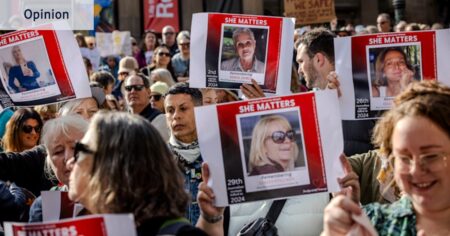
Gun ownership laws have been the focus of state and federal governments following last year’s Bondi attack, where 15 mostly Jewish people were gunned down at a Hanukkah festival. One of the gunmen, Sajid Akram, legally owned six guns at the time of the massacre.
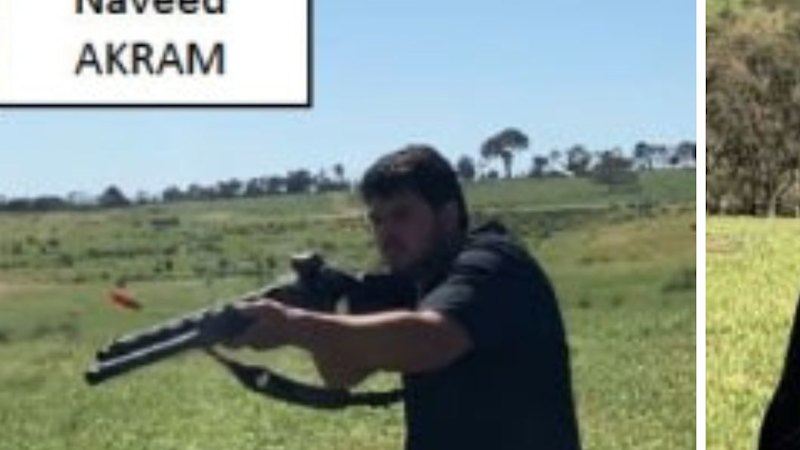
Akram applied for a NSW gun permit in 2020, which was granted three years later even though he lived with his son, Naveed, who had been investigated by ASIO for his suspected links to terrorist sympathisers in 2019.
In a statement to the commission, ASIO boss Mike Burgess confirmed Naveed had also been subject to “residual risk processes” in NSW in 2022, raising further questions as to how Sajid was able to obtain his gun licence.
NSW Police Assistant Commissioner Kirsty Heyward, who oversees licensing enforcement, told the commission on Wednesday that a “clunky” spreadsheet was used within the firearms registry, which meant multiple people were involved in assessing a single application for a licence and they may have had to go to different agencies to access information lodged at different times.
This presented a risk of a “slip or miss of information” between assessments of different adjudicators, the commission heard.
The commission also heard that only one in six gun clubs have been added to the NSW Police’s online registry Gun Safe.
Gun Safe was introduced in 2019 to automate tasks involved in gun licensing and create a real-time register of firearms and licences. It requires gun clubs to upload annual reports, which are monitored by police, and allows for the identification of non-compliance by gun club members.
Of 581 gun clubs in NSW, only 97 have been onboarded onto Gun Safe, the commission heard.
“I’ve been guaranteed three times by the commander of the firearm registry that that will be achieved by the end of the year,” Heyward said, adding two temporary positions had been recently created to assist with the task.
Heyward was asked about a 2021 internal review into the firearms registry which found the intelligence analyst role was “underutilised, only reactive, and duplicated the work of the adjudicators”. That review was undertaken before she was in her current role, she said.
The review stated the lack of an in-house intelligence capability presented a “significant risk to both public safety and the NSW police force”, the commission heard.
Gun laws were explored in the commission’s interim report, released on April 30, with a recommendation the federal government prioritise a national firearms agreement together with a national gun buyback scheme.
NSW announced a four-gun ownership cap in December. The ACT has announced a five-gun cap, based on Western Australia’s laws implemented in 2024.
However, the buyback scheme is at risk of collapse, as NSW is the only state to sign on, with several states pushing ahead with their own schemes. This week Victorian Premier Jacinta Allan insisted an ownership cap was unnecessary.
Burgess this week gave evidence to the commission, with his heavily redacted statements later publicly released.
In one of several statements, Burgess called for ASIO to be granted access to the National Firearms Register, which he said would “significantly assist ASIO … [in] knowing whether a person under active investigation in connection with violent extremism has access to firearms”.
Burgess’s submission said information about whether an individual has membership to a shooting or hunting club could also have “utility” for ASIO.
Earlier on Wednesday, NSW Police Deputy Commissioner David Hudson told the commission he believed giving the Community Security Group (CSG), which provides private security services to the Jewish community, additional powers or privileges would be “problematic”.
In his statement, read to the commission, Hudson said CSG does not and should not supplant or displace the role of the police in protecting all members of the community, and police would have “considerable reservations” about granting additional law enforcement powers or privileges to CSG.
In the aftermath of the Bondi attack, Premier Chris Minns floated giving CSG greater ability to carry weapons at events.
Hudson also told the commission that Commonwealth and state law enforcement, security and intelligence agencies each had “different interpretations” on how information was shared between agencies.
NSW Police had a “very open” interpretation of the Protective Security Policy Framework, which governs what information can be shared, but said other agencies weren’t as transparent.
“If there is risk or threat, we will share information with other agencies, but other agencies can, on occasions, not be so forthcoming, and that has created a difficulty in dealing with other agencies in terms of the relationship with information sharing,” he said.
Hudson also confirmed a new armed response command launched in response to the terror attack may not be fully realised until 2028.
The new command will have access to weapons such as long arms while on patrol. It will create an additional 250 positions, including 210 armed frontline officers and 40 others in the command structure and intelligence.
Start the day with a summary of the day’s most important and interesting stories, analysis and insights. Sign up for our Morning Edition newsletter.


From our partners
Read the full article here