






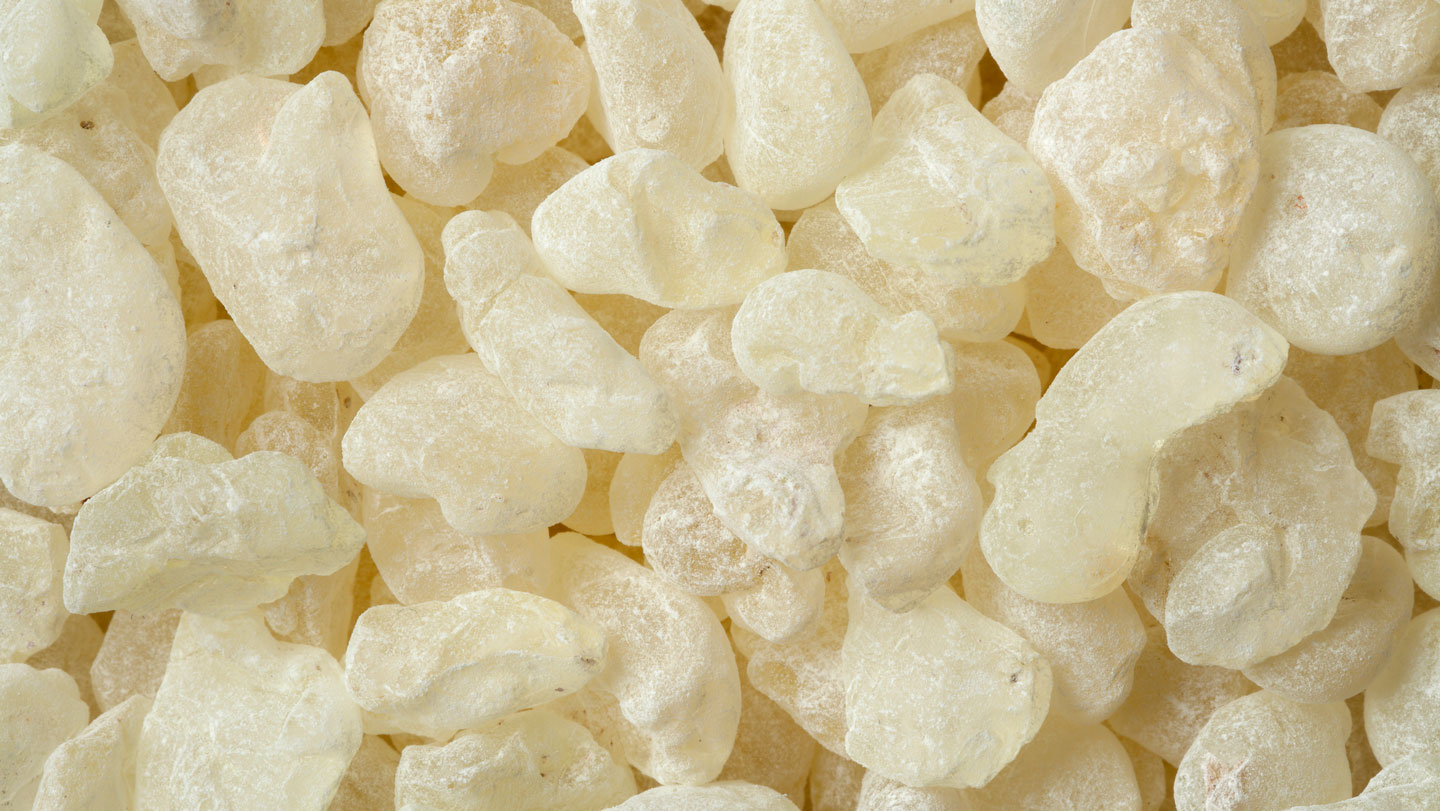
On the island of Chios in the Aegean Sea, ancient Greeks gnawed on dried sap from the mastic tree to treat stomach upset. Greek philosopher and physician Hippocrates even used the resin as an herbal remedy for gastrointestinal disorders. Thousands of years later, social media creators are promoting mastic chewing gum as a way to boost gut and oral health and even chisel the jawline. But not all the claims are backed by science, experts warn, and there are risks to chewing mastic.
The companies that sell modern mastic gum, which has added ingredients like spearmint for flavor and calcium to boost enamel, promise health benefits shared by traditional cultures. Though the resin’s health effects haven’t been researched much in people, some small studies suggest that Hippocrates was onto something. Several common plant compounds found in the mastic tree have well-documented antibacterial and anti-inflammatory properties. Research indicates these compounds may fight the ulcer-causing bacteria Helicobacter pylori and ease symptoms of Crohn’s disease, irritable bowel syndrome and dyspepsia — a type of chronic indigestion. The compounds have also been shown to reduce cholesterol and blood sugar levels.
However, few of the studies involved people actually chewing mastic gum. Participants typically took oil or powder supplements of concentrated plant extracts. “In gastrointestinal and metabolic conditions, chewing mastic gum does not have considerable efficacy,” says pharmacologist Roja Rahimi of Tehran University of Medical Sciences in Iran.
But chewing mastic does have oral health benefits, such as reducing plaque buildup, helping prevent cavities and gum disease, and potentially fighting oral cancer, a review published in 2023 in the Journal of Natural Medicines found. Mastic compounds seem to limit the spread of cancerous cells and trigger their death, clinical research suggests.
Mastic’s antibacterial properties might also make your breath smell better. Teenagers who used mastic toothpaste three times a day for two weeks lowered breath levels of stinky hydrogen sulfide, a byproduct of bacterial fermentation, researchers reported in 2025 in the Journal of Breath Research.
When it comes to claims of mastic’s aesthetic effects, the evidence takes a nosedive. Three out of five major mastic gum brands marketing on TikTok push the jaw-sharpening angle. But there’s no research to back up these claims, says orofacial medicine specialist Anette Vistoso of the University of Southern California in Los Angeles.
Few scientists have looked into whether chewing mastic or everyday gum can change face shape. One study suggests it doesn’t. Chewing typical gum three times a day for six months had no effect on the appearance of the jawline, researchers in Korea reported in 2024 in the Journal of Oral Rehabilitation.
Chewing firm gum can strengthen jaw muscles too much, Vistoso says. She has seen many gum-chomping patients develop jaw pain or clench so strongly that they grind through a night guard. Vistoso doesn’t recommend chewing any sort of gum.
If you’re keen on the gut and metabolic effects that mastic offers, Rahimi says, ask your doctor about oil or powder capsules. But she emphasizes that mastic isn’t a panacea. “I do not recommend long-term use of herbal medicines for healthy individuals. The best strategy for them is lifestyle modification and eating healthy foods,” Rahimi says. “However, in people who suffer from bad breath, dental and gingival problems, chewing mastic gum may help.”
Read the full article here