




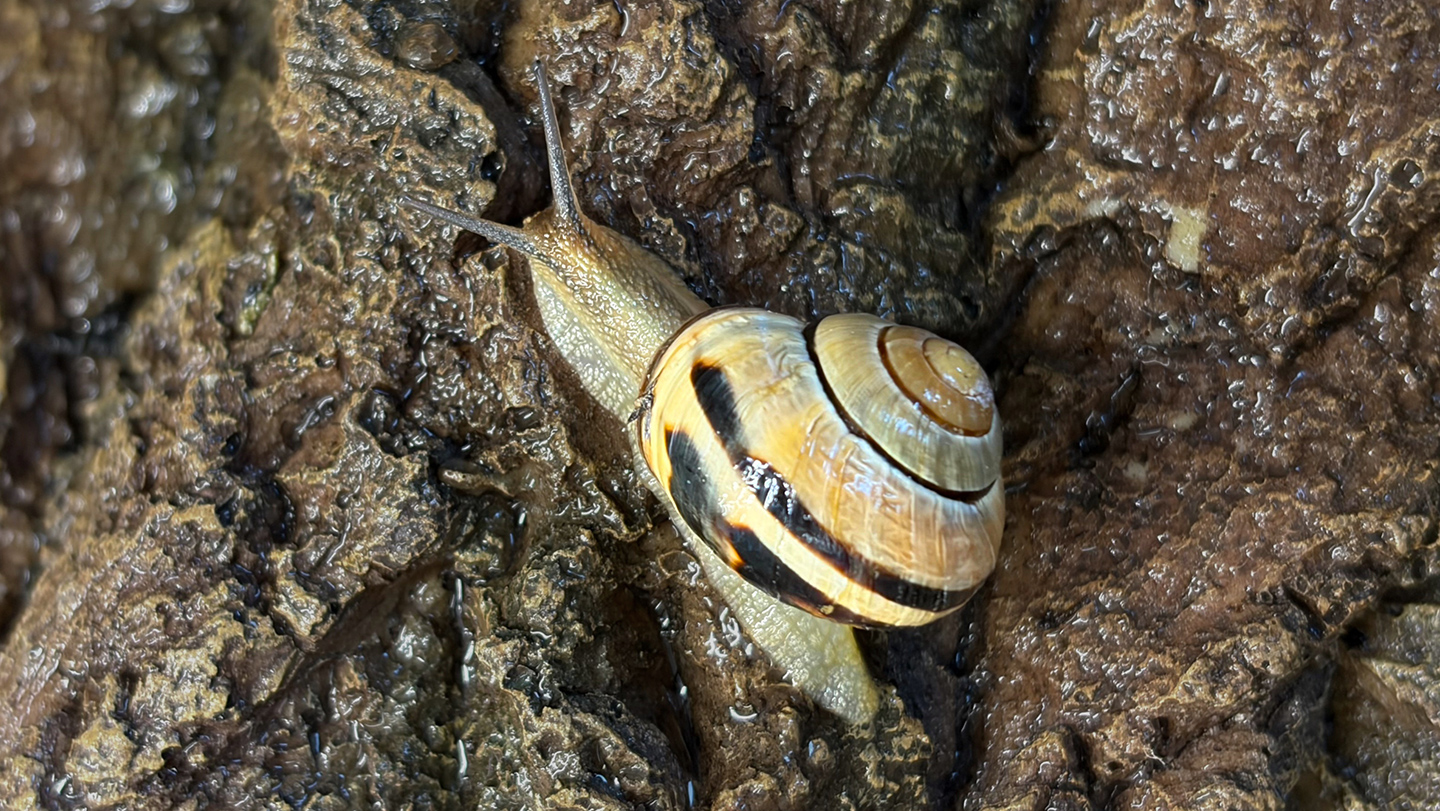
Not all slime is created equal. A species of land snails tweaks its slime’s chemical recipe to create five different varieties of mucus, using each for a particular job.
Depending on the amount of calcium added to the mix, these sundry slimes can range from a slippery lubricant to a boogerlike glue, researchers report August 6 in Science. The nimble physics of the mucus may inspire the design of new materials that can shift their mechanical properties.
There are myriad uses for mucus in the animal kingdom. Hagfish choke predators with an expanding cloud of gunk. Tubelip wrasse fish use their snotty lips to safely nibble on stinging corals. Mucus can be used to make a protective shield, a sticky gripping surface or a way to slide around.
While watching terrestrial snails, biochemist Franziska Jehle noticed that they stuck themselves to surfaces using their mucus. “I wanted to know what distinguishes this mucus from the one used for locomotion,” says Jehle, of the Max Planck Institute of Colloids and Interfaces in Potsdam, Germany.
The snails seemed capable of making individual slimes with contradictory properties — sticking in place versus reducing friction being one striking example. Some slimes were films. Some were foams. It wasn’t clear how this slime could be so versatile or what chemical components were responsible for the different properties.
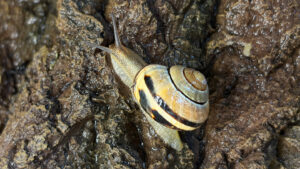
In the lab, the researchers categorized the different mucus types they collected from grove snails (Cepaea nemoralis). They scraped lubricating mucus from glass bowls after snails had slid across them. They plucked sticky mucus from the shell openings of snails that had stuck themselves to the inside of their terrarium. They even dragged a spatula along the snails’ shells to get them to produce mucus in a threatened state. Then, the team analyzed the chemical composition and underlying structure of each mucus.
The snails make five distinct types of mucus. They secrete an iridescent adhesive slime, a lubricant for sliding around on their muscular foot and a thin film called an epiphragm that seals their shells’ opening during hibernation periods. They also defend themselves with either a bubbly foam or a thick, yellow mucus.
A chemical analysis suggests that the same types of structural proteins were largely present in the different mucus types and were dominated by a form of collagen. But the amount of protein varied and was highest in the two defensive slimes.
The researchers also measured the concentrations of different chemical elements in the mucus and found that the calcium concentration differed dramatically in each mucus variety. The stiff epiphragm had the highest calcium levels, with 420 milligrams per gram — nearly 17 times higher than the lubricant mucus.
When the researchers looked at mucus-making glands in the snail foot with a high-powered microscope, they saw dense stockpiles of calcium carbonate. Jehle and her team think the snails can modify the base formula of their goopy products not only by tweaking the protein inputs, but also by altering calcium levels excreted from the mucous glands.
Calcium can influence the mechanical properties of the mucus by linking molecules together. The snails also seem capable of controlling what chemical form of calcium is incorporated into the slime. The epiphragm and adhesive types of mucus, for instance, are reinforced by calcite.
“Calcium is often associated with hard, mineralized tissues such as shells and bones,” says Victor Ajisafe, a biomaterials scientist at the University of Texas at El Paso. “But here it appears to have a much broader materials function.”
The slime might help inspire the development of materials that can be easily altered for different uses, says Ajisafe.
“The lubricant mucus reportedly becomes more fluid when subjected to stress and more solid-like when relaxed, which is a desirable property for materials that must flow during application but remain in place afterward,” Ajisafe says. Such materials might be useful in protective coatings or in wound or tissue repair.
Before applying these properties to human uses, it’s important to know how the snails fabricate and assemble these slimes. Jehle says she and her colleagues are now studying snail glands and tissues to better understand how the snails create their boogery blends.
Read the full article here