




The West Australian government has emerged largely unscathed from the landmark native title case that awarded the Yindjibarndi people of the Pilbara more than $150 million in compensation in their legal fight with mining giant Fortescue.
On Friday, the federal court published the 1300-page judgement in the civil case that saw the Yindjibarndi Ngurra Aboriginal Corporation awarded a record figure in native title compensation for cultural loss.
In his judgement, Justice Stephen Burley confirmed that Fortescue is liable to pay the entirety of the compensation sum, with the state government ruled it was not financially responsible for any of the claim.
The court upheld the constitutional validity of the WA Mining Act which shifts the liability to pay native title compensation for the grant of mining tenements onto the tenement holder, in this case Fortescue.
The Andrew Forrest-led company had attempted to argue that the relevant Mining Act section was constitutionally invalid due to inconsistencies with the Commonwealth Native Title Act, which would have made the state liable to pay the $150 million award.
However, Burley rejected Fortescue’s challenge, keeping the financial burden firmly on the mining company.
The court also ruled that the WA government will be able to retain the full benefit of the mining royalties collected from the Solomon Hub Project.
During the legal proceedings, YNAC had advanced an alternative argument that, if the state were found liable to pay compensation, it should be forced to pay an amount equal to 90 per cent of the rents and royalties it received from Fortescue, based on the Mining Act.
However, the court rejected the approach, noting that the Yindjibarndi people do not have ownership of the minerals, which remain the property of the Crown.
A Fortescue spokeswoman called the ruling “a detailed judgement in a complex and long-standing matter” and said the company will take the time to carefully review the court’s findings in full.
“We have always accepted that fair and proper compensation should be paid to the Yindjibarndi People and consistently sought to reach an agreement outside of the courts,” she said.
“After more than 20 years, our hope is that the compensation determined by the court can now flow to the Yindjibarndi community and be used to support elders, families and future generations.”
“If given the opportunity, we stand ready to pay that compensation tomorrow. However, cash payments alone will not deliver the practical, long-term outcomes communities need.”
The spokeswoman said the company remains committed to working respectfully with traditional custodians, including the Yindjibarndi people, and creating stronger futures together.
“The longer this remains tied up in a legal process, the harder it is for all parties to focus on broader solutions and opportunities that come with long-term partnerships, including employment, training, business development and economic participation,” she said.
“At Fortescue, we have always believed that when you operate on someone’s country, the people of that country should share in the opportunities created from it.
“For more than two decades, we have worked alongside traditional custodians across the Pilbara to create those opportunities through jobs, local business development, skills training and long-term economic participation.
“Those partnerships have always been about much more than compensation alone”
The Yindjibarndi compensation case was filed in February 2022, following a successful claim recognising exclusive native title rights on a substantial part of Yindjibarndi ngurra, or country, in a judgement set down by Justice Stephen Rares in 2017 on behalf of the Yindjibarndi people against the State of Western Australia.
The judgement of Justice Rares was the culmination of a long-running fight by the Yindjibarndi people for recognition of their native title rights.
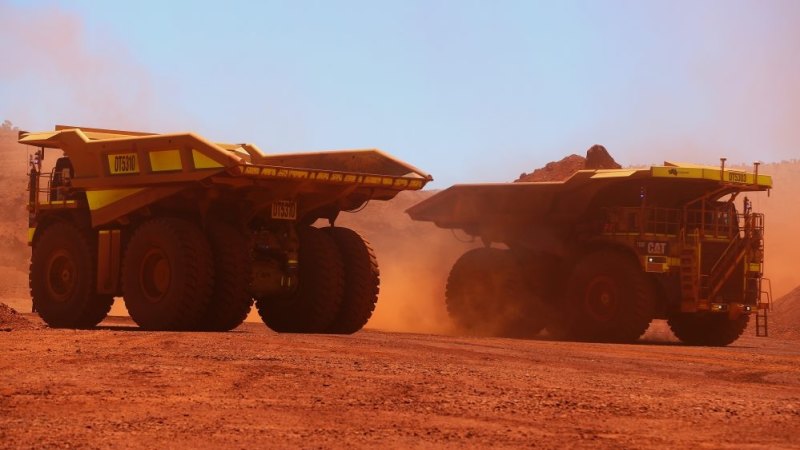
The claim area includes a large part of the Solomon Hub mine operated by Fortescue. The 2017 judgement was unsuccessfully appealed by Fortescue and a subsequent application by the company for special leave to appeal to the High Court also failed.
Fortescue had opposed the compensation claim together with the State of Western Australia.
In May 2022, with no compensation agreed, the Yindjibarndi applied to the Federal Court for it to step in to determine what Fortescue should pay.
The state government has been contacted for comment.
From our partners
Read the full article here